
What is the Global Circularity Protocol for Business?

The global economy is navigating what the World Business Council for Sustainable Development (WBCSD) has termed a decisive decade for business.
Despite advances in decarbonisation, material consumption and waste generation are on the rise, which could threaten climate objectives, biodiversity and the security of resources.
The extraction and processing of materials contribute to more than half of global GHG emissions, and over 90% of impacts on biodiversity and water stress.
In response, the Global Circularity Protocol for Business (GCP) establishes a science-based framework to help organisations transition from the linear “take–make–waste” model and place circularity at the centre of their strategies, operations and disclosures.

A framework for measuring circularity
The GCP is a voluntary framework providing organisations with a standardised method to measure, manage and communicate their circular performance.
It is intended for businesses of all sizes and across all sectors, from multinational corporations to small and medium-sized enterprises.
Application can be at the product, material, business unit or corporate level.
The protocol is structured around five stages:
- Frame
- Prepare
- Measure
- Manage
- Communicate
These stages are designed to guide companies in defining their objectives, mapping value chains, setting boundaries, selecting indicators and disclosing performance. It also introduces standardised scopes for material flows and a methodology that links circular strategies to outcomes for climate, nature and financial value.
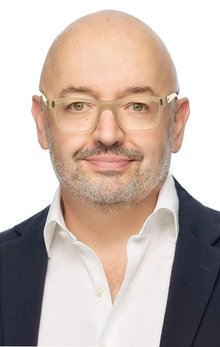
“The Global Circularity Protocol for Business provides a globally aligned, science-based framework to manage circular performance,” says Peter Bakker, President and CEO of WBCSD.
Peter explains that the GCP “enables organisations to embed circularity at the heart of strategy while generating credible information for investors, stakeholders and policymakers”.
Circularity as a strategic advantage
The protocol presents circularity not merely as a compliance task, but as something that promotes competitiveness and resilience.
By concentrating on material flows, it helps businesses reduce their exposure to resource volatility, regulatory shifts and supply chain disruptions. This focus also helps identify opportunities for circular innovation in products, services and business models.
According to the 2024 GCP Impact Analysis, widespread adoption could double the pace at which companies achieve advanced circularity maturity. This could deliver global material reductions of 100–120 billion tonnes by 2050 and avoid an estimated 67–76 gigatonnes of CO₂e between 2026 and 2050.
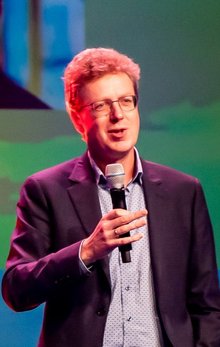
“At Philips, circularity is a powerful lever to reduce material use and our overall impact on climate and nature, while driving customer value and business success,” says Harald Tepper, Global Lead of Circularity and Director of Sustainability at Philips.
“Healthcare is a material-intensive industry. Embedding circular practices and innovations can help hospitals with reducing their environmental footprint while improving healthcare resilience and patient outcomes.”
Implementing the protocol across the business
Recognising that companies begin their circularity journey from different starting points, the GCP provides a progressive path with three levels: initiation, expansion and consolidation.
At the initiation level, organisations focus on material flows under their direct control, starting with at least one core metric; the expansion level adds a fuller set of metrics and includes stakeholder consultation; and the consolidation level extends to material flows under indirect control and integrates impact metrics like GHG emissions and biodiversity.
This tiered structure allows businesses in various sectors and locations to adopt circular practices at a manageable pace while generating comparable data.
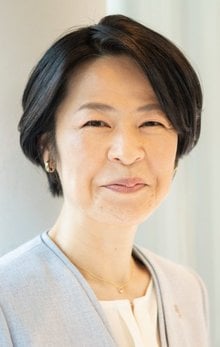
“For years, Toyota has been committed to resource efficiency, including easy-to-dismantle design, waste management in the production process and proper treatment of ELVs,” writes Yumi Otsuka, Global Head of Sustainability at Toyota Motor Corporation.
“The GCP, a useful framework to visualise circular initiatives in business, allows Toyota to strategise circular business models through stakeholder dialogue.”
Transforming circularity from concept into practice
A key characteristic of the protocol is its interoperability with current sustainability and reporting frameworks. It is aligned with the Global Reporting Initiative, ISO circular economy standards, the GHG Protocol and European Sustainability Reporting Standards.
This alignment enables organisations to use a single data foundation for circularity across multiple ESG processes, which could reduce reporting burdens and enhance consistency.
Governance of the GCP involves a multistakeholder structure coordinated by the WBCSD and the United Nations Environment Programme’s One Planet Network.
Version 1.0 is a starting point, with future versions planned to include science-based targets for circularity and deeper integration with finance and policy communities. These developments aim to transform circularity from a concept into a measurable business practice.
Company portals
Arcadis
Philips
The United Nations
Toyota Motor
World Business Council for Sustainable Development



Executives
Harald Tepper
Global Lead of Circularity and Director of Sustainability
Mark McKenna
Global Sustainability Director
Peter Bakker
President and CEO
Yumi Otsuka
Senior General Manager for Sustainability Management