Kantar: Exploring the Evolution of Procurement

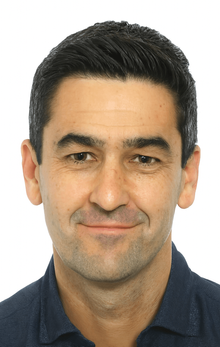
Having spent 20 years working across the public, private and charity sectors, Jonathan Clarke has witnessed his far share of change in procurement.
Now, as Global Procurement Director at Kantar, he lead digital procurement transformation for a leading global data, insights and consulting business.
Jonathan's current focus is on modernising sourcing and spend management. His role is to leverage digital technologies and innovative strategies to drive value, efficiency and sustainability.
Here, Jonathan offers his perspective on procurement's evolution, the growing impact of AI and the key skills procurement professionals can ill afford to neglect.
What are the main ways in which procurement has evolved over the years?
Procurement has evolved well beyond its traditional focus on cost savings to be a strategic driver of resilience, sustainability and operational efficiency. Today we balance negotiation skills and centralised efficiency with AI and automation, streamlining routine tasks and improving user experience.
While new technologies enhance outcomes, it’s vital not to let system complexity hinder productivity. Modern workforces feeling under pressure in fast-moving environments have little time to learn new processes. They expect intuitive, consumer-grade procurement tools and if we fail to meet that standard we risk poor adoption and missed ROI opportunities.
To bridge this gap, we’ve implemented several market leading platforms such as Coupa, eFlow, Service Now, Co-pilot and Candex to improve process flows from spend analytics and supplier onboarding to purchasing, contract management and invoice payments.
This year our focus has been Globality’s autonomous sourcing platform which is combining generative and native-built, agentic AI to empower our teams to move faster and make better supplier choices, transforming procurement into a true business enabler.
What primary challenges is procurement facing in today’s global environment?
Procurement is continually evolving to meet the demands of a more complex world, where high inflation, geopolitical tensions and supply chain disruptions are becoming the norm. Meeting these challenges requires adaptability, innovation and resilience, as well as embracing the best available technology.
Turning sustainable procurement pledges into action is also crucial. A cornerstone of our strategy at Kantar has been to increase the share of spend flowing to diversely owned and SME suppliers from 1% to 12% as part of our digital transformation. We don’t award contracts just because a supplier is diversely owned, but casting the net wider to new supplier groups we may not have considered previously has increased innovation in our service delivery and reduced costs, as well as driving positive social impact.

How is AI changing the face of modern-day procurement?
AI is revolutionising procurement by automating manual work and rapidly analysing complex data. This drives significant productivity gains, from evaluating sourcing options and identifying spend patterns to mapping supply markets and frees our teams to focus on strategic tasks that support business growth.
The main challenge for a lot of procurement professionals is integrating this pace of change into business workflows in a controlled way. Lots of organisations are focussing on specific use cases that will deliver the most value to them or that they are able to implement quickly and effectively.
At Kantar we focus on high-value AI use cases, such as increasing competitive sourcing and contract compliance. We’re embedding AI-driven insights directly into our tools and workflows. Globality’s AI agent, Glo, enables us to efficiently run competitive sourcing events and automate tasks like proposal analysis and price benchmarking, but within tighter compliance guardrails than we had before.
What’s the role of human negotiation in an increasingly AI-driven world?
I believe procurement will always require a strong human element and strategic insight is becoming more important than ever. While AI workflows are undoubtedly accelerating decision-making, successful negotiation depends on understanding what truly matters – not only within our own business context but also from the supplier’s perspective. Building close relationships with suppliers committed to quality, sustainability and competitive pricing is essential.
Maximising AI is about augmenting human capabilities, allowing for faster, smarter and more strategic decision-making. It is not about operating on autopilot or giving up on critical human thinking.
Over time, as teams become comfortable with automation and letting go of manual tasks, they can use time savings to engage more deeply with colleagues, suppliers and clients. This unlocks holistic approaches to supply chain sustainability, resilience and risk management.
What skills will be most important for future procurement professionals?
I think negotiation skills, curiosity and emotional intelligence are essential capabilities. While AI increasingly supports commercial analysis and insights, the softer human skills remain irreplaceable. Effective negotiation, storytelling and relationship building, rooted in empathy, context and deep understanding, is something technology cannot replicate.
We also need resilience to manage business change that can be uncomfortable and curiosity to look at completely new ways to streamline processes for both our people and our suppliers. Bill Gates said automation applied to an inefficient operation will magnify the inefficiency. To unlock the benefits of AI, procurement professionals will need to help organisations install strong data foundations and move to more effective processes along the way.
Finally, I think a commitment to learning and having empathy is going to be vital. We must remain adaptable and open to change but also remember we’re human and probably all feeling slightly overwhelmed in such a fast-moving environment. Just as important as asking your teams to embed the latest AI process, is ensuring they get off their screens and go for a walk.