Zycus Horizon 2025: Why Agentic AI is Future of Procurement
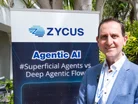
Terry Clune, Founder of TransferMate

Could you tell me a bit about TransferMate, what the business is and what you are seeking to achieve?
TransferMate is a global leader in the area of embedded payments. We are a provider of cross-border payments to the B2B industry and we focus on embedding our solution, which is regulated in over a hundred countries across the world, embedding that solution into software that is very much at the cutting edge. It has been running since 2012.
We've built, we believe, the third widest network of licensing across the world, just behind the two largest banks. We own a very significant infrastructure and we provide globally regulated payments as an infrastructure to leading software.
Tell me all about Zycus Pay and what the partnership's going to bring.
We're thrilled to be here to launch in partnership with Zycus Pay. Many companies around the world, when it comes time to make payments cross-border, usually they'll use the bank, and very often there can be delays and quite large expenses incurred with using a bank to send money around the world.
Using the partnership we have agreed now with Zycus, we're able to bring cross-border payments, same day, worldwide for Zycus customers. And we're thrilled that Zycus has chosen us. Zycus is focused on making partnerships with the leaders in the space and with the infrastructure we have built worldwide, we are a leading provider in the area of cross-border, same-day global payments.
For a company, for example, which is making cross-border payroll payments or accounts payable, usually when you send the money abroad you'll use your bank and very often the bank can take time to deliver the payments because the bank uses other banks to make the transaction happen.
Very often the message falls down along the way and it can be quite expensive. So it's slow and expensive to make cross-border payments traditionally. Using the alliance we are making now with Zycus in Zycus Pay, Zycus' customers can benefit from same-day global payments much, much cheaper than using the bank. So it's a win-win for the customer.
How much of a difference do you think it's going to make to Zycus customers to be able to do this?
Usually when a company is using, for example, the bank to make a cross-border payment, the payment will take four or five days to get to the other side. Sometimes it can take longer, it can take a week, sometimes two weeks, which can be a bit of a pain and a bit of a concern sometimes to the overseas party.
Whereas using our infrastructure together with Zycus, we take away that uncertainty because the payment will happen same day globally, which is really very much at the cutting edge. And we're delighted that Zycus has chosen us and it's very much reflective of what they are choosing in terms of partners. They're choosing the leading partners in the world and we're delighted to be part of their ecosystem in Zycus Pay.
Mark Nadler, Vice President of Corporate IT Systems, TKC Holdings

What are your initial experiences and takeaways from Zycus Horizon?
I think it's a good exposure to what Zycus is as a company. We've recently gone through a selection process to determine a partner with us in centralising our source-to-contract. We're not going all the way to the source-to-pay module, but source-to-contract environment, and selected Zycus based on a lot of interviews and onsite visits. And then being here and seeing the vision of the CEO and seeing a lot of these panellists, it reinforces our decision to go with the company.
In my mind, they seem like a great partner to go with. Seems like they're going to be hand in hand with us along the way to help us get the most out of their products and services and their platform.
What practically you are looking to achieve from selecting Zycus?
Today, we have a lot of our RFP processes, our manual email-based buying, and we buy a diverse amount of products for both our food service kitchen and our commissary business, our indirect spend for our packaging materials and things like that.
A lot of those processes are done manually with a limited number of our suppliers, Excel and email-based. So what we're hoping to do is, again, on that side of the house, get processes in place that streamline that whole process, standardise it, have templates and also get us better pricing on a lot of those goods and materials by using these standard processes, additional supplier visibility, use the systems to help us find additional potential suppliers that may have more competitive pricing.
On the contract side, we're hoping to take contracts. We have a lot of customers, suppliers, IT, HR, other contracts stored in different disparate systems. We hope to pull those all together and also use the technology to be able to analyse those contracts more effectively and efficiently.
What kind of role do you think agentic AI will play in the future of procurement?
At TKC, we are on the foundation of the AI journey. We've been looking at agents for supporting our sales team and other areas. So within the procurement area, I think there's a lot of opportunity to streamline a lot of those processes - taking non-standard processes that are being done manually across a number of groups, pulling them in together to simple agents where somebody can go to one spot and get a lot of a process initiated and completed without a lot of manual interventions and manual interactions.
Luke van der Waals, North America Offshore Supply Chain Manager, SLB

What have you taken away from Zycus Horizon?
I think there's some great insights from Gartner first thing today as to where agentic AI in particular is moving, where AI has progressed to, but also where it's likely to go to and where we are also on the hype curve for that.
I think also I'd like to see some of the demonstrations as well. There's some quite interesting demonstrations of the capabilities in the real world of what AI is doing today, what agents can actually do.
Could you talk a little bit about SLB and how SLB is integrating agentic AI processes into its procurement supply chain?
SLB is an energy technology company. We work at different parts of the energy space, and we've been working in AI as a company for decades in all its different forms and particularly for some of the software and the operations that we provide to our customers. More recently, we've been getting into this on the procurement and supply chain side, looking at it again from some of the more classical AI elements in contract management and so on.
Over the last couple of years, we have been starting to look at what generative AI and agents are going to be able to bring us. I think we've started to make some good progress into that. At the moment we're piloting the first wave of those agents, looking at how can we really help decision-making.
This is really where I see the greatest impact that agents should be able to bring in something like procurement in particular, because the value of procurement doesn't come from doing it cheaply: it comes from doing it as well as you possibly can.
And that means making fantastic decisions every single time. If you look at how a procurement organisation works, we are making hundreds of decisions impacting billions of dollars. If we can optimise those decisions, even fractionally, then the impact on the company can be material. We've actually found this in some of our classical AI and procurement solutions that we've built.
We're talking hundreds of millions of dollars'-worth of impact. I think with agentic AI, you can start to scale that to almost every decision. Now, we're not there yet. We're still working on putting the foundations and the building blocks in place. But I think that's where I can clearly see it's going. And now you start talking about shaving percentage points off your billions of dollars of spend and you can reduce your spend. This is where you get something which is truly effective.
There's a danger that some people are scared of AI and what would you say to the profession about that?
It's a really interesting moment in time, I think, and that question resonates for a lot of people because there's quite a lot to be scared about, or quite a lot to be uncertain about. Fundamentally, AI will change the way that we work. It already is changing the way we work and it's going to do so even more in the future.
But I think if I look at this from the perspective of a procurement professional, and I've been doing this for a couple of decades now in lots of different ways, I see this as actually making the value proposition of being in procurement a much more exciting job. Some of the administrative tasks, yes, they're going to get automated away.
They already are being automated away. You look at what ERPs did to the purchase-to-pay process over the last 20 years, we've taken away a lot of that simpler work. It has been automated. I think what we're seeing now is going to continue to happen. And so I understand why people are concerned about that, but the flip side of that is what does it free up time to do? What does it create space in the organisation to be able to do instead?
This is where I think the excitement comes because it means that there's more time for a procurement professional to focus on relationship management, on negotiation.
I know some negotiations can be automated, the complex ones are not. If you are looking at multifactorial different elements that you need to be pulling together for a negotiation, that is the piece that will still be there. And I think for people who are maybe questioning: 'What does this mean for me? What does this mean for my career?' - I would say, look at this from the human skills that you can invest in.
Look at investing in how I can be better at influence, at negotiation, at working with my stakeholders and with my supplier-facing work, how do I do it with my suppliers? How do I get good at supporting them and helping them grow and develop? These are skills which will be very much increasingly in demand so that the potential of AI can actually be realised. So I think it's a moment of excitement, uncertainty for sure, but it's a moment of absolute excitement as well.
David Kern, Vice President of Enterprise Commercial Strategy and Global Procurement, Tripadvisor Group

We are here at Zycus Horizon. What do you make of it? What are your takeaways from it?
The thing that I'm looking mostly at is there's a lot of AI, new tools and solutions out there, and they all kind of funnel back to P2P. Like how do you get the most out of your procurement team? How do you get the most out of the control environment? How do you get the most out of making sure that you only buy what you want to buy, necessarily buy what you need to buy?
I've learned that agentic AI is kind of the new frontier. I grew up back in the day where the .com, the internet was kind of new, and I feel like this is my second opportunity to jump into something early. I think of agentic AI like this. A lot of us for years would pick up the phone and call, let's say an airline or customer service somewhere, and we'd push 0, 0, 0, 0 until we got an agent because we felt like that was the only place that you could get services.
I was on a call last week looking to have someone come out and give me an estimate on a roof repair. And it was amazing how I didn't know I was talking to someone who was agentic AI or a bot or robotics until all of a sudden someone picked up the phone because I asked a question the person couldn't answer.
So it's getting to the point now where I'm not realising I wasn't talking to a real person. And that's where it's really cool, because if you're getting what you need out of a phone call, if you're getting what you need out of that interaction, where you're taking your time to contact someone, either a supplier, a customer, or even in this case someone providing me a utility service, and you're able to get that value out of that interaction without having to feel like it always has to be a real person.
The value that you get is actually just as meaningful, if not maybe more meaningful because they engage you in a way like, "Hey, by the way, would you like us to do this? Would you like us to do that?" It's pretty cool. It's a little game-changing, but it's cool.
How are you, as a company, looking at AI?
So as a company, I have to give our CEO and CFO a lot of credit. In the early years of this journey, they had come out and said: "Hey, listen, we're all in. We need to go after this. Wherever we can find a fit or find an opportunity, let's go for it." So it wasn't a matter of us trying to sell internally the use of AI within procurement or even try to tell people: "Hey, this exists out there."
In a lot of cases, you do that with new supplier opportunities. It was actually coming to us much faster than we were going to the business. And that's a great place because that means the business is going out and searching for the best of the best, the opportunities to enrich, to provide the best content, to provide the best customer experience, if not travel experience.
We have retooled internally to deal with two things. One is how do we handle the workflow of all of these new AI POCs, test, iterate, we want to try this, we want to try that, because there's a lot of tools out there.
At the same time, how do we start to use AI for our own workflow within procurement to be better at aligning, assigning and executing in a more efficient and effective way? See, at Tripadvisor, we have a great programme in place. We have what we call enterprise commercial strategy, and that allows us to go through every new purchase with our procurement team, with our strategy team, which is part of – they all work for me at this point – along with our IT folks, along with some of our folks in legal. And the list goes on: engineering. And what we do is we get in a room and we make sure that, A, there's a business case in place, and that's where AI comes in.
Because AI can help build business cases, it can help do analytics. It can kind of do the trust and verify or the verify and trust. But what it also does, it allows us to get to awareness of what we're trying to solve for. It allows us to understand what the value of what we're about to purchase is, what the cost is, what the metrics are, what the risks are. And then we all execute by going off and doing our piece. And then we come back and it's a unified front. I'm so proud of the team for adopting it.
Which areas do you think could benefit from a greater implementation of AI?
So I'm really excited about the P2P space and for those who know me for years, I've kind of been afraid of it because it is very complex and it is very large to implement in some cases.
The data that you have in your infrastructure really needs to be clean. It needs to be orderly, it needs to be actionable so that you can really get the value out of the P2P solution, in my opinion.
But where I find the P2P solutions challenging, especially for a tech company, is that when I worked at Staples, there was a three-way match, right? You ordered, procured the paperclip, you received the paperclip, you got the bill: three-way match, you're good. Whereas in technology, there's no one who's really, in my opinion, managing licensing. And so if I buy a thousand licences from ABC vendor and all of a sudden I don't necessarily know which licences have been deployed and which you're not, and some would say, "Well, you should have that internally."
I agree with you. But the truth of the matter is there's no AI agent that I know of that's autonomously looking at licensing and tying it back to invoicing so that there can be an implied three-way match, or at least the assurance that the match is there.
I know this is a little bit new. I know that some people have a little bit of a flavour out there that they're doing it, but I do think that this is a necessary step for us to understand that licence management is almost in a form of a PO with data, that you can then look on your system to understand how things are moving, because licensing is very subjective and it's also very expensive when it's not being deployed properly.
Toi Matthews, Associate Vice President for Administration and Procurement Director, University of the Virgin Islands

What have been your impressions of Zycus Horizon?
AI is new to me and I'm sure lots of other people. I've been using it in my own work, just limited with ChatGPT and the online tools that you see. But learning about how the different AI procurement tools are there has been very exciting and interesting.
What's your take on agentic AI? Are you an early implementer? Are you thinking about how you might use it?
I've been in procurement for more than 26 years. I've come from agencies and institutions that have larger, robust procurement departments and some where I was the only person. Currently, the institution I'm with, it's a small team and I think AI would help with the team.
We can be a lot more effective and efficient by implementing some of these things such as automated purchase requisitions would be something that we could use. Smart sourcing and bid analysis, which I'm currently using now, but it's limited.
I don't have a programme that I'm focused on that can interface with our current system. Something like what I've been seeing here would be very beneficial to the agency, especially intelligent vendor and contract management can help a lot. So those are some of the things I've been listening for and taking notes on and how I can take that back to my team.
Renee Williams, Senior Manager of Indirect Sourcing at Newell Brands
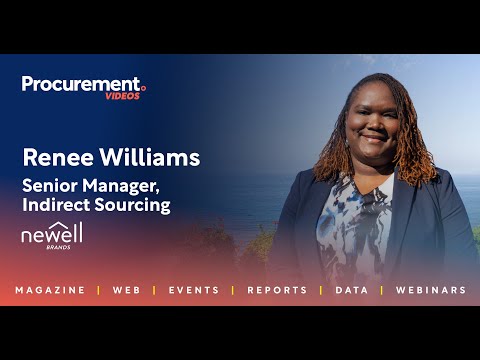
Do you have any particular takeaways from Zycus Horizon?
AI is no longer the future. It's the present. Companies must be willing to lean in and adopt. As the technology evolves, it's going to be important to have that rate of adoption because AI is led by human intelligence, human involvement.
So the earlier we have adoption and the more wide-scale adoption that we have, the faster the technology will develop.
There's also been a theme of change management and people-first involvement. As you're doing any kind of digital transformation, you need people adoption and people involvement, perspective, because you could throw a shiny tool at any process.
If people aren't using it, then there's no value. So the more you get people involved early in the transformation process, the faster you'll get adoption and unlock the value that you need.
Agentic AI is all around us. How is that looking in terms of Newell Brands?
Newell is leaning in heavily and driving innovation broadly. We've launched our front-end innovation efforts. We've been recruiting in that space, and so we're building out within our organisation a focus group to really drive innovation beyond even just AI, just broadly.
I'm fortunate to be a part of that, and I've even been able – with how accessible generative AI and agentic AI is today – I've even been able within two months of joining the company to be able to deploy agents within my procurement team.
Newell is definitely leaning in.
Marc A. Lowe, Senior Director of Global Sourcing & Procurement, Nature's Sunshine

Could you tell me your takeaways from Zycus Horizon?
I'm very intrigued by AI and how it's being integrated in the world of sourcing and procurement.
One big takeaway is that AI is not replacing the people on my team. It's more enabling and helps them to focus on things that are more value and creates a better experience for our organisation as well as our customers.
One of the things that surprises me, more than anything, is how fast technology has advanced in the last year and a half. But at the same time, I see a lot of great opportunities moving forward, and I'm excited about that.
Company portals







Executives

David Kern
Vice President, Enterprise Commericial Strategy & Global Procurement
Luke van der Waals
North America Offshore Supply Chain Manager
Marc A. Lowe, C.P.M.
Senior Director of Global Sourcing & Procurement
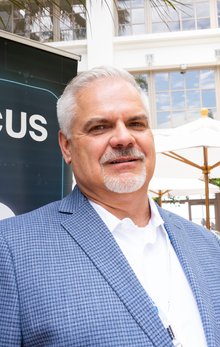
Mark Nadler
VP of Corporate IT
Renee W.
Senior Manager, Indirect Sourcing
Terry Clune
Group CEO
Toi M. Matthews, MPA
Assistant Vice President for Administration/Procurement Director