
Import Pressure on thyssenkrupp Steel Halting Production

The European steel market is grappling with a period of intense volatility as global trade tensions and shifting sourcing strategies reshape industrial landscapes.
German industrial giant thyssenkrupp is the latest to feel the pressure, announcing significant production cuts in France that put thousands of jobs at risk.
Domestic production is increasingly being side-lined by a surge in imports, rendering high output levels unsustainable for local mills. This trend follows a difficult 12 months for the group, which has struggled to stabilise its European operations amid a "ruinous" market environment.

European-made products continues to wane
Turbulence in global trade has seen core commodities like steel used as leverage to reconfigure supply chain relationships. Similar to the oversupply issues from China that previously hampered UK steelmakers, the European mainland is now facing a mirrored crisis.
thyssenkrupp Steel Europe (TKSE) is a critical player in the energy transition, particularly through its electrical steel division. This specific material is essential for grain-oriented applications used in power plants, wind turbines and grids. Despite its role in the region's strategic autonomy, increasing imports have destabilised the supply chain and triggered job instability.
Since January, the Isbergues site in Northern France has operated at half capacity. The situation worsened in December 2025 when the company temporarily shuttered production of electrical steel due to the availability of cheaper Asian alternatives.
"Grain-oriented electrical steel is indispensable for Europe's energy infrastructure and the energy transition," TKSE CEO, Marie Jaroni said at the time.
Marie highlighted that the material remains a cornerstone of the continent's green goals, yet demand for European-made products continues to wane.
Sustainability, procurement and supply chain leaders won’t want to miss Procurement & Supply Chain LIVE, taking place at Navy Pier, Chicago, on April 21–22.
Co-located with Sustainability LIVE: The US Summit, the event unites senior decision-makers at a time when supply chains, sustainability and business performance are more interdependent than ever.
Secure your place now for The US Summit – group booking discounts available.
The urgent need appropriate trade
The crisis has now escalated, with thyssenkrupp Electrical Steel announcing extended cuts at Isbergues.
The site will face a total closure from June to September as the company attempts to weather an "import crisis" for grain-oriented electric steel.
"In view of the ruinous flood of imports in the market for grain-oriented electrical steel, we see no alternative but to temporarily shut down our French site once again," says Angelo di Martino, CEO of thyssenkrupp Electrical Steel.
Angelo notes that import prices are frequently falling well below EU production costs. "This measure is necessary to stabilise our company amid further deterioration in order intake. We are faced with import prices that in some cases lie well below production costs in the EU.
"We therefore urgently need appropriate trade protection to establish fair competitive conditions for this strategically important product."
Seeking safeguards
The suspension impacts approximately 1,200 skilled roles across Gelsenkirchen and Isbergues.
Management is currently in discussions with the European Commission to secure effective safeguards, which they argue are currently non-existent.
Angelo adds: "This also concerns around 1,200 skilled jobs, which we aim to safeguard at our sites in Gelsenkirchen and Isbergues.
"We are engaged in intensive and constructive dialogue with the European Commission and hope for the prompt introduction of effective safeguards. Currently, there is no effective protection. At the same time, we are doing everything within our control to strengthen our competitiveness."
The scale of the challenge is stark: imports have tripled since 2022, with a further 50% jump in 2025. It is now estimated that more than half of the European market is supplied by imports.
While global demand for grain-oriented electrical steel is projected to triple by 2050, European firms warn they will not reap the benefits of this growth unless fair competitive conditions are restored.
Company portals

Executives
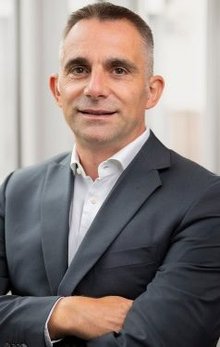
Angelo di Martino
CEO thyssenkrupp Electrical Steel

Marie Jaroni
CEO