
Green Steel: Can You Procure Carbon Neutrality?
Currently, steel manufacturing produces more CO2 than any other heavy industry, producing roughly 7% of total global CO2 emissions.
As a result, changes within the steel industry are central to achieving the EU’s 2050 climate neutrality goals.
One steel manufacturer planning to make a change towards carbon neutrality is Liberty Galați, the largest integrated steel producer in Romania.
At present, Liberty Galați is one of the EU’s top 10 most polluting steel facilities, but with a plan to switch to green steel production, it is aiming to be carbon neutral by 2030.
Sustainable sourcing strategy
Romania is one of the few remaining countries in Central and Eastern Europe that makes steel from raw materials, like iron, rather than recycling old steel. As a result of this, steel making is very important for Romania’s economy.
Liberty Galați aims to become a leader in the sustainable, environmentally friendly production of steel.
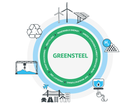
With the aim to invest up to €1bn (US$1.1bn) into GREENSTEEL transformational plans, Liberty Galați is determined to transition from traditional blast furnaces to hybrid electric arc furnaces.
With Liberty Galați’s plans, Romania’s national carbon emissions could be significantly reduced and the company could establish itself as carbon neutral in as little as five years.
Liberty Galați’s GREENSTEEL transformation strategy will ensure the long-term economic, social and environmental sustainability of Liberty Galați, so it can reinvest profits and continue to provide high quality steel and jobs for future generations.
This transformation strategy could serve as the blueprint for green steel production in Central and Eastern Europe.
The GREENSTEEL transformation plan Liberty Galați is working towards requires a Direct Reduced Iron plant–the most effective technology to reduce carbon emissions and transition to decarbonised green steel.
The plan also relies on two hybrid electric arc furnaces. These are expected to reduce up to 80% of CO2 emissions per tonne of steel.
Attempts towards producing green steel are underway, but it’s a significantly more expensive production than using the current methods. As a result, companies like Liberty Galați are having to consider funding and potential price rises.
The Stockholm School of Economics conducted a study into Liberty Galați’s GREENSTEEL production plan, evaluating the potential profit losses of the company switching to sustainable production.
Rickard Sandberg, co-author and professor and head of the Center for Data Analytics at the Stockholm School of Economics comments: “Our results have practical implications for both industry and policymakers.”
“For steel producers, they help inform risk assessments and future decarbonisation strategies. For policymakers, they highlight the urgent need for stable electricity pricing, green energy production, hydrogen infrastructure development, and supportive policies to make low-carbon steel financially viable.”
The hydrogen demand
Green steel is a sustainably produced material, created in furnaces powered by electricity or hydrogen, as opposed to coal-fired furnaces.
Green steel production relies on a great deal of hydrogen. If it can be sourced on-site, steel production will run smoothly and costs will remain stable.
However, if demand is too high, hydrogen must be sourced from elsewhere, resulting in a price rise.
Mara Bălașa, lead author and PhD Fellow at the Stockholm School of Economics writes: “Our findings show that Romanian green steel production can be competitive—if hydrogen is produced on-site and electricity prices remain stable.
“But if hydrogen is purchased externally, a 15% price premium in the market would be needed to avoid steep value losses.”
Changes can already be tracked through other steel producers. German company Salzgitter AG is already implementing its program SALCOS to produce virtually climate-neutral steel.
If companies like Liberty Galați can procure the infrastructure and reliably source hydrogen, the steel industry can see a significant change in its environmental impact.
Explore the latest edition of Procurement Magazine and be part of the conversation at our global conference series, Procurement & Supply Chain LIVE.
Discover all our upcoming events and secure your tickets today.
Procurement Magazine is a BizClik brand