
Mitsui and MOL: Port of Nigg Deal Strengthens Offshore Wind
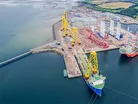
Mitsui & Co. confirms it acquires the Port of Nigg in North-east Scotland through its European subsidiary, together with Mitsui O.S.K. Lines, Ltd (MOL).
The agreement with GEG (Holdings) Limited covers the port and a share of steel processing and equipment manufacturing activities that supply the energy sector.
The purchase is structured so that the assets transfer to Global Energy Service Holding Limited (GESH), a new operating platform based in Inverness.
Mitsui holds 51% of GESH while MOL takes 49%. At the same time Mitsui will sell its stake in GEG’s remaining businesses back to the founder.

Procurement focus on renewables and fabrication
The Port of Nigg sits on the North Sea coast, directly within one of the largest offshore wind development zones in the world.
The location is set to act as a logistics hub for staging, assembly and servicing of large-scale offshore projects, with capacity to continue serving oil and gas as needed.
For procurement teams across renewables, the deal represents an expanded local supply base for heavy fabrication, integrated port operations and specialist logistics that enable developers to deliver projects at pace.
The acquisition allows Mitsui and MOL to consolidate port services and manufacturing capacity into a single framework under GESH.
The scope spans steel processing, equipment production and marine operations, creating a procurement channel that integrates supply across fabrication and logistics.
This matters for offshore wind, where developers require precision components, reliable staging facilities and time-critical transport windows.
Mitsui brings a record of investment in UK industrial services, including previous work with pipeline specialist STATS (UK) Ltd, while MOL contributes expertise in shipping and port management.
Together they aim to modernise port services and remove bottlenecks that slow turbine installation.
The outcome is expected to reduce project delays, cut demurrage costs and support a more predictable pipeline of offshore capacity.
Localised fabrication of turbine towers and foundations can cut reliance on imports, shorten transport routes and reduce logistics emissions. Procurement managers will find value in being able to source heavy components closer to site, with integrated handling that reduces both costs and risks in the supply chain.
Tetsuya Shigeta, Representative Director, Executive Vice President and CFO at Mitsui, says: “While efforts towards decarbonisation seems to be slowing down currently, I believe the initiatives themselves are irreversible, which seems to be the consensus.
"If wind power generation slows down, we believe business viability can be secured by providing services for other businesses.”
His statement underscores a procurement reality: facilities that can flex between wind and other industries reduce stranded asset risk.
Supply chain decarbonisation and energy security
Procurement strategy increasingly accounts for Scope 1 and 2 emissions from suppliers. GESH has scope to electrify handling equipment, optimise vessel calls and adopt shore power, measures that cut emissions from port operations.
Material efficiency in steel processing, design optimisation and use of recycled content can lower embodied carbon in turbine structures. These initiatives align with Mitsui’s stated material issues: stable energy supply and responsible marine stewardship.
The Port of Nigg therefore positions itself not only as a throughput hub but as part of a decarbonised value chain.
Offshore wind projects staged at the port can connect to the UK’s wider energy transition goals, displacing higher-emission generation and strengthening energy security.
For procurement teams tasked with balancing cost, carbon and resilience, the port offers a consolidated service platform that advances all three.
Transparent environmental management and biodiversity protection will be central to community trust.
Procurement contracts linked to the port are likely to include requirements for monitoring and reporting, which supports accountability across the chain.
Local jobs, governance and project delivery
GESH launches as a dedicated operator with 248 employees, led by Yoshihiro Hayakawa. Clear ownership is expected to streamline investment decisions and safety governance.
For procurement officers this governance structure provides clarity of counterparties and accountability.
The development is also positioned as a source of skilled employment in the Highlands, with transition pathways for workers moving from oil and gas into renewables.
Partnerships with colleges and training providers are expected to expand the skills base, while collaboration with local authorities and grid operators will align transport and transmission with project growth.
Following expected completion in summer 2025, Mitsui and MOL plan to integrate port operations and manufacturing to deliver lower-carbon services to offshore wind developers.
Progress will be measured through outcomes such as offshore wind capacity supported, improved on-time delivery, reduced emissions and social indicators including local employment and training.
The Port of Nigg acquisition represents a strengthened UK hub for offshore wind supply.
Through combining Mitsui’s industrial networks with MOL’s maritime expertise, the partners deliver a competitive platform that supports reliable project delivery, aligns with net zero goals and anchors community benefits within the supply chain.