
GlobalFoundries & Qualinx Secure Sovereign Chip Supply

GlobalFoundries and Qualinx have completed the first fully European semiconductor manufacturing flow at a facility in Dresden, Germany.
The US-headquartered GlobalFoundries partnered with Netherlands-based Qualinx to produce chips without relying on manufacturing steps outside the EU.
Dresden operates as Europe's largest semiconductor manufacturing hub. The city is known as Silicon Saxony and functions as the continent's most developed microelectronics cluster.
Multiple semiconductor facilities are scheduled to open in Dresden over the next few years. According to the European Commission, the EU has directed billions into securing a stable supply of European made chips, which it considers essential to technological sovereignty.

Procurement implications for security-critical applications
The facility produces chips that GlobalFoundries describes as security-critical for aerospace, defence and critical infrastructure. This could mean procurement teams can now source semiconductors with full visibility over the supply chain from design to delivery.
Dr Manfred Horstmann, Senior Vice President and General Manager at GlobalFoundries, says: "We are demonstrating that Europe can rely on a secure, end-to-end semiconductor manufacturing flow that meets the highest requirements of aerospace and defence.
"Our partnership with Qualinx marks the first operational milestone: it shows that complex, security-relevant ASIC designs for aerospace, defence, and critical infrastructure can already be industrialised today using a fully European, trusted manufacturing path."
The facility received EU€495m (US$574.3m) in co-funding from the European Chips Act. GlobalFoundries is consolidating every production step, from design intake and mask services to wafer manufacturing, within the EU.
According to GlobalFoundries, the tape out completed with Qualinx represents the first operational milestone on the path toward a fully automated trusted European flow. The company aims to establish this in Dresden by the end of 2026.
EU investment in chip supply
According to data from the European Commission, the global semiconductor market reached US$796bn in 2025. Growth was driven by demand for data centres, artificial intelligence systems and advanced logic and memory chips.
The EU is investing in the sector to secure future technological sovereignty through the European Chips Act. According to Semi, a market intelligence group for semiconductors, the European Chips Act has catalysed a total of EU€69bn (US$80bn) in public and private investments powering research and manufacturing in semiconductors across Europe.
This level of public investment could show procurement teams will have access to a broader range of European sourced semiconductor suppliers over the next five years. Supply chain resilience could improve for organisations required to source components from verified manufacturing locations.
Qualinx partnership and product specifications
Qualinx served as the launch customer with a Global Navigation Satellite Systems SoC design for secure Positioning, Navigation and Timing applications. The QLX3xx design targets sovereign GNSS-based PNT solutions for aerospace, defence and critical infrastructure.
Tom Trill, Chief Executive Officer of Qualinx, says: "This first secure product demonstrates that a fully European manufacturing path – from mask services to wafer production – is already a reality today.
"Together with GlobalFoundries, we've optimised our Digital RF technology on GF's FDX with a secure end-to-end flow, culminating in the launch of our ultra-low-power reconfigurable Global Navigation Satellite System SoC and Analogue Front End. This milestone underscores our ability to deliver trusted, energy-efficient solutions while maintaining full control over IP, data and the supply chain within Europe."
The Netherlands-based deep-tech company developed the sophisticated system-on-chip design specifically for the European manufacturing flow. Procurement teams sourcing navigation and timing components for critical infrastructure projects can now access chips produced entirely within EU borders.
Dresden as semiconductor hub
Dresden sits at the centre of Europe's plans for building a chip supply ecosystem. Infineon is preparing to open its second semiconductor manufacturing facility, a Smart Power Fab, on July 2 2026, according to a report from Bloomberg.
With the new facility, Infineon in Dresden will operate one of the largest semiconductor production sites in Europe. According to Bloomberg, the project received EU€920m (US$1bn) in German aid.
ESMC, a joint venture between TSMC, Bosch, Infineon and NXP, is set to manufacture chips in Dresden starting 2027. The project received EU€5bn (US$5.8bn) in state aid.
This concentration of manufacturing capacity could mean procurement teams will have multiple European suppliers to evaluate when sourcing chips for regulated industries. The facilities opening between 2026 and 2027 could provide alternatives to Asian supply chains for organisations with sovereignty requirements.
Company portals






Executives
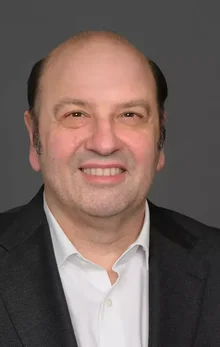
Manfred Horstmann
General Manager & Senior Vice President of GlobalFoundries Europe

Tom Trill
CEO