The Honeywell Split Reshaping Procurement Contracts

Honeywell will separate into two publicly listed companies on 26 June 2026, creating distinct procurement channels for automation and aerospace buyers.
The split could reshape supplier relationships and contract structures for organisations currently managing unified agreements with the manufacturing giant.

Dual vendor relationships emerge
Honeywell Technologies will retain the original Nasdaq ticker symbol "HON" and house the automation business. Honeywell Aerospace will trade under "HONA" and become one of the largest publicly traded aerospace suppliers.
Procurement teams working with Honeywell will need to evaluate whether existing contracts transfer to one entity or require renegotiation with both companies. The separation could mean separate vendor qualification processes, payment terms and compliance requirements for buyers who source products from both divisions.
According to Honeywell, the company maintains an estimated value of US$18bn through the transition. Financial projections remain unchanged, with expected sales of US$38.8bn to US$39.8bn.
The company anticipates adjusted earnings per share of US$10.35 to US$10.65. Operating cash flow is expected to reach US$4.7bn to US$5bn, while free cash flow projections range from US$5.3bn to US$5.6bn.
Contract management considerations
Vimal Kapur, Chairman and Chief Executive Officer of Honeywell, says: "Drawing on Honeywell's century-long legacy, these new brand identities honour our history while reflecting the bold vision and strategic focus that will define Honeywell Technologies and Honeywell Aerospace as standalone companies. This is the start of an exciting new era for both businesses.
"Our new brand highlights the powerful intersections of our technology and expertise, from controls to intelligence to safety, that will redefine how industries operate, accelerating the shift toward a more autonomous future while unlocking new levels of growth and long-term value."
Procurement professionals may need to assess how the separation affects master service agreements, volume discounts and preferred supplier arrangements. Buyers who negotiated consolidated spending across both divisions could see changes to pricing structures once the companies operate independently.
The administrative burden could increase for procurement departments managing relationships with both entities. Separate invoicing systems, purchase order processes and supplier portals may require additional resources to maintain.
Supply chain implications
Jim Currier, President and Chief Executive Officer of Honeywell Aerospace, says: "Our new Honeywell Aerospace brand reflects the precision, confidence and forward momentum that has defined the past century of innovation and trusted performance we have delivered for our customers and partners.
"As an independent company, we will be uniquely positioned to innovate faster, move with greater agility and shape the next era of aviation."
The separation could affect lead times and inventory management for buyers who source from both divisions. Supply chain teams may need to establish separate communication channels and escalation procedures with each company.
Honeywell Technologies will feature a dynamic colour pattern and modern "HT" monogram in its branding. Honeywell Aerospace will use a sunrise orange colour scheme with stylised "H" and "A" letters.
In 2025, Honeywell incorporated Corvus Robotics technology into its autonomous drone fleet, enabling flight without human intervention. This partnership demonstrates how procurement decisions around warehouse automation technology involve multiple vendor relationships.
Jackie Wu, Chief Executive Officer at Corvus Robotic, explains: "We selected Honeywell's SwiftDecoder software for our cutting-edge drones due to the company's long-standing expertise in the warehousing sector and the software's ability to efficiently and reliably acquire data, even in complex and fast-moving DC environments.
"With Honeywell's software and our in-house proprietary case counting AI technology, we can quickly decode many cases in one location, all at once. Together, Corvus Robotics and Honeywell are empowering warehouses and distribution centres to better manage inventory, reduce operational expenses and streamline the overall flow of goods throughout the supply chain."
During the same year, Verizon and Honeywell forged a relationship as the telecommunications company integrated Honeywell's hardware, software and services to simplify procurement and scale for future needs. This arrangement illustrates how buyers structure agreements to consolidate purchasing across product categories.
The separation could require buyers to reconsider how they structure similar integrated procurement arrangements that span automation and aerospace products. Organisations may need to evaluate whether maintaining relationships with both entities delivers the same procurement efficiencies as dealing with a single supplier.
Company portals

Executives
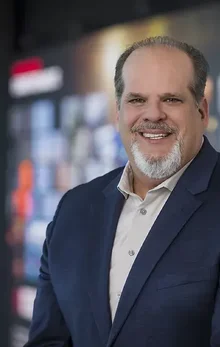
Jim Currier
President and CEO of Honeywell Aerospace
Vimal Kapur
Chairman and Chief Executive Officer