
GEP: Businesses are Stockpiling to Avoid Sourcing Issues
Organisations around the world have been undergoing immense pressure in recent months, with procurement teams having to make strategic decisions to avoid disruption.
Decisions made by procurement leaders have been the driver of resilience throughout an entire organisation, putting these leaders at the forefront of strategy – particularly in recent times.
Now, as volatility shows no signs of stopping, GEP has found that companies are looking at stockpiling in order to avoid supply chain risks.

Global sourcing concerns
GEP's Global Supply Chain Volatility Index explores how organisations are operating amid volatility, examining how procurement teams can adapt in order to ensure resilience throughout turbulence. It looks into where capacity is being stretched or underutilised, offering key insights for procurement teams who need to change their sourcing strategies, develop new contracts, or look to make cost savings.
Using a months survey of 27,000 businesses, GEP has found that pressures on procurement and supply chains teams have remained high, despite lower transportation costs and falling oil prices. This demonstrates that organisations are still uncertain surrounding geopolitical events, with caution driving their sourcing decisions.
Amid this, manufactures have reported the rise of backlogs, as shortages of critical inputs have been at their highest since late 2022. Through this, GEP points towards a greater risk of supply chain bottlenecks into Q3, as businesses are unable to meet customer demand due to materials shortages.
Businesses still don't trust the global trading environment to remain stable.
Procurement strategies
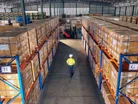
Procurement leaders have therefore been making the decision to stockpile – with larger numbers of orders purchased than immediately needed in order to account for shortages further down the line. Manufacturers have been building 'buffer inventories' throughout June, with reports of safety stockpiling being at their highest level since January 2023.
As raw materials and critical minerals demand is increasing, partially due to the rising demand for semiconductors and smartphones, as well as the wide-spread energy transition, businesses are needing to source strategically. Across North America and Asia, demand for intermediate goods, commodities and raw materials is strong.
This suggests that supply chain activity will remain strong as inventories are replenished and existing orders are completed. The lack of delay reflects the previous stockpiling that had begun in early 2026 – the US was facing a surplus of copper in March due to aggressive stockpiling following the threat of copper tariffs.
"The rise in stockpiling and persistent order backlogs point to one clear conclusion: businesses still don't trust the global trading environment to remain stable," said John Piatek, Vice President of Consulting at GEP.
"Despite lower oil prices and easing transportation costs, companies continue buying ahead because they expect further disruption. While this is encouraging for the global economy in the near term, it also shows manufacturers remain very cautious and are planning for more disruption in international trade."
While North America and Asia demonstrated continuous demand, input demand in Europe weakened.
- Asia: the index fell to its lowest level since March, to 1.95. GEP points to easing transport cost inflation as a key factor
- North America: another three-month low, falling from 1.69 to 1.17. This was caused by the sharp rise in purchasing activity to respond to rising backlogs and item shortages
- Europe: the index fell to 1.13, from 1.43. Despite strong inventory growth, the region has seen a reduction in buying volumes across factories
- UK: UK manufacturers have been downsizing and undertaking budget cuts, resulting in an index drop to 1.05
Global supply trends
Five key trends have impacted procurement capabilities throughout 2026, with changes taking place in June which are being seen across the supply chain.
Throughout June, purchasing of raw materials, commodities and intermediate goods – particularly ones required by manufacturers in order to produce larger goods – remained strong. This was driven by a rise in input buying at its fastest rate since April 2022. Across Japan, China and Vietnam, there was an acceleration in purchasing growth.
Reports of stockpiles have been the highest since January 2023, showing procurement decision-makers are concerned about future shortages. This is reflected around the world, demonstrating a wide-spread strategy among procurement leaders of working now to protect against future inflation.
Though supply issues are still at a historic high, there was a decrease in June of the number of items in short supply, showing that some global shortages have seen a reduction. Due to ongoing demand but supply chain issues, backlogs have risen sharply, causing an issue for procurement teams aiming to develop a resilient and well-stocked organisation.
Labour shortages have also impacted capacity, with manufacturers unable to meet demand.
For procurement teams, these trends demonstrate widespread issues, resulting in performance gaps between supply and demand. Though procurement leaders have attempted to get ahead of shortages, through strategic purchasing, in-advance sourcing and stockpiling, this has added to the ongoing stretch of global supply chain capacity.
Company portals

Executives

John Piatek
Vice President, Consumer Goods and Retail