
Carlsberg: Committed to Sustainable Sourcing

Carlsberg is leveraging procurement to advance its sustainability goals, with a focus on reducing plastic waste and moving towards regenerative agriculture.
As one of the world's leading brewing companies, Carlsberg's enhanced ESG programme Together Towards ZERO and Beyond (TTZAB) sets a clear course for decarbonisation across its value chain.
Its science-based targets verified in line with the 1.5°C level of the Paris Agreement signal a commitment to emissions reduction, earning it 57th place in Sustainability Magazine’s Top 250 World’s Most Sustainable Companies 2025.

The TTZAB programme establishes targets for 2030 and a new goal for 2040. A central ambition is achieving a ZERO Carbon Footprint, which involves reaching zero carbon emissions at its breweries and securing a 30% reduction in its value chain emissions by 2030.
The long-term objective is to achieve net-zero carbon emissions across its value chain by 2040. To deliver on these goals, Carlsberg is decarbonising its thermal energy usage by converting boilers from natural gas to renewable thermal fuels or electrification.
Carlsberg also ensures any additional renewable electricity is sourced from on-site generation or procured through Power Purchase Agreements.
Peter Hammarstedt, CEO of Carlsberg Sweden, says: “We are constantly working to take concrete steps towards a more sustainable business.”
Strategic supplier collaboration on packaging
A key pillar of Carlsberg’s strategy is its goal to have 100% recyclable, reusable or renewable packaging by 2030. This involves designing packaging for a circular economy using bio-based materials and working with suppliers to increase recycled content in packaging materials.
A collaboration with packaging manufacturer DS Smith in Poland demonstrates this approach. The partnership develops a new multipack design for Carlsberg Garage and Somersby beer product ranges.
This new design features rounded corners, which reduces the need for shrink film on pallets during transport. According to DS Smith, the multipack design reduces empty space in the box by 4.2% and makes the box 17% lighter.
The fully-recyclable packaging is expected to save more than 200 tonnes of CO₂ annually for Carlsberg in Poland.
Simon Boas Hoffmeyer, VP Sustainability and ESG at Carlsberg, explains: “Our performance in 2024 is due in large part to the long-standing commitment to our ESG agenda and our focus on creating impact through partnerships and collaborations.
"A prime example is in the area of packaging. We could not achieve a 76% collection and recycling rate of our bottles and cans without years of hard work in industry-wide partnerships for efficient deposit return schemes and recycling infrastructure across our markets.”
Sourcing for a regenerative supply chain
Beyond packaging, Carlsberg is transitioning to regenerative agriculture practices in key markets, including Denmark, France, the UK and Finland. This initiative supports Carlsberg’s ZERO farming footprint ambition by expanding its procurement of regenerative raw materials.
The aim is for 30% of its raw materials to be grown using regenerative agricultural practices by 2030, rising to 100% by 2040. These supply chains cover all malt barley wheat rice sugar hops, and corn crops.
This change in agricultural sourcing could lead to a reduction in farming emissions from lower fuel usage due to low or no tilling and reduced fertiliser application because of healthier soils. To facilitate this change, Carlsberg is formalising its principles of regenerative agriculture, mapping its supply areas and partners and integrating new agriculture requirements into its procurement processes.
In the UK, for example, Carlsberg is working directly with farmers with the goal of brewing its Carlsberg Danish Pilsner with 100% regenerative barley by 2027.
This hands-on approach with suppliers, from packaging manufacturers to farmers, is central to Carlsberg's strategy.
By embedding sustainability deep within its procurement processes, the brewer is not just aiming to meet its targets but is actively building a more resilient and environmentally-friendly supply chain for the future.
Company portals

Executives
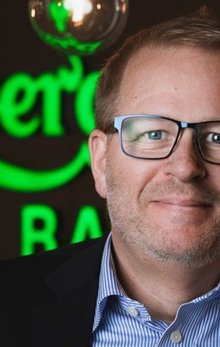
Peter Hammarstedt
CEO, Carlsberg Sweden
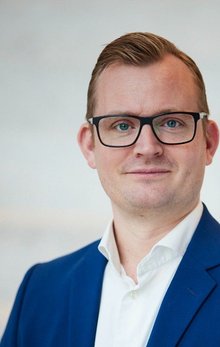
Simon Boas Hoffmeyer
VP, Global Head of Sustainability and ESG