
Rio Tinto: Helping Canada Secure Critical Minerals Supply

Rio Tinto is braced to expand its scandium oxide production in Québec thanks to a new partnership with the Canada Growth Fund (CGF), aiming to increase capacity and strengthen Canada’s critical minerals strategy.
The development relates to Rio Tinto’s Critical Minerals and Metallurgical Complex in Sorel-Tracy, where CGF is committing around C$25m (US$18m) to accelerate output. It will raise the the site’s nameplate capacity to nine tonnes annually.
With this growth, Canada gains a stronger foothold in global scandium markets and adds resilience to its domestic supply chain. The move also aligns with wider national ambitions to secure and scale the supply of critical minerals for key technologies.
Two commercial agreements form part of the arrangement with the Canadian Government. The first is an offtake agreement, where a fixed volume of scandium is pre-purchased. The second supports marketing and storage, helping to manage supply until market demand increases.

Scandium’s role in advanced manufacturing
Scandium is a rare-earth metal used in various high-performance applications, particularly where strength, heat resistance and corrosion protection are critical. It improves aluminium alloys, making them more durable and lightweight, and is also used in solid oxide fuel cells – a type of energy device that generates electricity through electrochemical reactions.
Although scandium is present in the Earth’s crust, it appears in very low concentrations and is often chemically bonded with other elements. This makes it difficult and costly to extract, and traditional extraction methods raise environmental concerns.
Canada, the US and Australia all classify scandium as a critical mineral. These are materials essential to economic security and energy transition goals, and where supply faces risks from geopolitical factors or limited global sources.
Rio Tinto takes a different approach to scandium extraction. Instead of mining new material, it uses byproducts from titanium dioxide production at its Québec facility, reducing environmental impact and creating new value from existing operations.
The Québec site remains North America’s only scandium oxide production facility. It started producing scandium oxide in 2022 as a demonstration plant and has operated as the only such output in the region. Within countries of the Organisation for Economic Co-operation and Development (OECD), refined scandium remains scarce, with the global market still relying heavily on China.
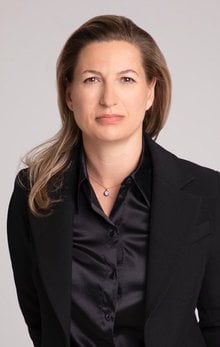
Sophie Bergeron, Managing Director of Rio Tinto Iron and Titanium and Diamonds, says: “Rio Tinto is pleased to partner with CGF and the Government of Canada to expand our Canadian production of scandium oxide, a high-performance material used for advanced manufacturing and energy generation.
"This project leverages an innovative process developed in Canada by our scientists, fully supplied from our domestic mining and metallurgical assets to provide a secure, North American supply of this critical mineral.”
From demonstration to full production
The latest investment enables Rio Tinto’s Québec site to shift from demonstration phase to commercial-scale production, with a target output of nine tonnes per year. This makes Canada one of the few countries able to refine and supply scandium domestically.
CGF’s funding comes as a structured financial royalty, a model similar to equity that allows the fund to share in long-term value without ownership of the project. This supports CGF’s objective of backing projects that match Canada’s industrial, environmental and economic priorities.
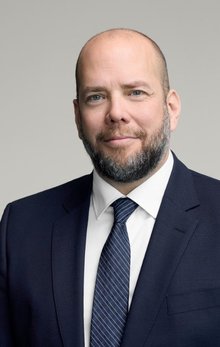
Yannick Beaudoin, President and CEO of Canada Growth Fund Investment Management, says: “With its unique investment mandate, CGF invests into innovative transaction structures that directly support projects of strategic priorities.
"This transaction, completed alongside an established operating partner, enables us to unlock new models for risk-sharing and value creation that advance Canada’s supply chain resilience strategy. Our commitment to the project demonstrates how targeted investment and disciplined structuring can deliver tangible benefits for the Canadian industry and economy.”
The Government of Canada is also playing a commercial role through its offtake and storage agreements. Offtake contracts provide stability for producers by securing a buyer for a set volume of product, which helps with long-term operational planning and financing.
The marketing and storage arrangement allows Rio Tinto to assist in managing inventory and sales until markets mature, ensuring scandium can be held until sectors such as defence, lightweight transport and energy adopt the material more widely
Building resilience in the minerals supply chain
Scandium's role as a microalloying element gives aluminium better mechanical properties, making it more suitable for sectors such as aerospace, automotive and renewable energy.
In solid oxide fuel cells, scandium improves electrical conductivity, supporting efficiency in off-grid and backup power systems – especially those used in hospitals, data centres and public infrastructure.
Deborah K Orida, President and CEO at PSP Investments, CGF's parent company, adds: “We are delighted to bring PSP Investments’ rigorous investment process, depth of expertise and arm’s length governance model to the execution of CGF’s mandate.
"CGF continues to provide innovative solutions that enable the development of important projects, improving Canada’s investment climate and contributing to PSP’s foresight on the evolution of the critical minerals supply chain.”
By combining public funding, commercial contracts and domestic processing technology, the project reflects Canada’s wider ambition to secure critical minerals and reduce dependence on external supply chains.
With Rio Tinto’s facility now scaled for commercial output, the move marks a shift towards greater North American autonomy in high-value mineral production.
Company portals

Executives
Sophie Bergeron
Managing Director of Rio Tinto Iron and Titanium and Diamonds
Yannick Beaudoin