
What is Germany’s National Circular Economy Strategy?

Germany has long been recognised as a global leader in industrial efficiency and manufacturing excellence. Its supply chain and procurement feature a robust infrastructure, an advanced logistics network and a commitment to innovation.
Deeply interconnected with global markets, Germany is a critical player in international trade. However, with its reliance on exports, Germany’s economy requires efficient supply chains to reduce the risk of resource scarcity, volatile raw material markets and environmental challenges.
This can be said for not only Germany but also the global supply chain and procurement industry.
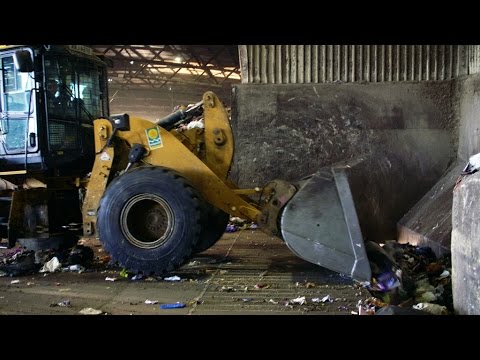
Increasingly, awareness of climate change and resource depletion are forcing businesses to rethink traditional supply chain models. With this in mind, Germany’s National Circular Economy Strategy (NCES) emerges as a timely and transformative initiative that addresses these challenges, setting a benchmark for others.
By prioritising resource efficiency, environmental protection and economic resilience, the NCES aims to not only secure Germany’s supply chain competitiveness but also influence global standards in procurement and sustainability.
What is Germany’s National Circular Economy Strategy (NCES)?
The NCES represents a transformative shift from traditional linear economic practices towards a comprehensive circular model that prioritises resource efficiency, environmental protection and economic resilience.
The NCES has been developed with extensive stakeholder input and aligned with the EU Circular Economy Action Plan, it emphasises a systemic redesign of material flows, focusing on optimising every phase of a product’s life cycle.
This approach is designed to minimise waste, reduce reliance on imported raw materials and foster innovation across key industries.
Germany’s circular economy landscape
Germany for the past three decades has been dedicated to strengthening its leadership in waste management and recycling.
While its advanced systems for collecting, sorting and reprocessing waste have set strong foundations for a circular economy, only 13% of Germany’s raw material consumption is currently covered by secondary materials.
Without targeted measures, the demand for primary raw materials is expected to rise further due to investment needs in housing, renewable energy and defence.
The NCES aims to reverse this by encouraging product designs that extend lifespans and improve repairability, promoting resource-efficient production processes and enhancing recycling infrastructure to maximise the use of secondary materials.
NCES’s impact globally
No doubt the NCES will have a significant impact on environmental benefits, economic resilience and enhanced stakeholder engagement for Germany, it will also have many benefits for global operations.
Germany’s proactive stance on circular economy sets a benchmark for other nations – particularly in the European Union – by demonstrating the economic and environmental benefits of circular practices.
It will also have a ripple effect across international supply chains, incentivising global suppliers to align with the country's standards, as well as a direct impact on global efforts to combat climate change by reducing emissions through material efficiency and secondary raw materials usage.
The NCES is a pivotal step for Germany in its journey towards sustainability. The NCES offers a holistic approach to addressing the challenges of resource scarcity and climate change, by integrating environmental protection, economic resilience and stakeholder collaboration.
Explore the latest edition of Procurement Magazine and be part of the conversation at our global conference series, Procurement & Supply Chain LIVE.
Discover all our upcoming events and secure your tickets today.
Procurement Magazine is a BizClik brand.