How Automation is Rewriting Procurement Job Descriptions

As automation technologies mature and AI becomes increasingly sophisticated, procurement roles are undergoing transformation before our eyes.
From transactional processing to strategic enablement, procurement professionals are discovering that their job descriptions are being rewritten in real time.
Where procurement teams once spent countless hours on manual processes – creating purchase orders, chasing approvals and reconciling invoices – intelligent systems now handle these tasks with remarkable speed and accuracy.
It's not merely about replacing manual work; it represents a fundamental shift in what procurement professionals do and how they create value for their organisations.
The strategic evolution
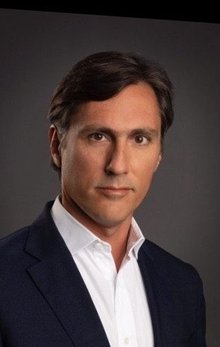
Giulio Rindi, Chief Financial Officer, Commercial & New Payment Flows at Mastercard, has witnessed this transformation first hand at one of the world's leading financial services companies.
"Automation has elevated the role of procurement professionals at Mastercard by freeing up time for more strategic work," he explains.
"While payment execution is now seamless and system-driven, our teams continue to play a vital role in supplier engagement, risk management and driving innovation."

This shift represents more than just a change in daily activities – it's a complete redefinition of procurement's value proposition.
At Mastercard, Giulio notes that "automation is shifting procurement from transactional execution to strategic enablement. This evolution allows our teams to focus more on vendor strategy, performance, resilience as well as commercial innovation–such as expanding virtual card adoption and driving sustainability initiatives."
Traditional tasks like payment processing and supplier reconciliation, which once ate away at significant resources, are now handled through automated systems.
By embedding virtual card capabilities into their systems, Mastercard has reduced manual intervention, accelerated settlement timelines and unlocked issuer rebates that are not available through traditional methods like ACH or wire.
The technology foundation
Tricia Miller, SVP Product Marketing and Chief Evangelist at Coupa, identifies the areas where automation delivers immediate impact: "The most immediate efficiency gains come from automating the traditional backbone of procurement which includes purchasing, payables, sourcing and contracting.
“Mature technology now makes it possible to manage these processes through intelligent intake and orchestration."
Tricia's perspective reflects a broader industry consensus that certain procurement functions are particularly well-suited to automation. These foundational processes, once digitised and standardised, create the data infrastructure necessary for more sophisticated applications of artificial intelligence and machine learning.
The role of AI in procurement has moved beyond theoretical applications to deliver tangible results.
"AI and generative AI are already reshaping procurement by simplifying processes and unlocking new sources of value," Tricia explains.
At Coupa, this is evident in solutions like SpendGuard, which "quickly detects potential fraud by identifying duplicate or suspicious invoices and patterns of unusual buying behaviour".
Tricia adds: "Coupa's AI scans millions of transactions and supplier profiles to uncover opportunities to renegotiate contracts or consolidate suppliers."
This capability exemplifies how automation enables procurement teams to focus on higher-value activities that directly impact the bottom line.

Human element remains central
Despite the increasing sophistication of automated systems, the human element in procurement remains irreplaceable, though it is evolving rapidly.
Jessica Harris, Vice President, Procurement & Supplier Management at RGP, emphasises that successful automation implementation requires careful attention to the user experience, adding: "This is particularly in indirect spend, where you will have a massive number of people who will engage with the procurement process and they don't do this as part of their job."
Jessica's insight highlights a vital aspect of procurement automation: the technology must serve people, not the other way around.
She advocates for creating procurement experiences that mirror consumer expectations: "Everybody now has their own buying experiences through Amazon and the like; they know what e-procurement feels like in their own personal worlds. The goal is to make your procurement experience in the business world to be just as intuitive."
This user-centric approach extends beyond internal stakeholders to suppliers as well.
"That user experience view should extend beyond the internal users to include the supplier experience," Jessica adds.
"I have seen too many organisations build supplier portals and network enabled invoicing that just don't get used, because it is so painful on the supplier side."
New roles and responsibilities
As automation handles routine tasks, new roles are emerging within procurement organisations.
Jessica identifies several key areas where human expertise remains essential: "Technology will require some new roles and activities and eliminate others. Beyond just having a sys admin, supplier enablement doesn't just happen; it requires someone to own driving supplier enablement, maintaining supplier catalogues, alignment of guided buying workflow to preferred/approved providers."
Giulio has seen procurement professionals increasingly positioned as cross-functional leaders.
"Our sourcing function is uniquely broad, with a mandate that spans financial performance, environmental impact and risk mitigation," he continues. "As automation handles routine tasks, our teams are increasingly positioned to lead cross-functional efforts that protect the business and advance corporate goals."
The evolution extends to how procurement teams engage with suppliers and manage risk. Rather than diminishing the importance of relationships, automation enhances procurement's ability to build stronger partnerships.
Giulio adds: "Supplier relationships remain central to our strategy and automation helps us manage risk more effectively by improving visibility, consistency and responsiveness across our operations."

Skills for the future
The changing nature of procurement roles necessitates new approaches to skills development.
Jessica advocates for "upskilling" as the primary strategy: "While some new roles may be focused on the technology itself, with fine-tuning and maintaining automated workflow, the bigger opportunity for value capture is by enabling your procurement teams to focus on higher-value activities like analysing category spend and executing strategic sourcing initiatives."
This shift requires procurement professionals to develop analytical capabilities that were previously less critical to their roles. The ability to interpret data, identify trends and translate insights into actionable strategies becomes paramount.
"Sometimes we're upskilling teams that they may have the capability, but it's a muscle that they haven't flexed because they've really been focused on pushing paper," Jessica adds.
Tricia reinforces this perspective, noting that, once basic procurement processes are automated, "the data they generate empowers procurement to operate as a true business and supplier partner, driving measurable value for organisations, from supplier collaboration to risk management and sustainability."
"AI is not theoretical. Its tangible value being delivered now."
Implementation realities
Successfully implementing procurement automation requires more than just technology deployment.
Jessica identifies several common challenges that organisations face: "Our clients put too much faith in their system integrators. The SI is focused on configuring the system as designed, hooking it up and turning it on. They are not incentivised by adoption rates or post-implementation performance KPIs."
The most critical gaps, according to Jessica, include "data cleansing, strategic sourcing to enable guided buying, supplier enablement, change management and training." These areas require dedicated internal resources and cannot be effectively outsourced to system integrators.
Measuring success in procurement automation requires a phased approach to key performance indicators. Jessica recommends focusing initially on adoption metrics: "I suggest in the first three to six months to focus on adoption metrics. We'll ask, 'how many transactions are happening in the system versus outside of the system? How many suppliers are enabled that are using the system and following the workflow as it should be?'"
Only after establishing strong adoption patterns should organisations shift focus to operational performance indicators such as cycle time, cost per purchase order, cost per invoice and the number of no-touch transactions.
The procurement professional of tomorrow
The future of procurement technology lies not in choosing between custom and off-the-shelf solutions, but in finding the right balance. Tricia says: "A good mix is around 80% off-the-shelf and around 20% custom. This balance ensures companies can scale value quickly while keeping technology costs and maintenance manageable in the long run."
This pragmatic approach recognises that while standardised automation delivers proven efficiencies, custom solutions may be necessary to address unique industry requirements or organisational processes.
The transformation of procurement roles through automation represents more than technological change: it signifies a fundamental evolution in how organisations view and utilise their procurement capabilities.
As Giulio concludes, this evolution positions procurement teams to "focus on value creation, cross-functional collaboration and broader business goals–without changing the core skill sets required to manage payments effectively."
The procurement professionals of tomorrow will be strategic advisors, relationship builders and data analysts rolled into one.
They will leverage automated systems to handle routine transactions while focusing their human intelligence on complex negotiations, risk assessment and strategic supplier partnerships.
Company portals



Executives
Giulio Rindi
EVP CFO, Commercial & New Payment Flows
Jessica Harris
Vice President Supply Chain Solutions

Tricia Miller
SVP Product Marketing and Chief Evangelist