
How AI & Regional Supply Networks are Reshaping Global Trade
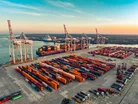
Global trade is experiencing a transformation shaped by tariff fluctuations, the integration of AI and the ongoing evolution towards multipolar, regionalised supply networks.
According to Citi's latest Global Perspectives & Solutions (Citi GPS) report, titled Supply Chain Financing – Durable Global Trade in the Age of AI, businesses have shown notable resilience despite considerable challenges.
They appear to be adjusting swiftly to policy changes while maintaining strategic priorities around diversification and working capital optimisation.
The report draws on insights from Citi's proprietary Global Supply Chain Pressure Index, payment flow data from the more than US$5tn its Services business processes daily and survey responses from multinational corporations alongside small- and medium-sized enterprises (SMEs).
Despite US tariffs climbing to approximately 16.8% from 2.4% before the change in US administration, the Index indicates that supply chain pressures have remained subdued and close to pre-pandemic levels.
Organisations successfully navigated initial tariff disruptions through strategic inventory management, supplier diversification and accelerated nearshoring initiatives.

Shifting global trade patterns
Analysis of goods movement reveals a complex reorganisation of global trade patterns. South Asia and the Association of Southeast Asian Nations (ASEAN) have emerged as major beneficiaries, with a 44% increase in shipments from North and East Asia.
Furthermore, Latin America has become deeply integrated into both Asia- and North America-linked supply chains. Exports to South Asia and ASEAN have surged 82%, representing the single largest increase globally.
The US has diversified its import base, with shipments from South Asia and ASEAN rising 50% and from Latin America up 43%, both exceeding the 32% growth from North and East Asia.
Shahmir Khaliq, Head of Services at Citi, explains the broader context: "Global trade and geopolitics are closely intertwined, with export growth from North and East Asia shifting towards more emerging economies in efforts to diversify customers."
All sustainability, net zero and sustainable procurement leaders should attend:
- Procurement & Supply Chain LIVE: The Net Zero Summit - QEII Centre, London, March 4-5
- Procurement & Supply Chain LIVE: The US Summit - Navy Pier, Chicago, April 21-22
Co-located with Sustainability LIVE, these events brings together CPOs, CSCO, CSOs, ESG leaders and senior decision-makers at a moment when sustainability, supply chains and commercial performance are increasingly interconnected.
Tickets can be booked online today for The Net Zero Summit and The US Summit. Group discounts available.
Technology transforming trade finance
The report examines how AI is creating what could be a once-in-a-generation capital expenditure supercycle in data centres, with Citi Research estimating US$7.75tn in global AI-related capex by 2030.
Trade finance is playing an increasingly critical role in this ecosystem, with solutions ranging from supply chain finance to structured receivables programmes supporting the complex, capital-intensive nature of AI data centre development.
Adoniro Cestari, Global Head of Trade and Working Capital at Citi, says: "Technology is fundamentally reengineering how trade finance operates.
"AI-powered intelligent document processing enables exceptionally high accuracy rates and reducing processing to just minutes.
"Through a pilot of blockchain-based conditional trade payments, we have seen the potential for an evolution from standard paper-based guarantees to near 24/7 digital execution and automated settlement."
AI adoption in trade finance has accelerated dramatically, with 36% of large corporates now using AI tools, representing an 18% increase from 2025.
"These types of innovations, combined with structuring expertise, helps companies unlock trapped liquidity and optimise working capital while supporting more efficient supply chains and the massive AI infrastructure buildout underway globally," Adoniro adds.
Optimising working capital liquidity
Working capital management has become a C-suite imperative, with 64% of companies citing increasing input costs as their primary concern.
On average, 6.3% of working capital is now tied up in funding tariff costs. In response, companies are deploying inventory finance, structured receivables programmes and dynamic discounting to release trapped liquidity.
Citi's survey of 710 large corporations revealed that 65% are actively diversifying supply chains away from one or more countries, with Vietnam, Thailand, India and Mexico emerging as preferred destinations.
Notably, 46% of survey respondents are planning to rationalise inventory holdings to release liquidity, up from 16% in 2023. Meanwhile, China's share of US imports fell to 8% by late 2025, down from a peak of more than 20% in 2018.
"Disruption is no longer a bug in global trade – it's a feature," says Adoniro. "Having absorbed a pandemic, conflicts and now a highly fragmented policy environment, global trade is not in retreat – it is evolving, supported by innovation, investment and operational agility."
Company portals

Executives

Adoniro Cestari
Global Head of Trade and Working Capital

Shahmir Khaliq
Head of Services