Aggreko on Procurement's Role in Securing Energy Supply
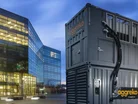
The burgeoning demand for artificial intelligence (AI) is not just reshaping the technological landscape but also creating critical power requirements for data centres.
As AI continues to transform enterprise technology, the procurement strategies behind the power infrastructure supporting these innovations are more crucial than ever.
Data centres form the backbone of the digital economy and their ability to accommodate AI workloads hinges not only on computational prowess but also on their energy strategy.
Each AI advancement heightens the pressure on these centres to upscale their power needs efficiently and resiliently.

Power as a procurement challenge
Unlike conventional IT workloads, AI applications – particularly in training and inference – consume massive amounts of electricity.
This demand drastically exceeds that of traditional data operations. As a result, AI-centric data centres require considerably more power, posing significant challenges, especially in regions like the UK and Europe.
Grid connection delays in these areas create an urgent need to reassess procurement strategies for energy supply.
The potential loss of billions in AI-related investments emphasises the necessity for innovative power solutions. Major industry players, such as Digital Realty, advocate for comprehensive reforms in the UK's energy grid protocols.
Adding weight to these concerns, Aggreko, a leader in decentralised power solutions, stresses the importance of bridging power in its whitepaper, Bridging the Energy Gap for European Data Centres.
Billy Durie, Global Sector Head for Data Centres at Aggreko, says: “Our conversations with data centre owners and operators show Digital Realty’s concerns are echoed throughout the sector.”

Evaluating decentralised energy systems
Aggreko proposes decentralised energy systems as a critical strategy for alleviating current power supply issues.
By deploying these solutions, operators can reduce their dependency on the national grid and enhance resilience and flexibility at the site level.
Among the technologies being integrated are:
- Stage V HVO-fuelled generators: These generators offer a reliable and cleaner energy alternative, reducing emissions without sacrificing performance.
- SCADA-based monitoring and controls: These systems provide real-time oversight and can integrate seamlessly with existing infrastructure, promoting efficient energy management.
- Temporary bridging power systems: These are vital during the commissioning and construction phases to avoid project delays due to energy supply issues.
Decentralised energy solutions not only act as interim measures but also redefine energy as a strategic asset for digital infrastructure – similar to how hybrid cloud solutions balance operational needs.
AI's role in energy procurement
The rapid expansion of AI intensifies the need for immediate and adaptable energy solutions. The increasing queues for grid connections indicate a gap between demand and the grid's capacity, as highlighted by Aggreko.
The company’s whitepaper reveals that long-term planning reforms will improve infrastructure, yet the present requires immediate solutions to support AI-centric operations.
Billy adds: “While in the long run planning reforms will make it easier to deliver the necessary infrastructure needed to power facilities handling AI-heavy workloads, bridging power is required in the short- to medium-term.”
Strategic procurement: Navigating challenges
A critical recommendation from Aggreko concerns procurement practices. The scarcity of permanent decentralised energy equipment exacerbates potential supply chain disruptions, urging operators to consider temporary hiring strategies as a viable interim option.
Billy adds: “Data centre construction and commissioning must continue as unhindered as possible if facilities are to be brought online within strict project timescales.”
However, with delays in grid connectivity and limited purchasable decentralised options, flexibility becomes imperative.
The absence of a single-source solution necessitates a dynamic approach to energy procurement – one that leverages available resources like hired generators to maintain timelines and manage energy needs efficiently.
Engaging with third-party experts within supply chains can further facilitate the deployment of scalable energy technologies, ensuring that these facilities remain at the forefront of AI innovation and capability.