How Schneider Electric is Reimagining Contract Renewals

In a time of unprecedented supply chain volatility and rapid technological acceleration, the role of the Chief Procurement Officer has fundamentally changed.
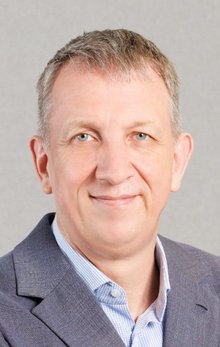
Leading this evolution at Schneider Electric is Ard Verboon, a seasoned executive with three decades of experience across the high-tech electronics industry.
With a foundational background in engineering, Ard’s career spans strategic sourcing, supply chain management, product management and general management.
Known for building high-performing teams and driving bold, disciplined transformations, Ard focuses on turning the supply base into a core competitive advantage for Schneider Electric.
Under his leadership, procurement at the company is shifting from a reactive, administrative function to a proactive driver of resilience and value. Central to this vision is the integration of AI and predictive analytics, moving teams away from spreadsheets and late-stage escalations toward real-time, actionable intelligence.
Crucially, this modernised approach extends to sustainability. At Schneider Electric, ESG compliance is no longer an afterthought at contract renewal; it is a non-negotiable.
Procurement Magazine spoke with Ard, where he explored his views on building a self-healing supply chain, navigating the shift from administration to strategic partnership and balancing cost competitiveness with the uncompromising demand for sustainable, resilient operations.

“Instead of starting a negotiation with spreadsheets and assumptions, teams can now walk in with a fact base ”
Moving beyond traditional negotiations with AI
When it comes to the implementation of AI in contract renewal, Ard explains that it does two things really well – creating clarity in complex data and automating the repeatable parts of the process.
“It connects the dots across spend, supplier performance, risk signals and contracts (which are often spread across multiple systems) and turns that into actionable intelligence,” says Ard.
“Instead of starting a negotiation with spreadsheets and assumptions, teams can now walk in with a fact base. They know what’s changing in demand, where pricing is drifting, which sites are exposed and what alternatives are viable.”
AI can also take the heavy admin out of negotiations, speed up tasks like drafting RFx documents and summarising proposals.
“We have tested autonomous negotiation bots for repetitive, transactional and commoditised spend and are using GenAI to speed up tasks,” says Ard. “This frees our people to focus on the work that really creates value. This includes building supplier partnerships, managing risk, driving innovation and improving total cost.”
However, Ard warns that it’s important to remember that AI only delivers at scale when it sits on solid data foundations and clear governance.
“When it’s used well, it doesn’t replace human judgment. Instead, it raises the quality and speed of decision-making,” says Ard.
“It also becomes far less labour-intensive and far more targeted. For straightforward categories, a lot of the old document bureaucracy can be automated.
What replaces the heavy, one-size-fits-all is a more dynamic approach, with clearer specifications up front, more continuous engagement with the market and faster cycles where AI helps you screen options and model trade-offs. Humans focus on the parts that truly need judgment.
“When it's used well, it doesn't replace human judgment. Instead, it raises the quality and speed of decision-making ”
“That’s consistent with how we think about using AI across procurement. Not hype, but practical productivity and faster, better decisions. We call that ‘AI at scale’.”
Combined with predictive analytics, Ard explains that this duo takes operations from reacting late to acting early, with a much clearer view of the trade-offs.
“Instead of waiting for a contract renewal to become a last-minute escalation, we can spot patterns in performance, demand shifts, risk signals and market movement sooner and run scenarios on what happens if we renegotiate versus if we transition,” says Ard.
“In practical terms, it helps us separate a supplier relationship that’s worth fixing from one that’s becoming a structural risk. If the data shows the supplier can recover and the issue is temporary, renegotiation is about improving outcomes.
“If the indicators show repeated instability or a growing risk to continuity, we can plan an orderly exit and protect supply, rather than being forced into disruption mode.”
“It's what it takes to do business with Schneider Electric. ”
Re-skilling for higher value
The value procurement brings has changed; administrative work will always matter, but Ard explains that ‘it shouldn’t be where talented people spend most of their time. Especially in a world where supply markets are more volatile and competitive, with sustainability expectations rising.”
Having AI and automation take over these repetitive tasks creates a greater opportunity to redeploy capacity to work that only humans can do well.
“That means collaborating with suppliers on innovation and resilience, understanding true cost drivers, managing risk before it becomes disruption and shaping long-term commercial strategies that support growth,” says Ard.
"It’s also a mindset shift. Procurement is moving from being measured mainly on did we get the lowest price, to did we secure supply, protect performance and create competitive advantage over time?”
“Procurement is moving from being measured mainly on did we get the lowest price, to did we secure supply, protect performance and create competitive advantage over time? ”
To deliver on this, procurement teams need stronger commercial judgement, stakeholder influence and the ability to build relationships.
“Procurement these days needs to speak the language of R&D, of P&L, of quality, of resilience, of sustainability, as well as proving we spend the company’s money wisely and responsibly. Critically, this needs to be supported by good data and the right governance,” Ard explains.
Taking a closer look at sustainability, Ard states that ESG is not something that Schneider Electric adds on at renewal. “It’s what it takes to do business with Schneider Electric. And it’s not optional," he says.
“It’s firmly embedded and a measurable part of how we evaluate suppliers alongside cost, quality and delivery. We use a structured ESG assessment approach that recognises suppliers are at different maturity levels, from basic compliance through to more advanced sustainability practices.
“For areas where progress is possible, we take a more developmental pathway and work closely with suppliers to help them improve over time. We believe that’s how you work with strategic suppliers. Based on joint conviction, not forced to accept in a contract renewal.”
Company portals

Executives
Ard Verboon
Chief Procurement Officer