How Canada Plans to Utilise Stealth Fighter Jet Procurement
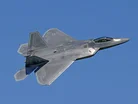
In an effort to improve its stealth fighter jet sourcing for defence capabilities, the Canadian government has now signed on to be an observer in the Global Combat Air Programme (GCAP).
While the initiative is led by the UK, Italy and Japan, Canada stands to gain from this procurement alliance as it seeks to potentially purchase fighter jets while minimising its dependence on US defense technology due to ongoing tariff constraints.
Canada’s defence objectives
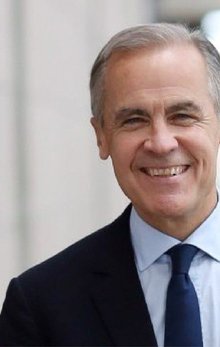
Under the direction of Prime Minister Mark Carney’s Defence Industrial Strategy, air defence procurement remains as a pivotal strategy in remaining ahead of any future threats that may arise.
“I think it is very feasible to imagine a world where Canada contributes and then ultimately would employ this aircraft in the future. ”

During a recent press conference in London, Ontario, Mr. Carney highlighted multiple prospective enhancements to the country's defence capabilities. These potential additions include ongoing negotiations for Saab's GlobalEye surveillance aircraft, the acquisition of the multi-aircraft P-8 Poseidon and the integration of an Arctic over-the-horizon radar system.
With Canada joining the Global Combat Air Programme as the first observer, it gives the country a competitive advantage in participation in classified discussions surrounding the potential opportunity to purchase the fighter jets in the future.
Lieutenant-General Jamie Speiser-Blanchet of the Canadian Armed Forces says: “I think it is very feasible to imagine a world where Canada contributes and then ultimately would employ this aircraft in the future.”
Furthermore, in a press release obtained by CBC, UK Defence Secretary Wes Streeting noted that while Canada does not have a “decision-making role,” it will enjoy “privileged access to the programme,” which “paves the way for discussions on Canada’s future participation and contribution".
Programme attributes
Established in 2022, the Global Combat Air Programme aims to introduce stealth fighter jets by 2025. The initiative builds upon military and industrial strategies to pioneer new advancements in air combat capability.
To rapidly advance technology development, the initiative is collaborating with high-tech SMEs, even those outside the traditional defence industry, enabling suppliers to innovate and bring forward specialised expertise.
Previous procurement agreements
In a separate procurement initiative, Canada selected the German defence firm ThyssenKrupp Marine Systems (TKMS) for an agreement to construct the nation's 12-vessel submarine fleet.
By replacing Canada’s current Victoria-class fleet, the new contract for a fresh fleet of TKMS submarines aims to modernise military procurement and expand defence investments. Concurrently, the government has increased defence expenditure to 2% of GDP, targeting a rise to 5% by 2035.
With only a fraction of the current vessels available for operations, growing concerns over the condition of Canada's existing submarine fleet prompted the agreement.
Mr. Carney emphasised that upholding national strategic preparedness is a paramount necessity for the country.
“In a more dangerous and divided world, Canada must be prepared to defend our interests, protect our citizens, build our economy and secure our future.
“To that end, we are making the largest defence procurement in our nation’s history with speed, ambition and discipline. Canada’s next submarine fleet will secure our coastlines and waters, and their construction will have enormous, lasting benefits for Canadian industries and workers.”
Company portals


Executives
Mark Carney
24th Prime Minister of Canada | 24e premier ministre du Canada