UK Energy Bill Sparks Criticism Over Forced Labour Clause
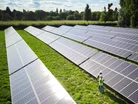
The Great British Energy Bill is stirring debate across procurement and supply chain circles, as a clause designed to prevent public funds being awarded to firms linked to forced labour may be dropped.
This clause, introduced to restrict companies associated with slave labour – especially in Chinese solar panel production – from receiving financial assistance via Great British Energy, is now under threat in Parliament.
Despite warnings over the use of forced Uyghur labour in China's Xinjiang region, Labour MPs are being pushed to remove this restriction from the bill. The Chinese government denies the allegations, but growing scrutiny of solar supply chains continues to raise questions for public procurement processes tied to the UK’s energy future.
Solar supply chains under scrutiny
At the heart of this controversy is the UK’s renewable energy procurement strategy.
Solar panels form a key component in clean energy infrastructure, but the Business and Trade Select Committee has warned that many solar components are sourced from Xinjiang – a region where, according to various investigations, forced labour is widespread through state-run transfer schemes: “It is well evidenced that the renewable sector is heavily dependent on companies sourcing from areas like Xinjiang in China and that forced labour is endemic in the region through involuntary labour transfer schemes.
“The Great British Energy Bill provides an ideal vehicle to ensure that the green transition is not built on the back of contemporary slaves.”
The clause in question aims to protect public sector funding from going to any firm where there is evidence of forced labour links.
As it stands, the bill would make these firms ineligible for support through the government's planned clean energy firm, Great British Energy. The clause was introduced with the intention of aligning clean energy procurement with modern slavery laws and ethical sourcing standards.

Labour MP, Alex Sobel, is proposing an amendment that would appoint the UK's independent anti-slavery commissioner, Eleanor Lyons, to assess whether there is “credible evidence” of forced labour. The amendment introduces a form of oversight that could trigger disqualification based on documented abuse within supply chains.
Alex Sobel says: “The UK has been crystal clear that the UK will not tolerate slave-made goods and appreciates more must be done to root them out. Great British Energy provides us with the opportunity to not only pursue our green transition but bolster our national security, but only if we are to reduce our dependence on China.”
“Ensuring our solar supply chains are free from slavery would also see the UK take a leading position on human rights, as a force for good.
“We have listened to the government arguments and tabled an amendment which would provide a practical solution to this issue, assuring we are aligned with actions in Europe and the US.”
Ethics vs economics in procurement
The Great British Energy Bill itself is a wide-ranging piece of legislation designed to enable the creation of two new state-backed energy firms – Great British Energy and Great British Nuclear. These institutions will be tasked with helping the UK reach net zero, lower reliance on fossil fuels and increase energy security.
Key functions under the bill include improving energy efficiency, reducing greenhouse gas emissions and facilitating clean energy storage and supply.
The bill also allows the Secretary of State to grant financial support to Great British Energy, meaning procurement rules tied to this funding are critical.
However, the prospect of barring firms over labour abuses has triggered concern among some MPs and government departments. Opponents of the amendment warn it could harm access to affordable Chinese solar panels, which play a major role in the UK's clean energy plans.
The Chinese supply chain dominates global solar manufacturing and stricter rules could lead to procurement delays or higher costs.
Supporters argue that procurement based on ethical principles should not be compromised.
The amendment is backed by Labour peer and barrister Helena Kennedy and has gained cross-party support, including from Conservative members. They view the clause as a mechanism to ensure public funds are not complicit in human rights violations.
Former Conservative Exports Minister, Lord Offord, says: “The UK’s Modern Slavery Act 2015 requires companies to take responsibility for their supply chains, yet we know that modern slavery remains a serious issue in the global energy sector, particularly in the sourcing of solar panels, batteries and raw materials such as lithium and cobalt.”
Procurement challenges and future strategy
The UK now faces the challenge of reconciling ethical sourcing policies with the need to secure energy independence and maintain competitive procurement processes.
If the clause is removed, the UK risks accusations of prioritising trade convenience over labour rights. If it stays, there is concern that energy projects could slow due to supply limitations or rising costs.
A compromise solution may involve Sobel’s proposed threshold test for credible evidence and a defined transition period. This would allow suppliers time to demonstrate compliance without causing immediate disruption.
Procurement teams working with public energy contracts could benefit from clear guidance and lead times to adjust supplier relationships.
This transition period would also support diversification. UK-based suppliers and firms in low-risk regions could play a larger role in the future energy supply chain, reducing dependence on areas with poor labour records. In turn, this could strengthen long-term supply chain resilience and ensure ethical standards remain central to government procurement.
Ultimately, the clause debate highlights the broader challenge for procurement leaders balancing commercial viability, supply risk and human rights. Public money funding clean energy must reflect not only environmental ambition but social responsibility.
Explore the latest edition of Procurement Magazine and be part of the conversation at our global conference series, Procurement & Supply Chain LIVE.
Discover all our upcoming events and secure your tickets today.
Procurement Magazine is a BizClik brand.