BNP Paribas: Embracing Circular Economy Principles
The market for sustainable investment is growing robustly, projected to reach trillions, as indicated by the Organisation for Economic Co-operation and Development.
The focus on sustainability and circularity is crucial for procurement leaders striving to reduce environmental impact while optimising resources.
BNP Paribas, a European bank with substantial global influence, exemplifies commitment to these principles by reducing emissions and promoting a circular economy.
This commitment involves phasing out financing for the thermal coal sector by 2030 in the EU and OECD, extending to 2040 globally, impacting procurement strategies extensively.

Circularity through IT-as-a-service
BNP Paribas 3 Step IT employs an IT-as-a-service (ITaaS) model, embedding circular economy principles into the IT procurement process.
The model encourages efficient use, repair, refurbishment and recycling, impacting procurement decisions significantly.
Businesses can obtain IT equipment through leasing, eliminating upfront costs, which aligns with strategic procurement objectives of cost savings and asset management.
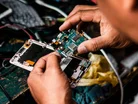
Laptops, desktops and mobiles are refurbished at centres such as the Buchelay facility in France, highlighting a sustainable procurement cycle with reduced e-waste and conservation of resources.
This aligns with ESG goals and compliance, incorporating secure data management and responsible end-of-life handling, supporting procurement policies focused on sustainability and regulatory adherence.
Carmen Ene, CEO of BNP Paribas 3 Step IT, says: “For European businesses, the horizon for growth and resilience is undeniably centred around circularity.”
This encapsulates a strategic imperative for procurement teams navigating evolving legislative frameworks and sustainability initiatives.
Business through product-as-a-service
The product-as-a-service (PaaS) model introduces a transformative approach to procurement by replacing ownership with accessibility.
It enhances procurement flexibility and resource efficiency, aligning with ESG pursuits. Companies pay for product outcomes, shifting lifecycle management responsibilities to manufacturers.
This impacts procurement by necessitating lifecycle-aware contracts that improve utilisation and ensure sustainable end-of-life practices.
The rising concern of e-waste, recorded at 62 million tonnes in 2022 with a substantial financial loss, underscores the economic and environmental benefits for procurement departments considering circular economy practices.
Emmanuelle Bru of BNP Paribas, adds: “The circular economy is key to achieve a carbon-neutral economy by 2050,” reinforcing procurement’s role in facilitating a sustainable, cost-effective model.
Collaboration for circularity
Legislation from governments and financial backing from institutions like BNP Paribas foster an environment where procurement plays a pivotal role in circularity adoption.
The push for innovation in diverse sectors can lead to enhanced procurement strategies that align financial performance with sustainability goals, giving businesses a competitive edge.
With IT spending expected to reach US$5tn in 2024 and increasing ESG obligations, procurement leaders embracing circular models can secure both operational and environmental advantages, posing as a catalyst for sustainable procurement practices that harmonise business success with ecological responsibility.
BNP Paribas also champions biodiversity through initiatives like "Nature Tech," integrating technology to manage ecosystems, further influencing procurement policies and investment strategies.
The focus on sustainable finance initiatives aligns with broader procurement objectives of reducing climate-related and biodiversity risks.