Top 10: BPO Providers in Procurement

Business process outsourcing (BPO) is the use of third-party providers to support companies with operational transformation. In procurement, BPO partners help streamline processes across the business, improving efficiency and reducing costs.
By working with a BPO provider, procurement teams can enhance sourcing, reduce risk and gain data-driven insight into supplier performance.
The BPO market has evolved in recent years, adapting to changing business demands and advancing alongside new technology.
Here, Procurement Magazine highlights the leading BPO providers.
10. Genpact
Employees: ~140,000
CEO: Balkrishan "BK" Kalra
Founded: 1997
Genpact offers procurement BPO through its Cora AI platform. It has experience assisting in BPO for Fortune 500 firms, with scalable services across the entire source-to-pay process. It uses cutting-edge technology, extensive subject knowledge and key alliances to provide end-to-end solutions.
Genpact’s main focuses include supplier risk management, optimising indirect procurement and processing automation across global supply chains. Genpact helps integrate new software into existing operations, building off the clients’ pre-existing foundations.
9. HCLTech
Employees: ~226,600
CEO: C Vijayakumar
Founded: 1991
HCLTech has experience in helping companies reduce costs by up to 50%, through its sourcing and procurement solutions. It provides an ‘Advisory & Execution’ methodology for supply chain transformation, making it particularly useful in transforming business processes and company spending.
HCLTech has expertise in helping IT firms and manufacturing companies, helping provide significant cost reductions across warehousing. Its procurement operations outsourcing uses ERP integration, approaching procurement transformation with a technology-first approach.
8. Infosys
Employees: ~317,000
CEO: Salil Parekh
Founded: 1981
Through Infosys, clients can reduce third-party spending and improve procurement processes, using its BPM sourcing and outsourcing solutions. It offers end-to-end procurement outsourcing services across a range of industries, providing support with sourcing and vendor management, as well as compliance and logistics.
Infosys helps businesses through digitalisation journeys and optimising spend categories through its expertise in AI and data intelligence. It is particularly helpful to global IT clients, with its specialty in IT integration.
7. Fullstep
Employees: ~140
CEO: Rosario Piazza
Founded: 2000
With Fullstep, clients can maintain control and reduce risks within their supplier portfolio, with little to no manual effort. Its supplier qualification services help clients ensure regulatory compliance within its supplier base, reducing time and low-value administrative tasks. This significantly increases business efficiency, risk control and reduced transaction costs.
Fullstep designs process management solutions tailored to the strategic requirements of each client. It provides its clients with total visibility of its own activity, building a trustworthy relationship.
6. Capgemini
Employees: ~349,000
CEO: Aiman Ezzat
Founded: 1967
Capgemini uses its Global Enterprise Model (GEM) to provide help for the whole source-to-pay cycle. Each branch of the solution aims to achieve a goal, offering a range of strategies in one process. As a result, it creates a thorough procurement solution to its clients, with particular focuses on strategic sourcing, category management and procurement operations.
The company offers cognitive procurement services to mitigate risks across operations and ESG positioning to ensure client compliance and sustainability.
5. Efficio
Employees: ~1,300
CEO: Jens Pedersen and Melaye Ras-Work
Founded: 2000

Efficio takes a 360-degree view of a client’s procurement function, end-to-end cost portfolio and supplier base in order to find the best solution. It works in partnership with clients to deliver procurement transformation, helping its clients build supply chain resilience.
Efficio offers a flexible model to apply to its clients, whether to scale up or fill gaps in its procurement operations. Through its BPO services, it helps businesses upskill their teams, reduce costs and improve internal processes.
4. The Hackett Group
Employees: ~1,900
CEO: Ted Fernandez
Founded: 1997
The Hackett Group uses its Best Practices Intelligence Centre – a cache of metrics, data and practices using the data from more than 13,000 projects – to help clients avoid procurement pitfalls. The Hackett Group develops a realistic time frame for business transition to outsourced services. Through this, it can also estimate transition costs accurately, helping clients budget and understand cost savings.
The Hackett Group supports internal customers by involving them in solution building and maintaining communication, allowing for high levels of transparency.
3. IBM
Employees: ~270,000
CEO: Arvind Krishna
Founded: 1911
IBM reimagines operational workflows by driving performance and resilience with the help of agentic AI and process automation. Using pre-built AI assets and agents on a global AI delivery platform, IBM is able to unlock client value at speed.
For global enterprises, IBM has a specific emphasis on compliance and risk management, using data analytics to improve visibility. Alongside that, it encourages the use of supplier collaboration, with its personalised approach to redesigning processes.
2. GEP
Employees: ~6,000
CEO: Subhash Makhija
Founded: 1999
Through GEP SMART, the company provides a unified end-to-end procurement solution, automating the sourcing process and giving global procurement teams access to the best sourcing tools. It uses customised solutions to fit the needs of various client goals and can be scaled to multi-year projects or used for smaller, category-specific needs.
GEP has a strong presence across global markets, meaning it has a thorough understanding of regional regulations, local languages and ground-level resources. As a result, it can help guide clients to low-cost country sourcing opportunities.
As a BPO provider, GEP combines cloud technology, consulting and managed services to aid in large-scale transformation. It has been used across consumer goods teams, manufacturing and pharmaceuticals, with specialities in supply chain-heavy industries.
1. Accenture
Employees: ~779,000
CEO: Julie Sweet
Founded: 1989
Accenture is committed to creating positive change around the world, creating responsible solutions for businesses. It delivers 360-degree value as the heart of its business. It is recognised for its ability to integrate end-to-end procurement strategy with advanced technology. Its Procurement-as-a-Service model outsources procurement operations to Accenture, which then provides flexible, cloud-based services that can be tailored to suit the client’s needs.
With Accenture, clients can optimise supplier spend, ensure compliance with global regulations and make informed decisions through the platform’s data-driven insights.
Relying on a combination of human talent and technology, such as AI, analytics and human-machine augmentation, Accenture has helped transform the operational efficiency and the procurement strategy of more than 400 clients.







Executives
Aiman Ezzat
CEO, Capgemini Group
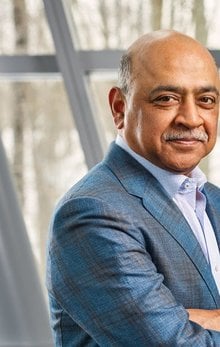
Arvind Krishna
CEO
Balkrishan "BK" Kalra
CEO
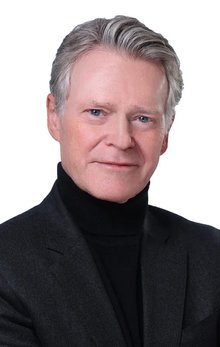
Jens Pedersen
CEO
Julie Sweet
Chair
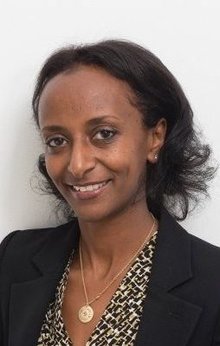
Melaye Ras-Work
Founder & Co-CEO

Rosario Piazza
CEO
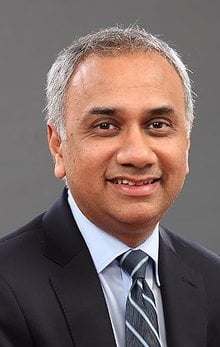
Salil Parekh
Chief Executive Officer and Managing Director
Subhash Makhija
CEO and Co-Founder

Ted A Fernandez
CEO
Vijayakumar C
Chief Executive Officer