How Sainsbury's is Transforming Food Waste into Fuel
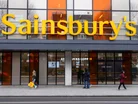
Supermarket giants Sainsbury's have announced plans to revolutionise its logistics by transforming food waste into fuel for a number of its HGV trucks.
From March 2025, this leading initiative will see biofuel created directly from Sainsbury's food waste power 30 trucks from its Emerald Park distribution centre in Bristol, England – which amounts to half of the site's fleet.
Leading to a saving of more than 3,000 tonnes of carbon dioxide annually, which is equivalent to the yearly electricity consumption of 1,950 households (one tonne of CO2 is equivalent to the electricity consumption of 0.65 average households for a year.)
Building on existing efforts

Efforts are already being made to make use of food waste, as waste processor RenECO currently works with Sainsbury's to turn food waste that can't be donated or used for animal feed into biogas through anaerobic digestion.
With this circular system, it will use the output of this anaerobic digestion, the biogas, to create a liquid biofuel suitable for HGVs.
This is different from traditional methods, which mix certified biomethane with non-renewable gases, this system ensures all fuel comes directly from Sainsbury's waste. By working together, the retailer and supplier have shown how collaboration is key to unlocking new ways of reducing environmental impact.
The circular system also allows for precise tracking of carbon emission reductions, contributing to Sainsbury's Scope 1 and 2 emission reduction target.
Commitment to sustainability
Patrick Dunne, Sainsbury's Chief Property and Procurement Officer, says: "Today's announcement underscores the power that collaboration has in driving impactful change across business.
"We are proud to have worked closely with our supplier RenECO to deliver a pioneering move that supports our commitment to circularity and helps us to take a further step towards becoming net zero across our operations by 2035."
This works as part of Sainsbury's Plan for Better which is at the heart of its sustainability efforts across the entire business. It has outlined priority areas of focus, key commitments and progress.
Sainsbury's have identified areas which matter most to its stakeholders and are aligned to the UN Sustainable Development Goals, so that it can make the biggest difference and play a leading role in building a more sustainable food system.
Ambitious emission reduction targets
Last April, Sainsbury's revealed its new goals for decreasing its greenhouse gas (GHG) emissions, which have been verified by the Science Based Targets initiative (SBTi), the global body that sets requirements for and approves emission reduction targets.
The business had pledged to cut both its Scope 1 (direct emissions from a company's vehicles and refrigeration) and Scope 2 (emissions that occur elsewhere to generate the electricity or heat consumed by the company) emissions by 50% by 2030. Sainsbury's has now upped that pledge to a 68% reduction within the same time frame.
Sainsbury's has enhanced its environmental commitments by increasing its operational scope three reduction target to 50.4%. The retailer has implemented several initiatives to reduce greenhouse gas emissions across its value chain:
- Introducing a new Taste the Difference Aberdeen Angus beef range with a 25% lower carbon footprint
- Launching Smart Charge, an EV charging business that will install more than 750 charging bays across 100+ locations by the end of 2024
- Requiring suppliers to disclose emissions data and reduction plans through sustainability platforms to identify decarbonisation opportunities in the supply chain
Explore the latest edition of Procurement Magazine and be part of the conversation at our global conference series, Procurement & Supply Chain LIVE.
Discover all our upcoming events and secure your tickets today.
Procurement Magazine is a BizClik brand