PSC LIVE: Sustainability Q&A – Kimberly-Clark's James Hallam
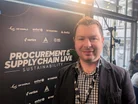
Speaking from the QEII Centre during Procurement & Supply Chain: Sustainability the premier two-day event focused on sustainable supply chain practices, James Hallam, Climate Programme Leader for Logistics at Kimberly-Clark, shared his insight on how the company was piloting a scheme looking at the electrification of a HGV at day one’s closing keynote.
The Procurement & Supply Chain: Sustainability conference has drawn industry professionals from leading global companies, all seeking to develop robust Scope 3 emission strategies and forge meaningful connections with sustainability pioneers.
James sat down with Procurement Magazine to discuss how Kimberly-Clark was implementing sustainable efforts within its procurement and supply chain operations
Could you tell us a bit about yourself and your career in the procurement and supply chain space?
My name's James Hallam. I've worked at Kimberly-Clark for 18 years. I started off as a trained mechanical engineer, so I’ve worked in many different functions, engineering, marketing, portfolio management and I found my way into sustainability about four or five years ago and just found a real love for it.
Most recently I've been working in the supply chain’s sustainability function, looking at developing a sustainable logistics strategy for Kimberly-Clark.

Your keynote has just closed out day one, can you give us a brief rundown of it?
Yeah, so it was about a pilot we set up to develop an electric truck on one of our routes in Europe and the presentation was about the journey we followed to get there, working together with our suppliers to develop something that was both environmentally and economically feasible.
It also highlights the results so far because it only started two weeks ago and what our plan is for the future.
How is Kimberly-Clark implementing sustainable efforts within its procurement and supply chain operations?
Kimberly-Clark has a 2030 sustainability goal backed by SBTI. So we've got a Scope 1 and 2 target reduction of 50% by 2030 and a Scope 3 reduction target of 20% all based off a 2015 baseline.
There's various different strategies we're following to get there and we have a glide path showing how we're going to get there. I think specifically due to Scope 3, the last report we did in 2023, we'd already made a reduction of 19.1%, so we're well along the path to achieving those goals.

Sustainability goals often clash with cost pressures, especially in procurement and supply chain – how can businesses strike the right balance?
I think with reference to what we did with this electric truck pilot, the first offer we got was almost twice as expensive as a diesel alternative.
We had to work collaboratively with the supplier to get the breakdown of what made it so expensive so we could work together with them to make adjustments to get something that was financially acceptable.
It was also to do with working with our operational teams to understand what was and what wasn't feasible in our operations to help make those changes.
What trends are you expecting to see within sustainable supply chain and procurement practises over the next couple of years?
I think the biggest trends are going to be in Europe, probably regulatory focused, whatever comes out of this omnibus and the changes that have just been announced I think will shape the environment over the next couple of years in Europe.
Explore the latest edition of Procurement Magazine and be part of the conversation at our global conference series, Procurement & Supply Chain LIVE.
Discover all our upcoming events and secure your tickets today.
Procurement Magazine is a BizClik brand