
North Sea Collision Disrupts Military Fuel Supply Chains
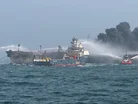
A tanker carrying jet fuel for the US military and a container ship transporting hazardous chemicals have collided in the North Sea, sparking fires and forcing evacuations.
The Stena Immaculate, loaded with 18,000 tonnes of aviation fuel, was struck while anchored, rupturing a cargo tank and spilling fuel into the sea.
The Solong, which was carrying toxic sodium cyanide and flammable alcohol, also suffered severe damage, raising environmental concerns.

The Stena Immaculate was operating under the US Navy’s Military Sealift Command, which manages fuel logistics for the American military. It was en route to the Defence Fuel Support Point Killingholme before continuing to the Mediterranean.
The highly flammable Jet A-1 fuel it carried made the vessel particularly vulnerable and the impact triggered explosions on board.
Tracking data suggests the Portuguese-flagged Solong collided with the stationary tanker. Emergency responders, including the UK Maritime and Coastguard Agency, launched a large-scale rescue effort involving helicopters, lifeboats and firefighting vessels.
Matthew Atkinson of HM Coastguard confirms: “Thirty-six crew members were taken safely to shore, one person was taken to hospital. One crew member of the Solong remains unaccounted for. After an extensive search for the missing crew member, sadly they have not been found and the search has ended.”
Military logistics at risk
The Stena Immaculate plays a key role in the US military's fuel logistics.
Since May 2023, it has been part of a 10-ship fleet representing the US and has been crewed by American citizens, ensuring a steady supply of fuel when needed.
The Defence Logistics Agency (DLA) Energy, which manages petroleum distribution for the US military, confirmed the vessel’s mission was to deliver fuel for military use.
This collision threatens potential disruptions to military supply chains, particularly at Killingholme, where the tanker was due to offload fuel.
The DLA states: “The Stena Immaculate was scheduled to resupply fuel to Defense Fuel Support Point Killingholme [on the nearby Humber estuary]. She was then scheduled to reload for delivery to other points in the Mediterranean. The Stena Immaculate… carried military-specification jet fuel and marine diesel.”
The tanker’s operator, Crowley, provides further details on the impact: “The Stena Immaculate sustained a ruptured cargo tank containing Jet A-1 fuel after it was struck by the container ship Solong and fuel was reportedly released.”
Meanwhile, Ernst Russ, the owner of the Solong, confirms that the vessel had “sustained significant damage”, with one crew member still missing.
Environmental concerns and supplier risk
The environmental impact of the collision is a major concern. The spilled aviation fuel and sodium cyanide could contaminate marine ecosystems, while the crash site’s proximity to Bempton Cliffs, home to England’s largest gannet colony, raises fears for wildlife.

The hazardous materials onboard the Solong also present supplier risk management challenges, as sodium cyanide is highly toxic and widely used in gold mining. Authorities are monitoring potential chemical contamination and reviewing safety protocols for transporting dangerous goods.
Overreliance on digital navigation
Beyond fuel supply and environmental concerns, the incident highlights risks in modern maritime navigation. Industry experts warn that crews increasingly depend on automated data systems, which may have contributed to the crash.
Steve Bomgardner, Vice President of Shipping & Offshore at Pole Star Global, explains: “Over the last decade, the shipping sector has become increasingly reliant upon data. From voyage planning, weather analysis and routing, to emissions reporting and advanced notice of arrivals, crews spend more time looking down at computer screens than up and outside the bridge.
"This technology reliance is of course great when it works; but if the data isn’t trustworthy, the vessel, its crew and profitability will be at risk.”
Steve also stresses that automatic identification system (AIS) tracking alone is insufficient: “AIS is too vulnerable to safeguard shipping. A single source of tracking data does not deliver the rigour required. What is needed is a robust solution that overlays multiple tracking data sources, including AIS and secure point-to-point satellite tracking systems.”
The UK Department for Transport has confirmed it is working with the coastguard to support the emergency response. With both vessels significantly damaged, concerns over sustainable procurement, environmental risks and supply chain disruptions are set to continue long after the flames have been extinguished.
Explore the latest edition of Procurement Magazine and be part of the conversation at our global conference series, Procurement & Supply Chain LIVE.
Discover all our upcoming events and secure your tickets today.
Procurement Magazine is a BizClik brand.