
Businesses Dealing with Escalating Supply Chain Disruptions
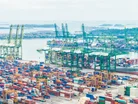
As supply chains across the world continue facing one of the most turbulent years ever, organisations across the globe are looking at ways to adapt in a time of geopolitical tensions, regulatory crackdowns and a rising demand from their customers for more ethical sourcing.
This is according to QIMA, a global leader in quality control and compliance solutions, the 2025 Sourcing Survey — which gathered insights from hundreds of brands, retailers, and manufacturers worldwide — reveals that supply chain disruptions are escalating across key industries.
Businesses navigate new trade barriers, stricter compliance mandates and sustainability pressures, while some industries are experiencing major sourcing and production shifts that could redefine global trade in the coming year.
Sebastien Breteau, CEO of QIMA, says: "In a world increasingly defined by distrust, businesses that thrive will be those that build and maintain trust within their supply chains. Trust is the new currency in a world hungry for reliability."
Trade shifts reshape global sourcing landscape
With three-quarters of businesses expecting supply chain disruptions to persist in 2025, companies are diversifying sourcing strategies to stay ahead. Two-thirds of global companies still plan to maintain or expand operations with Chinese suppliers, underscoring China's continued significance.
Meanwhile, one in two US businesses are shifting buying volumes closer to home through nearshoring strategies, with Mexico emerging as a top choice.
Regulatory blind spots create growing vulnerability
As ESG regulations face pushback, product safety laws tighten and forced labour policies evolve, businesses are struggling to keep up with shifting compliance requirements.
Yet, nearly 90% of companies still lack full visibility into their supply chains, making it even harder to adapt to these regulatory fluctuations.
The gap between compliance expectations and real-world implementation continues to widen, leaving many companies vulnerable to penalties, supply chain disruptions and reputational risks.
Sustainability future hangs in the balance

Once seen as a compliance necessity, sustainability is now facing growing uncertainty as ESG regulations are being challenged, delayed or scaled back in key markets like the US and Europe.
While some companies remain committed to sustainable sourcing, shifting regulatory priorities are creating inconsistencies and uncertainty in enforcement. The data reveals that businesses operating under ESG mandates are still twice as likely to prioritise sustainable suppliers, yet the broader industry is grappling with how to balance compliance, cost pressures and evolving regulations.
The technology implementation challenge
Technology-driven supply chains are proving more resilient, with companies leveraging AI-powered risk assessments, real-time tracking and predictive analytics to improve visibility, traceability and compliance.
However, wide-scale adoption remains slow, particularly in industries like toys, electrical and electronics, where supply chains remain among the most opaque.
While digitalisation offers a clear path to greater transparency, many businesses struggle to implement these tools effectively, leaving critical blind spots in their sourcing networks.
Explore the latest edition of Procurement Magazine and be part of the conversation at our global conference series, Procurement & Supply Chain LIVE.
Discover all our upcoming events and secure your tickets today.
Procurement Magazine is a BizClik brand