Could Climate Change be Putting Your Morning Coffee at Risk?
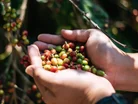
The global coffee market faces ongoing supply chain disruptions, with prices surging due to tight supplies, adverse weather and shifting production trends.
The World Bank’s latest Commodity Markets Outlook highlights an 18% increase in its beverage price index in December, mainly driven by sharp rises in coffee and cocoa prices.
While the index declined 6% in the third quarter of 2024, it remains 91% higher than a year ago. After a 58% increase in 2024, the index is expected to drop 9% in 2025 and a further 3% in 2026 as production stabilises.
Supply chain resilience key as coffee prices climb
Coffee producers and roasters are working to manage supply volatility as prices continue to climb.
Bob Fish, Co-Founder & CEO of BIGGBY COFFEE, remains confident in his company’s ability to weather market swings.
“BIGGBY COFFEE will be fine, we have understood that this moment was inevitable," Bob said on LinkedIn.
"Our model will not only survive but flourish. Hint, you have to deeply care about your supply chain and the people in it, from producer to end user. We will be 30 years [old] in March. Four coffee waves, the financial crisis of 08, COVID and multiple competitors. We always persevere.”
However, industry concerns persist as arabica coffee prices surged 13% in December, marking a year-over-year rise of over 60%, while robusta prices climbed 5%, more than doubling from the previous year.
Global coffee production for 2023-24 is estimated at 169.8 million bags, with a modest increase to 172.4 million bags in 2024-25.
Despite this, supply remains below 2020-21 levels. Market forecasts predict an 8% decline in arabica prices in 2025 before stabilising in 2026, while robusta is expected to drop 7% in 2026.
Coffee price volatility has prompted major brands to reassure stakeholders: “Our year-over-year coffee price impact was minimal,” Starbucks CFO Rachel Ruggeri told investors.
Brazil’s production struggles deepen supply chain risks
Brazil, which accounts for 38% of global coffee production, plays a crucial role in shaping supply and pricing trends.
According to Conab, Brazil’s national food supply agency, coffee production for 2025 is forecast at 51.8 million bags, a 4.4% drop from 2024 due to severe drought conditions and delayed rains.
Arabica production is expected to decline 12% to 34.7 million bags, following its natural biennial cycle, while robusta output is projected to rise 17% to 17.1 million bags due to improved weather conditions.
The country’s coffee supply has also been impacted by farmer behaviour. Many growers have slowed sales in anticipation of higher prices in the 2025-26 season after benefiting from rising prices in 2024.
Comexim, one of Brazil’s largest coffee exporters, forecasts 2025 production at 63.2 million bags, down 1.8% from 2024. Meanwhile, exports, which reached a record 47.5 million bags in 2024-25, are projected to fall to 44.9 million in 2025-26 due to lower production and reduced carryover stocks.
At the same time, speculation in coffee futures has driven additional volatility. ICE Futures US New York arabica contracts set record highs in early 2025, surpassing US$4 per pound for the first time, a 25% increase since January, building on a 70% rise in 2024.
Robusta futures in London also hit record highs before easing slightly and with limited supply relief expected in the short term, prices remain sensitive to external shocks.

Climate change continues to reshape coffee sourcing
Beyond immediate supply constraints, climate change poses a long-term risk to global coffee production.
Reports from the Intergovernmental Panel on Climate Change (IPCC) indicate that rising temperatures and unpredictable weather patterns will reduce yields and shrink coffee-suitable land by 2050.
A review of 148 studies on climate change’s impact on coffee-growing regions in Latin America, Africa and Asia highlights increasing threats to sustainability.
However, existing research lacks detailed modelling of how these risks interact with broader ecosystem services, underscoring the need for further study.
As climate-related challenges persist, industry experts warn that extreme market swings remain possible.
Bob points to historical precedents for significant price spikes. “Is it possible green coffee could go to US$10 a pound? Yes, it’s happened before. Frost ravaged coffee production in Brazil in 1977 and green coffee prices peaked at (an inflation-adjusted) US$10.67. So, yes, it is possible.”
With supply chain resilience under pressure and long-term climate risks mounting, the coffee industry faces a critical period of adaptation. Producers, exporters and roasters will need to invest in sustainable sourcing strategies while navigating ongoing market volatility.
Explore the latest edition of Procurement Magazine and be part of the conversation at our global conference series, Procurement & Supply Chain LIVE.
Discover all our upcoming events and secure your tickets today.
Procurement Magazine is a BizClik brand.