Why Cost Control is Procurement Leaders' Top Priority
In a volatile landscape, where procurement teams must go beyond just reducing costs to now maintaining and optimising current cost structures, controlling costs is top of the agenda for procurement leaders.
As part of a recent series examining the 2024 PwC Digital Procurement Survey, tech giant SAP has shifted its focus to cost control. According to the results, this was deemed the most critical priority by two-thirds (65%) of procurement executives.
Procurement teams are vital for this, managing external expenses and suppliers, with cost management top of the agenda. Traditionally, the procurement function is tasked with hitting annual cost savings targets, cascading these objectives down to category teams.

Navigating turbulent economic waters
Today's procurement landscape is, however, littered with challenges such as inflation, rising rates rising and the instability of the supply base. All of these factors have led to cost reduction becoming more complicated, while factors like sweeping trade tariffs are only ramping up these pressures.
Now, the emphasis is on moving from mere cost reduction to maintaining and optimising current cost structures.
This approach necessitates a profound understanding of procurement blind spots and areas ripe for optimisation.
The PwC Survey highlights data analytics as a significant investment priority (33% cited it as a top priority), yet many organisations struggle to fully exploit their data, affecting spend visibility, savings reporting, risk and opportunity management as well as KPI oversight.
The Triple Crown: A framework for procurement excellence
Amid these challenges, procurement teams need a methodology to work from in order to achieve success.
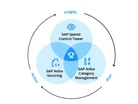
One of those on offer is the SAP's "Triple Crown" of Strategic Procurement approach—encompassing insights, planning and execution—which proposes a framework for managers focused on cost control:
Begin with insights
With the emergence of Data Cloud technology that harnesses an extensive procurement data lake, organisations can implement Spend Control Tower dashboards to uncover procurement blind spots related to compliance, sustainability, supplier fragmentation, tail spend, payment terms and sourcing risks. These insights might reveal concerning levels of off-contract expenditure, fractured supply bases, environmental emissions and diversity concerns, alongside inconsistent payment arrangements.
Formulate strategic actions
Procurement teams can subsequently capitalise on these insights to conduct deeper category spend and supplier analyses through platforms such as SAP Ariba Category Management, enhanced by AI-powered data intelligence. Establish objectives, identify value levers and utilise this information (through integration of curated data and AI-generated recommendations) to evaluate strategic options. Subsequently, document action plans and establish key performance indicators targeting cost optimisation—for example, unifying demand, employing RFQs and e-auctions to challenge suppliers, renegotiating contractual terms and, where necessary, severing relationships with underperforming suppliers.
Deliver with precision
Ultimately, teams can launch strategic sourcing initiatives directly from category plans, updating sourcing tools with objectives and baseline information. Implement sourcing projects that align with category strategies using traditional RFX and auction capabilities, while expanding into categories requiring sophisticated sourcing execution and optimisation engines. Following completion, automatically incorporate negotiated savings into category plans, monitoring progress and goal achievement within Category Management frameworks.
From data to actionable strategy: The power of integration
The current economic challenges demand a nuanced approach to cost control, highlighting the critical need for data-driven insights and strategic execution through enhanced automation.
Concentrating on maintaining cost levels and refining existing structures offers a resilient path forward, with innovative approaches such as SAP's Triple Crown methodology providing a closed-loop system to achieve these objectives across all expenditures.
Baber Farooq, Senior Vice President & Head of Market Strategy for SAP Procurement Solutions, says: "If you don't have insights from the data that you have, it's frankly quite meaningless, right?
"Develop a plan from those insights in SAP Ariba Category Management and then after that action that plan in SAP Ariba sourcing. We refer to that as the 'triple crown of strategic procurement'."
Explore the latest edition of Procurement Magazine and be part of the conversation at our global conference series, Procurement & Supply Chain LIVE.
Discover all our upcoming events and secure your tickets today.
Procurement Magazine is a BizClik brand.