Procurement Podcast: Mathias Grünewald on AI and Leadership
Related Podcasts
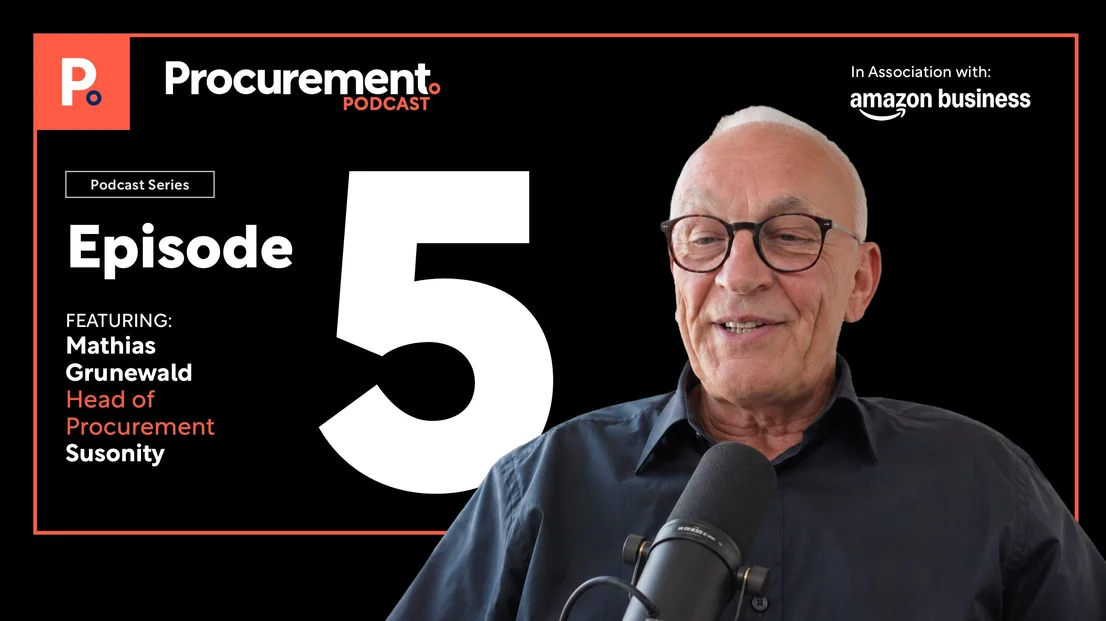
In the latest episode of the Procurement Podcast, host Aaron McMillan sits down with Mathias Grunewald, the Head of Procurement at Susonity, to explore the changing dynamics of global supply chain management. Once viewed strictly as a tactical function focused primarily on cost reduction and vendor negotiations, procurement has transformed into a core strategic driver of business value and corporate innovation.
This shift requires modern procurement leaders to operate less like administrative gatekeepers and more like enterprise conductors, balancing the diverse interests of internal stakeholders, financial departments, and global supplier networks. Grunewald shares his seasoned perspective on navigating this ongoing structural evolution while managing high-stakes supply chains.
Navigating Complex Global Industry Dynamics
Grunewald brings decades of specialized experience to his current role at Susonity, having previously led global sourcing strategies in highly complex, innovation-driven sectors. His background spans across the semiconductor, electronics, advanced materials, and highly customized chemical industries.
Operating within these advanced chemical and electronics sectors demands a departure from traditional commodity purchasing. Because these fields rely on highly customized, technically sophisticated materials, success depends entirely on building deep technical and commercial collaborations with vendors rather than enforcing aggressive, transactional cost-cutting measures.
Overcoming the Traditional Procurement Cliché
A persistent challenge for the function is dismantling the historical stereotype that procurement teams operate behind closed doors solely to demand discounts and create bureaucratic red tape. Grunewald emphasizes that long-term enterprise success cannot be sustained through short-term aggressive tactics or unauthentic relationships.
Modern supply chain management demands an open, authentic, and fair management style. To be taken seriously at the executive level, procurement professionals must act as reliable partners, establishing mutual trust with third-party vendors to secure supply resilience and foster shared business growth.
The Strategic Role of Artificial Intelligence
Looking toward the future, the integration of digital technologies and data-driven decision-making stands as the most significant operational shift for businesses. Grunewald identifies artificial intelligence as the primary global challenge and opportunity shaping the contemporary working environment.
Rather than viewing AI as a superficial addition to existing workflows, forward-thinking organizations must recognize its potential to completely redefine operational and strategic sourcing styles. Navigating this shift requires leaders to actively learn AI capabilities, utilizing automated tools to streamline routine operational tasks so professionals can focus on high-value, strategic initiatives.
Leadership Transformation and Effective Delegation
Transitioning from operational execution to executive leadership requires a fundamental shift in mindset. Grunewald openly reflects on early career challenges, noting that learning to step back from micromanagement and genuinely delegating decision-making rights is vital for organizational growth.
True leadership involves empowering team members with authentic responsibility, leaving executives free to maintain a broad strategic view and absorb escalated organizational risks. Rather than attempting to motivate teams through strict key performance indicators and rigid controlling processes, effective leaders inspire collaboration by sharing a clear corporate vision and demonstrating genuine empathy.
Cultural Adaptability in Executive Management
Managing supply operations within a cross-border corporate structure introduces distinct management challenges. Grunewald discusses his transition from a highly structured, process-driven European corporate model to working within a fast-paced Asian management culture following Susonity's integration into the Chinese G&MI Group.
This transition highlights the vast difference between simply managing international suppliers and directly operating under a different cultural management style. Speed, agility, and absolute personal accountability replace protracted steering boards, requiring contemporary leaders to be highly adaptable and comfortable making rapid, standalone executive decisions.
Subscribe and Listen
Episode 5 is brought to you by Amazon Business, the one-stop destination for everything your organisation needs.
Explore More from the Procurement Podcast Series
Catch up on Episode 4, featuring British Council CPO Andrew Swift discussing AI in procurement, leadership, governance and talent strategy.