Continental Embraces Sustainable Materials for its Tyres
Founded in 1871 as a rubber manufacturer, Continental now stands as one of the largest players in the global tyre industry.
It produces millions of tyres annually and is sharply focused on incorporating renewable and recycled materials in its products.
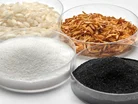
Continental innovatively incorporates husks from Italian risotto rice as a substitute for traditional silica derived from quartz sand.
"Innovation and sustainability go hand in hand at Continental," says Jorge Almeida, Head of Sustainability at Continental Tires.
"Using silica from the ashes of rice husks in our tires shows that we are breaking completely new ground – without compromising on safety, quality or performance."
Adapting raw materials for tyre production
Tyres typically comprise a blend of natural and synthetic rubbers.
Natural rubber is sourced from rubber trees, which have the benefit of absorbing CO₂ during growth.
However, the expansion of rubber plantations can adversely affect biodiversity due to deforestation.
Conversely, synthetic rubber stems from petroleum, leaving a considerable carbon footprint.
Moreover, tyre wear can release microplastics and nanorubber particles, posing threats to ecosystems, wildlife and human health.
Carbon black, a crucial component used to reinforce rubber, also provides the distinct black colouration to tyres.
Silica is employed to boost fuel efficiency and enhance wet grip.

Sustainability initiatives at Continental
Continental is committed to elevating the percentage of renewable and recycled materials in its tyre production.
The company achieved a 26% inclusion of these materials by 2024 and anticipates increasing this proportion to 28-29% by 2025.
By 2030, Continental targets an excess of 40%, while retaining a high standard of safety and performance.
Beyond altering material usage, Continental advances sustainability in its tyre manufacturing processes.
As of May 2024, the company announced its capability to produce CO₂-neutral tyres at its Lousado, Portugal plant.
Previously reliant on natural gas for steam generation, the plant now leverages self-generated solar energy and renewable electricity from the grid.
"In Lousado, we are demonstrating that even very large tire plants can achieve CO₂ neutral production," adds Dr. Bernhard Trilken, Head of Manufacturing and Logistics at Continental Tires, emphasising the role of renewable energy availability at competitive costs.
The initiative begins with the introduction of an electric steam boiler at the Lousado facility, marking the onset of a promising learning trajectory for the company.
Incorporating rice husk silica
Rice husks are a by-product of rice production, prevalent in both Asian and Italian risotto rice agriculture.
Traditionally, silica is derived from quartz sand, which has been a mainstay in tyre rubber components for many years.
Continental cites that the integration of silica has effectively halved braking distances, additionally reducing rolling resistance, energy consumption and emissions.
Rich in silica, rice husks yield ash when incinerated, which, once processed to remove impurities, can be utilised in tyre production.
Bio-based and recovered carbon black
Carbon black can contribute up to 20% of the weight of a passenger car tyre, vital for enhancing the resilience of rubber.
Continental employs various types of carbon black in different tyre sections.
Traditionally, carbon black results from the incomplete combustion or thermal decomposition of hydrocarbons.
However, bio-based carbon black is derived from organic oils, such as tall oil from wood pulp production, replacing crude oil.
It can also originate from recycled materials, including recycled pyrolysis oil from end-of-life tyres.
Continental is actively expanding the use of bio-based and recovered carbon black, collaborating with Pyrum Innovations to optimise the recycling of end-of-life tyres.
The thermolysis technology involves extracting carbon black from used tyres, preparing it for integration into new tyre manufacturing.