Exploring Walmart's Innovative Sourcing Strategy for Grapes
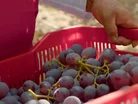
It's a thought that has likely crossed the minds of most customers during the weekly food shop: where is out-of-season sourced from and is it worth the price?
For Walmart, it's a case of forming partnerships around the world, but some fruits remain more difficult to source than others – especially grapes.
"There's something fundamental about grapes, which really makes them a challenge," says Javier Hernandez, Director in Global Produce Sourcing at Walmart.
"They are very complex because they're very perishable. And getting them in store, flavourful and full, 52 weeks a year, is a massive challenge."
The big issue with grapes is that they are particularly delicate and unpredictable, resulting in supply shortages on a regular basis. The challenge for Walmart, according to Javier, is bridging these gaps.
The question for Walmart becomes: how can we ensure we stock high-quality grapes consistently, all-year-round?
Chile opens doors to global sourcing
Back in 2005, the answer to that question was found overseas.
Walmart opened its first international office in Chile to explore how operating there could bolster produce sourcing.
"The question was, 'where in the world can we go to get grapes?'," says Mark Adamy, a Senior Director in Walmart Sourcing who leads the grape sourcing team overseas.
"Well, Chile had grapes and they could be sold, and so we started there. But think about what Walmart would mean to a grower in Chile, who can go back to their board and say Walmart was willing to work with them. It opened doors for everyone."
Chile – one of the most climatically diverse countries in the world – was selected due to its wide range of biospheres, playing host to both desert and temperate rainforest, making it a rich source of grapes.
Crucially, the nation taught Walmart a vital lesson: to expand its sourcing horizons.
Javier adds: "Back then, you would finish the season in California, and you would have a gap without grapes for two or three months, and then we would start in the early part of Chile. But, these early varieties we were working with there weren't consistent – they could be tart or acidic-and we always want the best experience for customers.
"Working with the merchants, learning from each other, we as a sourcing team said, 'okay we're starting to get somewhere. Now, we have the merchant, we have the suppliers in Chile, we can really make this happen.' And it was this approach that got us into Peru."

Following the sun across continents
Now, in 2025, Javier finds himself in Arequipa, Peru, joined by his colleague Catherine Pastor, an agronomist whose role with Walmart has taken her to fields around the world.
One is located southeast of Lima, at the foothills of the Andes mountains. While difficult to reach, the grapes themselves are deemed to be perfect, but must be cut perfectly from the vine to ensure they reach customers in prime condition.
With a sourcing strategy in place, the catalyst came courtesy of Walmart's ability to operate in markets and regions that competitors couldn't reach, with a goal to recognise quality as the foundation.
The grape-sourcing begins in California; then it moves to Peru; followed by Chile; back to Peru again; next comes Mexico.
Gradually, a clear pattern began to take shape for Walmart. Similar to wildebeest traversing Africa following seasonal rains, Walmart's dedication to quality creates a pathway spanning the Americas. It tracks optimal growing conditions, moving with the seasons and following favourable climates in pursuit of the ideal grape.
Exceptional results through strong relationships
Gerardo Guerrero is the merchant responsible for managing the grapes category at Walmart. Having been in the role for the past three years, he has overseen ~30% growth of Walmart's market share in grapes.
"We've covered all the gaps," he says. "We have 52 weeks' availability, with all the options across the year. We've reduced our markdowns and we're selling – and the customers are buying – the kind of fruit we want to sell."
In 2024, according to store data, Walmart sold more than 22 million cases of grapes. In the US alone, it sold more than one million pounds of grapes every day.
Between 2019 and 2024, the total volume of grapes imported through its direct import programme nearly doubled in size, growing 99.72%. And, from 2021 to 2024, its grapes in-stock improved by more than 500 basis points.
Walmart has substantially improved the availability of grapes for customers over the past four years, thanks, in large part, to the relationships it has built.
Gerardo adds: "We've had everything happen you can imagine. We've had strikes, major weather events, political unrest and, through all of that, we've been achieving extraordinary results, which is why relationships with suppliers are so critical.

"When you have these relationships, they're what protect you when supply is limited. Those relationships are value. With our growers and suppliers, you get a depth of commitment – they value us, we value them and they do everything in their power to ensure we have the very best grapes."
Like any successful partnership, this requires ongoing dialogue. Information must flow freely, be built upon collaboratively and then put to strategic use.
Mark adds: "Experience led us to experiment. About nine years ago, we started using the Innovation Centre at the Home Office to go after exotic varieties and niche varieties of grapes: red, green, black, seeded, seedless and sharing what we learned."
As agricultural insights streamed from global farms to headquarters in Arkansas, and lessons from the initial Chilean operations shaped approaches in Peru and other regions, a pattern emerged: Walmart customers were gaining access to exceptional grapes on a reliable basis.
Mark concludes: "We started chasing the sun for that very reason.
"Our whole goal is to deliver on flavour and quality at the price our customers expect. And to give them that greatness year-round. What we have is an amazing team, which does everything it can to get us the best varieties of grapes in the world."