What is Volkswagen’s Semiconductor Procurement Strategy?
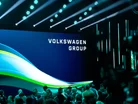
Category strategy for semiconductors is a critical function, but exists in a volatile spend area in automotive manufacturing. With intense, long-term capital investment requirements, extreme demand fluctuations and complex global supply chain dependencies all having an impact.
To counter this, Volkswagen Group has shifted to direct sourcing from manufacturers, joint procurement models with partners like Rivian, supplier base expansion and supply chain resilience tactics, showcasing its advanced strategic procurement.
Semi-conductors are a pivotal component for a company like Volkswagen. Helping drive automotive innovation, powering electrification, enhancing performance and safety and shaping the user experience.
Their importance has multiplied over the years, with the first generation of Volkswagen's Golf model having around 30 under the bonnet to power it. Today, it has grown to have thousands of them.
As certain applications have transitioned from using basic, reliability-orientated chips to incorporating advanced components that deliver sophisticated capabilities like those required in aerospace technology.

Building a reliable ecosystem through collaboration
"The automotive and semiconductor sectors are becoming increasingly interconnected.
"By working closely together, we are building a reliable ecosystem that will drive the innovation defining the next generation of vehicles," said Dirk Große-Loheide, the former Member of the Extended Executive Committee and Member of the Volkswagen Brand Board of Management responsible for Procurement, when speaking at The Semiconductor Summit 2025.
"With our strategy and new level procurement models, we are securing supply while positioning the Volkswagen Group as a driving force and trusted partner for global technology companies."
The Rivian partnership: sharing procurement
Volkswagen's joint sourcing initiative with Rivian Automotive highlights its efforts to diversify suppliers and forge strategic partnerships.
Through the Rivian and Volkswagen Group Technologies joint venture, which launched in 2024, both companies share procurement responsibilities for advanced semiconductors spanning over 50 categories.
This collaborative approach delivers multiple benefits: lower costs, guaranteed supply chains, simplified purchasing processes and enhanced operational performance.
The semiconductors acquired will support applicable vehicle models from both manufacturers, utilising the joint venture's electronic zonal architecture across European and North American markets.
"We are combining Volkswagen Group's global expertise with Rivian's experience in developing SDVs which will impact the development of future high-tech semiconductors," adds Carsten Helbing, co-CEO of Rivian and Volkswagen Group Technologies.
"This model allows the joint venture's tech teams to focus fully on development and innovation, while together we deliver tailor-made, large-scale solutions at startup speed."
Broader procurement priorities
Operating more than 100 production sites worldwide, the company supports vehicle delivery across Europe, China and the Americas.
In supporting e-mobility, autonomous driving and battery-cell manufacturing, Volkswagen's procurement teams handle sourcing for materials critical to electric vehicle (EV) production. These include lithium, nickel and cobalt, which are central to battery chemistry. Securing these inputs without exposure to environmental or human rights issues has become a key task.
Volkswagen adopts a Raw Material Due Diligence Management System across 18 high-risk materials. Suppliers must demonstrate clear traceability, ethical sourcing and data-backed risk controls.
This policy shifts sustainability from an internal ambition to an external gate, shaping commercial decisions.

Improved cost effectiveness
The Volkswagen Group has restructured its semiconductor strategy to create a resilient ecosystem, addressing both technological evolution and previous supply chain disruptions.
The strategy prioritises strong partnerships with semiconductor manufacturers and tier-one suppliers, with individual brands leading specific component categories.
The approach centres on several core elements: simplifying product complexity, establishing clear volume forecasts and monitoring components across the entire supply chain.
These initiatives deliver tangible results – improved cost effectiveness through direct supplier negotiations and consolidated purchasing power, accelerated technical and software modifications and greater supply chain reliability.
Additionally, the Group now custom-specifies semiconductors for mission-critical components that influence essential vehicle characteristics, while simultaneously strengthening internal technical expertise.
Company portals

Executives
Carsten Helbing
COO + Co-CEO