
Trump’s Tariffs: The US Threat to EU Sourcing Stability
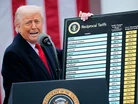
US President Donald Trump’s decision to impose 30% tariffs on European Union (EU) goods places procurement and sourcing professionals under direct pressure.
With transatlantic trade worth €4.4bn ($5.1bn) daily, this development risks unravelling established supply networks between the EU, UK and the United States.
The proposed tariff hike, set to take effect on 1 August, applies to thousands of product categories, from agricultural goods to automotive components.
The scale of the impact means businesses now face a scramble to secure alternative sourcing options or absorb unsustainable costs.

EU buyers brace for disruption
For procurement teams operating within EU-based firms, the prospect of a 30% increase in costs on exports to the US is prompting urgent contingency planning.
Supply chain professionals are evaluating nearshoring and regional partnerships, as well as seeking new supplier bases outside the US to maintain competitiveness.
The EU has expressed hope that a deal could be agreed before the deadline. EU Trade Commissioner Maroš Šefčovič says: “We want to use every day, every possibility and every minute until 1 August to find a negotiated solution.”
Maroš argues there is still hope for a deal: “Otherwise you would not spend three months on drafting an agreement in principle and going through 1,700 tariff lines discussing all details from agriculture to the spare parts of cars if this [would just] be ended by one – even though – very, very important letter.”
While the EU’s optimism is partly driven by internal political alignment, procurement professionals remain cautious.
US suppliers, meanwhile, face a wave of cancelled orders or contract renegotiations as EU buyers look elsewhere.
Countermeasures increase procurement risk
In a direct response to the White House, the EU has already paused its own counter-tariffs on €21bn ($24.5bn) of US goods that were due to begin on 1 August. However, options for further retaliation remain on the table.
Among the measures under discussion is a broader €72bn ($84bn) tariff package targeting US imports.
Lars Løkke Rasmussen, Denmark’s foreign minister and current chair of the EU trade talks, warns: “We don’t want to escalate things then, on the other hand, we also need to flash some muscles.”
“I don’t believe in the idea of escalating to de-escalate,” and states that “a total unified approach among ministers” is key if retaliation becomes unavoidable.
Procurement heads across Europe are now factoring geopolitical risk more heavily into sourcing strategies.
With France’s president Emmanuel Macron calling for anti-coercion instruments and legal tools to counter US pressure, the threat of tit-for-tat tariffs raises red flags for long-term sourcing partnerships.
EU companies that rely on integrated supply chains spanning the Atlantic are likely to fast-track diversification initiatives.
Multi-sourcing strategies and increased inventories are back on the table, despite their higher upfront cost.
UK sourcing links face indirect exposure
The UK’s separate trade deal with the US, which fixes tariffs at 10%, offers limited insulation.
The UK imports a considerable volume of goods and components from the EU, many of which are assembled or processed before being shipped to the US.
This makes UK suppliers vulnerable to the ripple effects of EU-origin tariffs.
Matthew Allen, economics lecturer at the University of Salford, explains: “Many British firms import components and goods from the EU that are later exported to the US, meaning UK businesses could be indirectly hit by this tariff hike.”
This supply chain interdependence is a major issue for British procurement professionals managing cross-border trade with EU and US partners.
Although tariffs may not directly apply to UK-origin goods, the costs of importing from EU suppliers are expected to rise if EU producers lose competitiveness.
In parallel, US policy under Trump continues to leverage supply chains as instruments of political pressure.
In recent talks, Trump has threatened an enforcement of 100% secondary tariffs on Russia, if there’s no deal between Russia and Ukraine in 50 days.
This policy would extend tariffs to countries trading with Russia—potentially penalising EU and UK firms with indirect exposure.
Global procurement leads are now faced with balancing compliance, cost and continuity, all while navigating a trade landscape shaped by tariffs and diplomatic standoffs.