
Traxys & Lilac's Deal Will De-risk US Lithium Supply Chain
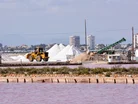
Lilac Solutions and Traxys North America have signed a binding 10-year offtake agreement for lithium carbonate from Lilac's Great Salt Lake facility in Utah.
Announced on 15 May 2025, the deal creates a clear procurement pathway for a major domestic source of critical minerals, and aims to de-risk US lithium production at scale.
Under the definitive terms, Traxys will purchase 50,000 tonnes of lithium carbonate over a decade, representing 100% of the planned Phase 1 capacity.
Traxys, a global leader in physical metals trading with annual turnover exceeding US$10bn, has structured the agreement as "take-or-pay" with pricing linked to market indices. The mechanism supports Lilac's progress toward a Final Investment Decision, while giving Traxys a reliable long-term source of battery-grade supply in a market known for volatility.
"Securing offtake for 100% of planned output moves us closer to construction of a significant new source of domestic lithium," Raef Sully, CEO of Lilac Solutions, says in a statement.
Raef's statement underscores the project's role in strengthening domestic sourcing.
DLE technology shifts timelines and risk
Lilac is a technology developer specialising in Direct Lithium Extraction. Its proprietary Gen 5 ion exchange system achieved an 87% recovery rate during 2025 pilot operations.
Unlike evaporation ponds, that can take up to 24 months, Lilac's process works in hours and is described as "non-consumptive", with lithium-depleted brine returned to the lake to maintain water levels.
For procurement and supply chain teams this means shorter lead times, more responsive output and reduced buffer inventory needs.
Great Salt Lake Phase 1 is designed for 5,000 tpa of battery-grade lithium carbonate, a step that would nearly double current US production.
A planned Phase 2 expansion targets 20,000 tpa of Lithium Carbonate Equivalent, which would produce close to four times today's domestic output. The 10-year, index-linked, take-or-pay structure provides a hedge against spot market swings, enabling better long-range budgeting, contracting and inventory planning.
The approach also advances responsible sourcing by removing the need for vast ponds and maintaining local water levels, an increasingly important factor in supplier evaluation.

Supply chain impact for EV and battery makers
As EV and battery manufacturers scale, securing compliant, traceable minerals is a priority.
Producing lithium within the United States supports qualification for tax credits in the US and in some European markets, cuts transport costs and shortens lead times.
By locking in the entire Phase 1 output, Traxys both underwrites project viability and strengthens its own position in a competitive battery materials landscape.
Next steps and domestic build-out
Lilac has completed FEL-3 engineering and is working with Utah state regulators to finalise permits for construction.
The ion exchange media will be produced at Lilac's facility in Fernley, Nevada, creating a domestic equipment and materials loop that reduces reliance on overseas suppliers while supporting regional industry.
Company portals


Executives

Raef Sully
CEO