
Royal Mail: Making its Value Chain More Sustainable
Royal Mail Group has published its Sustainability Report 2025-26, outlining progress on its Steps to Zero strategy. The organisation operates delivery services to around 32 million addresses across the United Kingdom and has set a target to reach net zero by 2040.
According to the report, the company has reduced emissions by 31% across all scopes compared to its 2020-21 base year. Investment in renewable energy, zero-emission vehicles and procurement practices could support this trajectory across its operations and value chain.
The report details how technology deployment and infrastructure development are being used to reduce the carbon profile of transport operations. Property management and supplier engagement also form part of the decarbonisation approach.

“Royal Mail's Low Carbon Transition Plan brings us a step closer to understanding the roadmap, while being clear that we cannot do this alone. ”
Electric vehicle fleet expansion
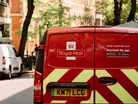
Royal Mail operates 8,800 electric vans, which the company describes as the largest electric delivery fleet in the UK. These vehicles power 31% of delivery routes and focus on final-mile operations.
"We've reduced our emissions by 31% across all scopes compared to our base year of 2020-21, keeping us on track towards our target of net zero by 2040," says Alistair Cochrane, CEO of Royal Mail, in the report.
"At the same time, our average carbon per parcel fell to 164g CO₂e, the lowest in the industry.
"We are committed to doing business the right way, by delivering for our customers whilst creating lasting value for people across the UK," says Alistair.
The company deployed more than 2,000 electric vans over the past year and established charging infrastructure across nearly 400 sites. Eight 42-tonne electric Heavy Goods Vehicles have been introduced for middle-mile distribution between parcel hubs.
More than 80 micro EVs have been deployed across the network. Electric drones operate a daily inter-island mail distribution service in Orkney, carrying approximately 1,000 kg of mail up to 24 hours faster than ferry services.
Renewable energy and utilities
Emissions from buildings and the estate account for 7% of Royal Mail's total carbon profile, according to the report. The company has maintained a 100% renewable electricity tariff since 2023-24, ensuring all purchased and generated electricity comes from renewable sources.
A site-level performance dashboard has been deployed to monitor utility use and encourage employee engagement. Digital technology including location-tagging on 850,000 wheeled containers aims to improve network efficiency by allowing vehicles to be filled more efficiently.
"Royal Mail's Low Carbon Transition Plan brings us a step closer to understanding the roadmap, while being clear that we cannot do this alone," writes Miles Durrant, Head of Climate Strategy at Royal Mail, on LinkedIn.
"Achieving decarbonisation depends on an economy-wide transition: progress in technology, supportive policy, supplier action, infrastructure and the skills to deploy low-carbon solutions at scale.
"Done well, that transition can support energy security, grow the green economy and create skilled jobs across the UK," writes Miles.
"That's why I'm particularly pleased that we recently announced a £1m (US$1.34m) apprenticeship fund to help build green skills in areas such as low-carbon heating, EV infrastructure, energy-efficient construction and sustainable supply chains.
"The direction is clear. Now the focus has to be delivery," writes Miles.
Royal Mail uses around 1.3 million cubic metres of water per year, primarily in washrooms and vehicle washing sites. Automatic Meter Readers have been installed at water supply points and currently cover 54% of water use.
Trials of improved flush controls in toilets have demonstrated a localised reduction in water use of up to 50%. These trials are ongoing across the property portfolio.
Supplier engagement and scope three
Scope three emissions account for 68% of Royal Mail's corporate emissions, stemming from indirect activities within the value chain. The company has achieved a 32% reduction in scope three emissions compared to its 2020-21 base year, surpassing its original 2030 target five years early.
This reduction was driven by cost management, decarbonisation of global electricity grids and the cessation of 18 domestic flight routes in favour of road haulage. Royal Mail has approximately 130 priority providers and launched a dedicated supplier portal where companies submit verified environmental information.
The First Class Sustainability Programme launched in April 2026 and assesses suppliers against bronze, silver and gold maturity levels. Suppliers are expected to progress toward at least silver-level maturity within agreed timeframes.
The programme sets sustainability expectations and aims to ensure carbon alignment across the supply base. Data gathering through the supplier portal underpinned the development of this programme.
Waste management and circular models
Royal Mail generated 30.3 kilotonnes of waste this year, securing a 25% total volume reduction against its baseline. The company works with Biffa as its primary waste contractor and targets operational products within its control, such as metal wheeled containers and mail sacks.
A waste-segregation culture among employees supports this performance. The logistics network facilitates rental and return business models for consumers, enabling external circular solutions.
A partnership with Nespresso resulted in the recycling of one million bags of coffee pods within its first year. The infrastructure also facilitates the return and reuse of electronic items like Wi-Fi routers for telecom brands and the resale of clothing through online marketplaces.
A stock donation project with the British Heart Foundation has diverted 21.86 tonnes of unwanted items from the waste stream. This project gives goods further use while raising funds for the charity.
Company portals
Executives

Alistair Cochrane
CEO

Miles Durrant
Head of Climate Strategy