Rail Baltica is Advancing Construction Materials Procurement
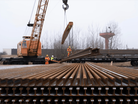
Rail Baltica has moved to the next stage of its consolidated construction materials procurement, making leaps towards the end of its years-long project.
It is moving to develop a connected and compatible system for a future high-speed railway development.
This project will introduce new job opportunities, more efficient lifestyles and better access to a work-life balance across the Baltics.

The importance of the transport line
Rail Baltica is a greenfield rail transport infrastructure project aiming to integrate the Baltic states into the European rail network. It directly includes four EU countries – Poland, Lithuania, Latvia, Estonia – and indirectly includes Finland. The network will connect Helsinki, Tallinn, Pärnu, Riga, Panevėžys, Kaunas, Vilnius and Warsaw with one another, ensuring an efficient operational connectivity.
Prior to World War II, the Baltic states were linked to Europe with a 1435mm gauge railway, before operating on the Russian 1520mm gauge. Now, the plans to reintegrate the EU rail network should ensure less travel time and more efficiency across operations.
Rail Baltica will cut regional travel times by up to 50%, making it easier for students and staff to commute every day. It will also improve access to healthcare and support community wellbeing by building connections between major cities and regions.
The project will also boost regional defence and military mobility, enabling faster troop and equipment movement, the opening of strategic corridors and more streamlined logistics. This will help grow the security across the Baltic region and its allies. It combines efficient multimodal freight transport with enhanced defence logistics, setting a new standard for strategic infrastructure and reliability.
Moreover, it is expected to create 13,000 direct jobs, as well as more than 23,000 indirect and induced jobs throughout construction, with approximately 800 permanent positions in operations and infrastructure management.
Procurement progress
Rail Baltica has now moved to the next stage of its consolidated construction materials procurements, with various framework agreements signed off or close to being finalised. The procurement model, formed by Estonian, Latvian and Lithuanian delivery organisations, is vital to ensuring the railway is developed as connected and compatible as possible.
Framework agreements develop conditions for pricing, performance, quality assurance and delivery schedules, without making immediate financial commitments. It allows organisations to put orders in and develop construction progress. This secures supply chain reliability alongside the maintenance of operational flexibility.
The seven-year framework agreements ensure transparent supply conditions, competitive pricing and long-term planning which meets EU funding principles. It ensures only the highest quality of materials are used across the railway line, following standard regulations. This develops a improved reliability and allows for more sustainable supply chains.
“By procuring track construction materials for the entire Rail Baltica mainline collectively, rather than on a country-by-country basis, we can secure the required supplies at the right quality and at competitive prices. Large-volume ordering strengthens our negotiating position and enhances price stability in a volatile construction market,” says Thierry Boussillon, Chief Programme Management Officer and Member of the Management Board at RB Rail.
“Harmonised technical standards across the three Baltic states ensure consistent material specifications and compliance with the highest safety requirements for high-speed rail, while strengthening certainty of delivery by enabling large-scale procurement from major, established suppliers in the international rail market.”
Contract conclusion
It is estimated that the total maximum value of the superstructure comes to €1.13bn (US$1.3bn).
Contracts covering cableway systems, which includes multiducts and cable ducts, have been finalised, with the materials available for ordering. The sleeper contract was signed in December 2025 and have since entered its commencement phase. The materials for this project are expected to become available for ordering from September 2026.
Rail contracts in Latvia have also been signed and initial implementation is already underway. From July 2026, rails are expected to become available for ordering and railway ballast should be available from September 2026. Other contracts, including those for turnout systems, high-speed turnouts and rail expansion have also come to a conclusion.
With the procurement of these materials being finalised, the running of this project will enter production faster and much more smoothly.
Company portals

Executives
THIERRY BOUSSILLON
Chief Programme Management Officer