
What Role Does Procurement Play in Scope 3 Reduction?
Today, procurement teams are under mounting pressure to deliver on their decarbonisation commitments, and there is no greater challenge for sustainable supply chain management than the reduction of Scope 3 emissions.
At Procurement & Supply Chain LIVE: The Net Zero Summit, industry leaders have been exploring how procurement professionals can leverage their strategic position to drive meaningful emissions reductions across complex value chains.
For procurement teams navigating the sustainability agenda, Scope 3 emissions represent both the greatest challenge and the most significant opportunity.

According to GHG Protocol, Scope 3 emissions generally account for between 70% and 90% of organisations' carbon footprints, yet they remain notoriously difficult to both track and manage.
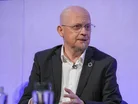
At the Net Zero Summit, four sustainability leaders participated in The Scope 3 Forum, examining how procurement teams can measure emissions effectively, foster supplier collaboration and drive innovation across the value chain.
"I think cultural change is a big part of what we're doing at the moment," explains Mark Yates, Head of Sustainability - Supply Chain at Specsavers.
"We've done a lot of training, spend a lot of time on actually getting people to a place where they understand what we're trying to do and what their part can be to play."
Procurement's role in supplier transparency
For procurement professionals, establishing transparency throughout the supplier base has become a critical priority. The function is uniquely positioned to mandate reporting requirements, set supplier standards and enforce compliance across the supply chain.
According to Bridget Beals, Founder at Thrive Sustainability, leading organisations are adopting more sophisticated approaches to supplier data collection.
I think there's three key things that I see companies starting to push for as they seek to deliver on their scope three decarbonisation targets," she says.
"The first one's really around quantity based reporting – it's really hard to make strategic decisions when you don't actually understand the detail of what your emissions are."
Bridget continued, highlighting the interconnected nature of sustainability and operational performance: "For a long time we've talked about decarbonisation and we've talked about climate risk assessments, but these are two sides of the same coin, operational resilience, energy price rises, carbon price rises."
This evolving understanding presents procurement teams with a compelling business case. Detailed emissions data can reveal opportunities for cost reduction alongside environmental benefits, demonstrating that procurement decisions can simultaneously address financial and environmental objectives.
Embedding sustainability in procurement strategy
The panellists emphasised that effective Scope 3 reduction requires procurement teams to embed sustainability criteria throughout their processes – from supplier selection and contract negotiation to category strategy and performance management.
"We are looking to be net zero by 2045 and we have a roadmap that sets out our trajectory and our requirements," says Heidi Barnard, Head of Sustainability at NHS Supply Chain.
"We already make our suppliers report carbon emissions and we are not going to be working with people who are not on this journey with us and are decarbonising.
"There's an element here around demand signalling and having that overview as a system to be able to say to the market that this is where we're going, this is what we're expecting."
This approach positions procurement as a strategic function capable of reshaping supplier behaviour through deliberate market signals. Organisations are increasingly incorporating sustainability performance into supplier evaluation criteria, viewing suppliers without credible decarbonisation strategies as higher-risk partners.
Procurement as the catalyst for change
Christophe Quiquempoix, Vice President of Sustainable Procurement at Schneider Electric, illustrated the scale of procurement's potential impact.
"I would say procurement is at the core to drive decarbonisation," he says.
"At Schneider Electric, our embedded emissions coming from our suppliers are 40 times bigger than the emission of our own operation."
Christophe highlighted practical examples of procurement-led initiatives: "We had a programme of sustainable packaging to ensure we're using 100% recycled cardboard and more important remove as much as possible of single use plastic. This has driven fantastic effort and creativity."
Organisations achieving meaningful Scope 3 reductions are empowering procurement teams to make sustainability informed decisions at every stage of the sourcing process.
By prioritising suppliers with established sustainability programmes and using procurement leverage to stimulate innovation, these organisations are demonstrating that strategic procurement could be the catalyst for genuine supply chain transformation.





Executives

Bridget Beals
Founder

Christophe Quiquempoix
Vice President Sustainable Procurement

Heidi Barnard
Head of Sustainability

Mark Yates
Head of Sustainability