
Procurement's Role in the National Grid's Energy Transition
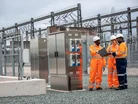
National Grid has positioned procurement as a strategic driver of its environmental transformation, moving beyond traditional cost-management to become a central mechanism for delivering climate commitments across its supply chain.
The company's Social and Environmental Action Plan (SEAP) for 2026-2031 represents the first integrated approach to environmental and social objectives, with procurement activities embedded throughout each pillar of the strategy.
The plan outlines how National Grid intends to leverage its purchasing power and supplier relationships to build a cleaner, more reliable and resilient energy system.
Through targeted procurement mandates, circular economy principles and enhanced supplier standards, the organisation is demonstrating how strategic sourcing decisions can drive measurable environmental outcomes.
Alice Delahunty, President of Electricity Transmission, says in the National Grid SEAP: "We have both a duty and an opportunity to manage our business in an environmentally and socially responsible manner. This Action Plan is designed to inspire, activate and lead us in our planning, decision-making and target-setting so that we not only meet today's needs, but also safeguard tomorrow."
The procurement function has evolved from a transactional role into a primary lever for achieving National Grid's "Clean, Fair and Affordable" energy transition commitments, with specific targets and supplier requirements now woven into every major sourcing decision.
Supplier engagement drives carbon reduction
National Grid's procurement team has implemented a partnership-led model designed to align the entire supply chain with the company's 1.5°C science-based targets. The most significant requirement mandates that 75% of carbon-intensive suppliers, measured by spend, must set their own science-based emissions targets. This approach directly addresses Scope 3 emissions, which constitute the largest portion of National Grid's carbon footprint.
By embedding carbon targets into supplier selection and contract renewal processes, procurement teams are extending National Grid's climate commitments throughout the value chain. This partnership approach aims to create shared accountability for emissions reductions while supporting suppliers in their own transition journeys.

Circular economy principles reshape sourcing
Procurement has integrated circular economy frameworks into tender processes, fundamentally changing how National Grid evaluates and selects suppliers. Resource efficiency has become a core evaluation criterion, with suppliers required to demonstrate waste reduction strategies and lifecycle management approaches. According to the SEAP, these procurement requirements have contributed to 95% of operational waste being diverted from landfills in 2026.
For capital delivery projects, procurement teams now prioritise low-carbon materials including green steel and low-carbon concrete to reduce the embodied carbon of network infrastructure. National Grid joined SteelZero and ConcreteZero initiatives, committing through procurement mandates that 50% of concrete and steel purchased will be low-emission by 2030, rising to 100% net zero emissions by 2050.
National Grid's SEAP states: "Every project we undertake must reflect our commitment to sustainability. This means embedding environmental stewardship into every stage of delivery, from design and procurement to construction and operation."
The procurement function has secured regulatory support for this transition, with Ofgem approving a 0.3% uplift to baseline project investment during the RIIO-T3 period to offset higher costs associated with sustainable materials.
Procurement enables fleet electrification and social value
National Grid's vehicle fleet transition strategy relies heavily on procurement policies that prioritise zero-emission vehicles. The company has established a clear purchasing mandate ensuring 100% of light and medium-duty vehicle acquisitions up to 3,500 kg will be zero-emission vehicles by 2031. During the RIIO-T2 period, procurement achieved a 60% replacement rate for light-duty vehicles, with 37% of the remaining fleet scheduled for electric transition during RIIO-T3.
For heavier vehicles where electric alternatives remain limited, procurement teams are exploring alternative fuel options, with the final 3% of the fleet consisting of heavy goods vehicles scheduled to transition after 2030. The company has also committed through procurement specifications to phase out diesel in construction activities by 2035.
Procurement at National Grid has expanded its remit to include social value and ethical compliance. The function has implemented social value weighting in 100% of large-scale contract awards, ensuring suppliers contribute to local job creation and skills development. The company has increased spend with diverse-owned businesses and Small and Medium Enterprises, using procurement decisions to drive inclusive economic outcomes.
The procurement team enhanced its Supplier Code of Conduct to include mandatory human rights and modern slavery due diligence, leading to more rigorous auditing of tier-one and tier-two suppliers. In 2025/26, National Grid adopted EcoVadis as its core supply chain ESG assessment platform, providing consistent, risk-based insight across environmental, labour and human rights, ethics and sustainable procurement dimensions.
Carl Trowell, President of Strategic Infrastructure, says in the National Grid SEAP: "The Great Grid Upgrade is a once-in-a-generation opportunity to upgrade and strengthen the UK's electricity network. This Action Plan sets out our aspirations to 2031 and demonstrates how, through collaboration across our teams, supply chain, partners and communities, we are building a cleaner and fairer energy system for everyone."
National Grid's procurement transformation demonstrates how strategic sourcing decisions can become instrumental in delivering environmental commitments while maintaining operational reliability and managing costs across a complex energy infrastructure programme.
Company portals

Executives

Alice Delahunty
President of Electricity Transmission

Carl Trowell
President of Strategic Infrastructure