
ORO Labs: Rising Pressure Makes Procurement Reaction Lag
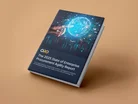
ORO Labs has released its 2025 State of Enterprise Procurement Agility Report, exploring procurement risk management strategies.
The research surveys more than 200 executives and their experiences facing current procurement issues.
The report shows that procurement leaders and their teams are under pressure they cannot meet without cutting corners - which is sure to introduce more problems in the longer terms.

Reporting disruption
ORO Labs is a procurement orchestration company dedicated to coordinating teams, systems and processes.
It has an AI-powered no-code platform which delivers effortless user experiences.
The software reduces cycle times, increases end-to-end process visibility, reduces risk and increases flexibility when responding to risk.
The release its 2025 State of Enterprise Procurement Agility Report, shows an understanding that procurement is facing major disruption this year. As a result of growing geopolitical uncertainties, procurement is looking more uncertain as the year continues, calling for an overhaul or big investments into procurement systems.
The report explores how supply chain disruptions - such as tariffs or climate issues - are forcing supplier changes, which is in turn creating pressure for procurement leaders to act fast.
"Procurement leaders are being asked to move faster while their teams are getting smaller and their systems are holding them back,” says Sudhir Bhojwani, Co-Founder and CEO of ORO Labs.
Growing pressures for CPOs
The research takes information from more than 200 executives at companies with US500m+ in annual revenue.
To learn how leading organisations are adapting to pressure, ORO Labs surveyed leaders from the US, UK, Europe and Canada.
It explores how procurement teams are facing more difficulties and growing pressure as tariffs, inflation and supplier volatility occur at the same time as shrinking teams and fragmented procurement systems.
These fragmented systems cause delays in response speed, resulting in longer waiting times for procurement teams to act, making them more vulnerable to risk.
Procurement has shifted dramatically over the past couple years, with an increased shift in 2025, due to the uncertainty with tariffs and changing trade relations.
As a result, procurement leaders are left reeling as they're having to decide what direction to take their company in.
Some leaders are experimenting with AI, shrinking teams, switching suppliers or altering their pressure on supplier risk.
However, many procurement solutions are short-term fixes, rather than processes they can implement into their long-term strategy.
Sudhir adds: “Tariffs are forcing rapid supplier turnover, but most large organisations are still running on disconnected tools and IT bottlenecks that make it harder to respond. Adding more technology to the stack hasn’t fixed the problem.
"What procurement needs is a connected system that harnesses agentic AI to create streamlined and autonomous workflows: one that gives leaders clear visibility, the flexibility to adapt quickly and the confidence to make the right calls under pressure.”
Report key findings
The report explores what the issues and key beliefs are surrounding procurement in 2025:
- CPOs are divided on risk - 24% of executives say they've added stricter vetting checks to their suppliers, thus tightening risk requirements. However, 25% have done the opposite, opting for speed rather than high standards, thus opening themselves up to suppliers with limited documentation or lower credit ratings.
- Tariffs are causing supplier issues - 86% have onboarded or offboarded suppliers in direct response to tariffs or are anticipating doing so in coming months. Moreover, while 16% say they could replace a key supplier within seven days, nearly 33% view the loss of a supplier as a main concern.
- Teams are shrinking - 38% of respondents report their procurement teams have shrunk, despite budgets increasing. As a result, many businesses are introducing technology in order to meet growing demands.
- IT bottlenecks are stalling agility - 64% of respondents rely on 10+ procurement tools, but most tools are not delivering expected ROI, and 57% require IT support for most changes.
- Lack of AI understanding - although 85% procurement executives are introducing AI to their teams and processes, only 49% understand how agentic AI works and only 39% are providing formal AI training to their teams.
CPOs need to act fast in order to meet growing demand during geopolitical uncertainty, however this should not come from cutting corners.
The ORO report explores how teams need to actively integrate good systems into their processes in order to mitigate risk and ready themselves for upcoming pressures.
To read the report in full, click here.