Nestlé: How Coffee Farmers can Increase Supply and Quality
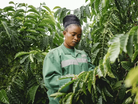
New research conducted in Côte d'Ivoire by Nestlé shows that planting a mix of six rigorously tested and validated robusta coffee varieties can increase yields by up to 86%, using the same inputs as the commonly used local plant variety.
Coffee production in Côte d'Ivoire
With coffee production playing an important role in the livelihoods of farmers in Côte d'Ivoire, improving the performance and reliability of coffee production has become a priority amid exposure to increasing climate variability and productivity constraints.
The new multi-year research conducted by Nestlé Institute of Agricultural Sciences in collaboration with the Centre National de Recherche Agronomique (CNRA) has studied 18 robusta varieties across four coffee-growing regions.
Since 2018, the two have been evaluating yield, flavour, bean quality, drought tolerance and overall performance under climate stress. The six best-performing varieties, two developed by Nestlé and four by CNRA, were tested to see how they perform together.
By planting a combination of six varieties, Nestlé and CNRA found that the strongest results were delivered through boosting yield and enhancing performance under climate stress and overall cup quality.
Sensory tests conducted confirmed that coffee made from this robusta mix has a smoother flavour, with less bitterness and fewer woody notes typically associated with robusta coffee.

The Nescafé Plan
The Nescafé Plan is Nestlé's long-running sustainability initiative for coffee, originally launched a decade ago to improve farmers' lives, reduce the environmental impact of coffee farms and factories and increase rural communities' well-being across countries, including Brazil, Colombia, Côte d'Ivoire, Kenya, Mexico, the Philippines and Vietnam.
Building on this foundation, Nestlé launched the Nescafé Plan 2030, investing over 1 billion Swiss francs (US$1.285bn) to help transition coffee farmers to regenerative agriculture, reduce greenhouse gas emissions and improve farmer livelihoods.
Under the Nescafé Plan, the six varieties have now been officially registered in Côte d'Ivoire, and the varietal mix will be made available to farmers through cooperatives.
"Côte d'Ivoire, the third-largest coffee producer in Africa, is feeling the effects of climate change, with shifting rainfall and rising temperatures impacting crop health and yield," says Hubert Coffi, Agronomy Manager for the Nestlé Institute of Agricultural Sciences in Côte d'Ivoire.
"Together with partners such as CNRA, we are exploring resilient coffee varieties to help protect farmers' livelihoods and ensure consumers can continue to enjoy great-tasting coffee in the future."
Nestlé's coffee plant breeding work
Led by experts in experimental farming in Zambakro, the new mix has been developed in collaboration with local research partners and the Nestlé Institute of Agricultural Sciences Plant Sciences Department in Tours, France.
Work closely with local farmers to improve agricultural practices, farmers at Zambakro have received hands-on training in regenerative agriculture from Nestlé, supporting the long-term viability of coffee production.
These efforts build on Nestlé's work using classical breeding methods to develop high-yielding, disease- and drought-tolerant coffee plant varieties suited to evolving local growing conditions in key coffee-producing countries.
The varieties are developed, tested under real farm conditions, and made available to farmers.