
National Geographic: The Billion Dollar Cost of Overfishing

Overfishing is the harvesting of wildlife from the sea at rates too high for species to replace themselves.
While the environmental damage is well documented, a new study by National Geographic has analysed multiple reports to uncover the true financial impact of this practice.
One such report, The Value of Bottom Trawling in Europe by Millage et al, measures the full economic value of bottom trawling. According to the paper, this destructive fishing method imposes up to €16bn (US$18.7bn) annually in net costs to society.
The research highlights that these costs are 90 times higher than the estimated €180m (US$210m) in annual profits accumulated by the fishing industry.

European fleet operations
Millage et al’s report pools data from more than 4,900 European-flagged bottom trawlers.
The paper shows that these vessels spend more than 5.5 million hours fishing on average each year in the waters of the European Union, the UK, Norway and Iceland.
The research implies that carbon emissions produced from the disturbance of seafloor sediments are a major contributor to the US$18.7bn in costs.
“Our study makes it clear that bottom trawling in European waters is not just an environmental disaster, it’s an economic failure,” says Professor Enric Sala, National Geographic Explorer in Residence and one of the authors of the study.
“The bottom trawling fleet is decimating marine life in Europe’s marine protected areas, from the North Atlantic to the Mediterranean.
"While we ultimately need to reduce bottom trawling across Europe’s waters to unlock societal benefits, banning it in protected areas is a critical first step, a win for the climate, the ocean and even the fishing industry itself.”
Environmental and carbon costs
The paper was written amid increasing pressure on government and industry leaders across Europe to ban bottom trawling, especially in Marine Protected Areas (MPAs).
Research from another study, Atmospheric CO₂ emissions and ocean acidification from bottom-trawling by Atwood et al, finds that the method is responsible for releasing up to 370 million tonnes of CO₂ into the atmosphere every year. Nearly a third of this (112 million tonnes) comes from European-flagged trawlers.
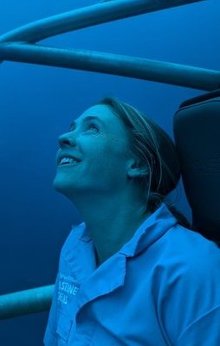
“Bottom trawl gear scrapes up the seafloor, releasing carbon that’s been stored in the ocean seabed for centuries,” says Kat Millage, Marine Researcher for National Geographic Pristine Seas and Lead Author on the study.
“It is clear that the magnitude of emissions from trawling are substantial. Even when we use a very conservative estimate of the social cost per metric ton of emitted CO₂, society is left bearing a heavy economic burden.”
Bottom trawling impacts marine life in the region's 6,000 MPAs, encompassing 900,000 square kilometres.
Further research by Katherine Came found that more than 3,000 fish species were catalogued in bottom trawls globally, including endangered animals.

Small industry revenue
Millage et al’s study analysed European waters between 2016 and 2021, comparing benefits such as revenue, supply and jobs against costs including fuel, labour, discarded product, subsidies and carbon emissions.
While net benefits to the fishing industry alone are positive, the net benefit to society is negative, ranging from €2.25bn (US$2.6bn) to €16bn (US$18.7bn). This range reflects different valuations of the social cost of CO₂. Overfishing is likely to enhance these costs through sea level rises, climate change effects and declining human health.
“Not all big is bad, nor all small beautiful, but where there is clear evidence that the economic and/or environmental costs of larger-scale mobile fishing gears outweigh any societal benefits from harvesting the resource, then it is right that alternatives are found and such operations are phased out,” says Jerry Percy, Sr. Advisor to the Low Impact Fishers of Europe (LIFE).
“Small-scale fishers in Europe, on the other hand, prove every single day that we can feed communities by catching fish sustainably — without disturbing spawning grounds or kicking up carbon.”
Subsidies and food waste
Research shows that European governments spend €1.17bn (US$1.36bn) on bottom trawling to offset fuel prices in the name of food and job security.
However, data shows that without these subsidies, activity would be unprofitable for nations including Belgium, Spain, Great Britain, Portugal and Romania.
Costs associated with food waste are also increasing. Up to 75% of marine life caught in these nets die and are discarded, valued at €220m (US$257m) annually.
Furthermore, these vessels require vast amounts of fuel; at least half the Dutch fleet stayed in port at the end of March 2026 because of soaring diesel costs amid the Iran war.
Banning bottom trawling
European leaders are beginning to take action. In April 2024, Greek Prime Minister Kyriakos Mitsotakis announced a commitment to ban bottom trawling in Greek MPAs by 2030.
“Βy moving to phase out bottom trawling across all Greek MPAs, Greece is taking decisive action to restore marine ecosystems, support sustainable fisheries and safeguard the long-term health of our seas,” says Prime Minister Mitsotakis.
“It is the most effective way to implement the two major Marine Parks in the Aegean and Ionian Seas, bringing Greece closer to exceeding the 30x30 target.
"Banning bottom trawling in all Greek MPAs would represent a transformative step in safeguarding Posidonia seagrass beds and other vulnerable habitats, enhance carbon sequestration, support the rapid recovery of fish stocks and generate positive spillover effects into surrounding waters.
"In doing so, it would serve both biodiversity conservation and the long-term interests of fishers and local communities, strengthening the resilience and sustainability of the blue economy in Greece’s coastal regions.”
Sweden followed this announcement two months later. The European Commission’s action plan now calls for the gradual phasing out of bottom fishing in all MPAs by 2030 to protect marine biodiversity and aid climate change mitigation.
Company portals



Executives

Jerry Percy
Senior Advisor
Kat Millage
Marine Scientists

Professor Enric Sala
Explorer in Residence