NASA Artemis II: A Masterclass in Multi-Tier Procurement
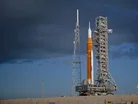
The aerospace sector is bracing for a landmark procurement milestone as NASA’s Artemis II Orion craft, engineered by Lockheed Martin, prepares for an April 2026 launch.
As the first crewed mission of the Artemis Program, the flight represents a critical step toward long-term lunar missions, testing the Space Launch System (SLS) and the agency's deep space capabilities.

Strategic prime partnerships
Orion stands as the most advanced deep space vehicle ever developed, but its journey to the launchpad is the result of a massive collaborative effort between American manufacturing titans.
The project has seen Aerojet Rocketdyne, Boeing, Amentum, Jacobs, Northrop Grumman and SpaceX align to deliver a high-stakes technical marvel.
Lockheed Martin serves as the primary contractor for Orion, overseeing the design, development and production phases. Their remit spans from advanced propulsion and launch abort systems to precision docking capabilities.
Lisa Callahan, former Vice President and General Manager of Commercial Civil Space at Lockheed Martin, says: "Orion is a new class of spaceship, uniquely designed for long-duration deep space flight, that will return astronauts to the Moon and eventually take the first humans to Mars, and bring them all back safely.
"Orion will accelerate scientific discovery of our solar system and will be the cornerstone of the defining space achievement of this era."
Lisa and her team are already looking beyond the 2026 window, with assembly currently underway for the Artemis III, IV and V missions.
Engineering safety and habitability
Northrop Grumman occupies a dual role as a prime contractor for the SLS and a critical component provider for the Orion Launch Abort System (LAS). Through a strategic partnership with subcontractor Thales Alenia Space Italia, the firm is also developing the habitation and logistics outpost, the modular home where astronauts will live and conduct research.
Adam Lyons, Chief Engineer for the LAS Abort Motor at Northrop Grumman, adds: "After the vehicle is launched and you're flying through the first portion of the mission, you're not only overcoming gravity with that massive amount of fuel, you're also facing aerodynamic forces, with the atmosphere pushing back on the vehicle, wanting to slow it down and break it.
"We need a way to get away from the launch vehicle if something were to go wrong."
For Adam, the engineering focus remains firmly on the "what-ifs" of high-velocity ascent.
Propulsion and lifecycle contracts
Aerojet Rocketdyne, now a subsidiary of L3Harris, provides the auxiliary engines and reaction control thrusters for the crew module. Beyond propulsion, the firm is responsible for the high-pressure helium tanks essential for Orion’s flotation system upon re-entry.
The procurement strategy for these engines leverages existing, proven technology. John Honeycutt, SLS Program Manager at NASA’s Marshall Space Flight Centre, says: “This contract allows NASA to work with Aerojet Rocketdyne to build the rocket engines needed for future missions.
"The same reliable engines that launched more than 100 space shuttle missions have been modified to be even more powerful to launch the next astronauts who will set foot on the lunar surface during the Artemis missions.”
John notes that the current contract also facilitates the procurement of additional engines for a wider range of NASA exploration programmes.
Managing a global supply network
The Artemis mission is supported by a staggering supply chain featuring more than 2,700 suppliers across 47 US states.
The project also relies on international expertise, with the European Service Module built by Airbus and contributions from space agencies in Japan, Canada and the UAE.
From the human landing systems to the bespoke mobility suits, the manufacturing infrastructure behind Artemis is designed for longevity.
This integrated global network is not just building a rocket; it is establishing the procurement blueprint for humanity’s eventual journey to Mars.
Company portals











Executives

Adam Lyons
Chief Engineer for the LAS Abort Motor
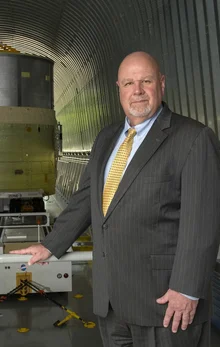
John Honeycutt
SLS Program Manager at NASA
Lisa Callahan
Retired Lockheed Martin Executive and Dog Lover