Inside Microsoft & Constellation's Power Purchase Agreement
In the realm of corporate procurement, energy contracts are pivotal, especially for operations as vast as Microsoft’s.
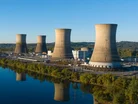
Back in September, Constellation Energy and Microsoft announced a groundbreaking 20-year power purchase agreement, showcasing the tech giant's commitment to sustainability through the renewal of nuclear energy at the renamed Crane Clean Energy Center, formerly known as Three Mile Island Unit 1.
Three Mile Island Unit 2 is historically significant for experiencing the "most serious accident" in US nuclear power plant history, according to the US Nuclear Regulatory Commission.
This legacy casts a shadow over the reopening of Unit 1, which faces opposition from some quarters. However, Constellation indicates that the reopening is progressing ahead of schedule and is expected to inject US$16bn into Pennsylvania’s economy.
"As Microsoft continues its path to become a carbon negative company, this agreement brings a significant supply of new, reliable, carbon-free electricity back to the PJM power grid,” says Bobby Hollis, VP of Energy at Microsoft.
“This will help address the grid’s capacity and reliability needs in the regions we operate."
Microsoft's renewable strategy
The convergence of artificial intelligence (AI) and cloud computing has escalated energy demands.
The United Nations Trade and Development anticipates the AI market will grow to US$4.8tn by 2033. With nearly 80% of organisations integrating AI into business functions, energy-efficient solutions are becoming crucial. Generative AI usage surged from 33% in 2023 to 71% in 2024, highlighting this trend.
Data centres, essential infrastructures for AI development, are significant power consumers. Microsoft's emissions have dramatically risen even as it strives to be carbon negative by 2030, experiencing a 23.4% increase in the 2024 fiscal year.
Melanie Nakagawa, Microsoft's Chief Sustainability Officer, admitted in a February 2025 blog post that sustainability efforts had become more challenging.
Leveraging the zero-emission profile of nuclear energy, Microsoft aims to dissociate data centre expansion from environmental degradation. Renewable energy investments continue, but nuclear power offers the reliability required for uninterrupted data centre operations.
Crane clean energy centre's legacy
The Three Mile Island Nuclear Generating Station's Unit 1, now the Crane Clean Energy Center, is steeped in history – not all of it favourable.
The infamous partial meltdown at Unit 2 in 1979 led to a Level 5 categorisation on the International Nuclear Event Scale due to its extensive repercussions.

Despite these challenges, Unit 1 resumed operation after 1985 but was shut down in 2019 over financial constraints.
Constellation asserts that the reactor remains in excellent condition, an assertion pivotal to the plant's anticipated 2027 restart, a year ahead of initial forecasts post-2020 agreement with Microsoft.
Operational progress
Under the power purchase agreement, the Crane Clean Energy Center's operational restart depends on grid operator PJM’s approval for an early interconnection request.
Josh Shapiro, Pennsylvania’s Governor, acknowledges the strategic collaboration to expedite this process: “This restart will safely take advantage of existing infrastructure while creating thousands of energy jobs and strengthening Pennsylvania’s legacy as a national energy leader.”
Joe Dominguez, Constellation’s President and CEO, underscores the broader impact: “With PJM’s action, Microsoft’s historic investment and strong support from Governor Shapiro, elected officials and members of this community, we’re on track to make history ahead of schedule, helping America achieve energy independence and supercharge economic growth.”
The workforce at the facility exceeds 65% capacity, with significant technical milestones reached, including successful major system operations.
This progress is acknowledged by Maria Korsnick, President and CEO of the Nuclear Energy Institute: “The US nuclear industry is uniquely positioned to meet the rising demand for clean, reliable and affordable energy.
"The Crane Clean Energy Center is a powerful example of how our industry is rising to the challenge.”