Procurement's Central Role in Microsoft's Climate Fund
Back in 2020, Microsoft established its Climate Innovation Fund, an initiative designed to kickstart and grow a portfolio of climate technology startups.
The fund forms a key component of Microsoft's wider sustainability strategy, which includes commitments to become a carbon-negative, water-positive, net-zero organisation by 2030.
It employs what Microsoft describes as a "market development flywheel" approach which combines corporate investment with technology support and crucially procurement commitments.
According to a newly-published report on the fund’s first five years, this strategy has attracted US$12bn in follow-on capital across its portfolio companies.
Brad Smith, Vice Chair and President of Microsoft, says: "Through the Microsoft Climate Innovation Fund, we invest in bold ideas and scalable technologies that drive real impact".
Procurement in hard-to-abate sectors
A large portion of the fund has been directed towards industries where low-carbon alternatives are either scarce or not yet commercially viable.
Steel production is a primary example. Microsoft invested in Stegra's commercial-scale facility in Sweden, which utilises green hydrogen-based direct reduced iron technology.
The facility aims to produce steel with emission reductions of up to 95% compared to conventional blast furnaces. Microsoft has supplemented this equity investment with multi-year purchase agreements for its suppliers to procure Stegra steel for data centre equipment.
Another focus is the aviation sector, where the fund has supported research and development around sustainable aviation fuel (SAF). Investments include Twelve’s carbon transformation technology and LanzaJet’s alcohol-to-jet scheme.
In the same sector, Microsoft also invested in a book-and-claim accounting model with Alaska Airlines enabling Microsoft to report lower emissions from SAF use without needing physical delivery to specific aircraft.
First-of-a-kind project financing
The fund has also dedicated more than US$100m to what it calls "first-of-a-kind" projects.
As the rubric suggests, these are nascent climate technologies that have been caught in limbo, facing financing challenges too large for venture capital but too risky for traditional infrastructure investors. The team at Microsoft estimates that this gap typically ranges between US$100m-US$180m per project.
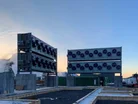
As part of this initiative, Microsoft provided project finance for Climeworks' Orca plant the world's first commercial direct air capture (DAC) facility. This was supported by a 10-year offtake agreement for 10,000 tonnes of CO₂.
In another project, the fund supported Konexa in Nigeria to construct renewable energy infrastructure that connects Heineken’s operations to clean power. That project, which is now commissioned, intends to create a replicable model for the country's renewable power sector.

The role of AI in climate innovation
As Microsoft has become more deeply involved in AI, the fund has increasingly integrated the technology into its investment strategy, describing it as an "innovation amplifier".
Investments in this area include Vibrant Planet, a company using AI-powered geospatial analytics to detect and mitigate wildfire risks. Another is Terradot, a startup applying AI to enhanced rock weathering, which is a novel carbon removal method.
These investments reflect Microsoft's belief that AI's capacity to measure, predict and optimise complex systems will be essential in addressing climate change. However, Microsoft acknowledges that AI is currently the fastest-growing source of carbon emissions within its value chain.
Microsoft's leadership hopes the long-term benefits will ultimately outweigh the immediate environmental costs.
Melanie Nakagawa, Chief Sustainability Officer at Microsoft, explains: "The force creating this distance from our goals in the short term is the same one that will help us build a bigger faster and more powerful rocket to reach them in the long term: artificial intelligence.
"This is not hyperbole."
Company portals


Executives
Brad Smith
Vice Chair and President
Melanie Nakagawa
Chief Sustainability Officer