
Why Procurement is a Key Player in Mars' Circularity Efforts
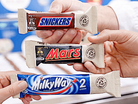
With a portfolio of brands including M&M’s, Pedigree, Snickers and Whiskas, Mars is a global leader in pet care, confectionery and food products.
Its sprawling supply chain and operations across 80 countries give it a considerable global footprint. In response, the US-based firm is taking steps to address its environmental impact through a dedicated sustainability strategy.
Mars launched its Sustainable in a Generation Plan in 2017, a framework that guides its efforts to create a healthier planet and a more inclusive society. The organisation continuously evaluates its progress against the plan’s goals, which include ambitious sourcing and emissions targets.
Mars is aiming to source 100% renewable electricity by 2040 and is targeting a 50% reduction in total greenhouse gas emissions across its value chain by 2030, from a 2015 baseline on the path to net zero by 2050.

Sourcing strategies and emission reductions
Significant progress has been made towards these goals. By 2024, Mars had achieved a 16.4% reduction in greenhouse gas emissions, and 58% of its sourced electricity was renewable.
These achievements are linked directly to procurement and supply chain initiatives, including the implementation of climate-smart agriculture and efforts to create a deforestation-free supply chain.
To address its remaining footprint, Mars intends to use high-quality carbon removal credits by 2050, to neutralise any residual emissions.
Alastair Child, Chief Sustainability Officer at Mars, says: “Sustainability at Mars is about ensuring we have an increasingly positive impact on society in the areas we are most material to and that are most material to us.
“Challenges remain and progress will not happen in a straight line but with innovation and collaboration we’re proving that growth and sustainability can go hand in hand.”
Creating circularity through packaging procurement
Packaging procurement is another core focus for Mars, as it invests in sustainable materials and circular solutions.
Mars acknowledges that its products can only be fully circular when the necessary waste management, collection, sorting and recycling infrastructure is widely available.
To that end Mars, is collaborating with governments and NGOs to help accelerate this change. A tangible result of this focus is the 2025 launch of a new mono-material pouch for its Whiskas pet food brand in the UK and Germany.
The packaging is designed for recyclability and is compatible with current or emerging recycling infrastructures. This switch has reduced the carbon footprint of the packaging by 46%.
“We want to contribute to a circular economy where packaging material never becomes waste” adds Elisabetta Pierangelo Vice President of R&D at Mars Pet Nutrition.
“The transition to mono material pouches has required groundbreaking innovative material science and we will continue to drive innovation in packaging to help build the world we want tomorrow.”
Enhancing supply chain visibility
Agricultural emissions remain a major challenge for Mars.
In 2024, Mars supported over 60 projects, utilising climate-smart agricultural practices which can lead to lower greenhouse gas emissions or regenerated soil.
Mars is also committed to responsible land stewardship, and has not expanded its total land footprint since 2015.
To better manage its impact from land use change it is leveraging geospatial satellite data to track and assess emissions across its raw material supply chains.
This technology allows Mars to trace products assess deforestation risks engage more effectively with suppliers and ensure regulatory compliance.
Poul Weihrauch CEO of Mars says: “Resilient businesses that endure the test of time are those who invest to continuously adapt while being mindful of their impact on both people and the planet.
“At Mars we take this responsibility seriously and we believe we don’t have to sacrifice performance to operate sustainably.”
Company portals

Executives

Alastair Child
Chief Sustainability Officer

Elisabetta Pierangelo
VP R&D, Mars Pet Nutrition

Poul Weihrauch
CEO