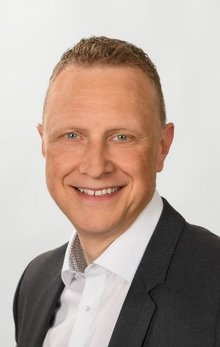
Joern Foerster on Driving Global Supply Chain Excellence
Joern Foerster, Senior Vice President, Supply Chain & Procurement at Diebold Nixdorf, leads global operations across production sites in Germany, Switzerland, Brazil, India, the United States and a joint venture in China. His remit covers production, logistics, procurement, product launches, quality management, supply chain planning and operational excellence.
Joern began his career at the company in 1999 as a Controller. In 2012, he transitioned to Vice President Finance Global Supply Chain, marking his first major focus on supply chain management. Following years of expanding responsibilities, he was promoted to Senior Vice President Global Supply Chain in 2020. Since 2021, he has also led the Paderborn site in Germany, which employs more than 2,000 people.
He spoke to Procurement Magazine about regionalising global hubs and transforming Diebold Nixdorf’s supply chain into a resilient, competitive force.

What was the driving force behind the "Supply Chain Excellence Program" and what specific improvements have you seen since its implementation?
Like many organisations, we have faced significant challenges recently and had to address difficult questions: How resilient is our supply chain? Can we maintain uninterrupted production? Global disruptions, the pandemic, geopolitical tensions and the blockage of critical trade routes have added complexity to a demanding environment. It became clear our supply chain needed to be decentralised and fundamentally transformed. Consequently, we launched our Supply Chain Excellence Program to provide necessary strategies and concrete initiatives.
This has enabled improvements across various areas. A major achievement was transitioning from a centralised manufacturing model to a regionalised setup. This change helped us shorten customer lead times and improve satisfaction. Additionally, building new supplier partnerships in strategic locations, including our North America hub in North Canton, Ohio, has increased agility. This reduced critical dependencies on individual suppliers and strengthened overall resilience. We are also continuing to optimise our supply chain footprint to improve flexibility and reduce goods in transit. Our emphasis on regionalisation demonstrates our commitment to adaptability in a dynamic market.
There are many more examples of improvements. Crucially, our supply chain organisation now plays a key role in supporting the company’s strong performance.
Could you share a specific example of a supply chain initiative you led that had a defining impact on performance?
A successful initiative is our 'In the Region for the Region' concept. We aim to align value creation regionally by producing and procuring where our customers are. The last few years showed how vital stable, elastic and regional supply chains are. This concept has strengthened our ability to respond to disruptions, reduced dependencies, lowered transportation costs and met sustainability requirements. A concrete implementation is in North Canton, Ohio, where we opened a retail technology production line in 2025 to serve US customers locally.
You’ve overseen significant LEAN initiatives. How do these help the team navigate the complexities of demand and sourcing?
A key part of our LEAN roadmap is cross-functional Kaizen events. These address five to six topics over one week at different locations throughout the year. They are designed to help teams experience the management of demand, processes, products and sourcing. These workshops emphasise that working harder is not a viable solution; instead, systems and processes must be adjusted for efficiency.
One key component is 'Go Gemba'. These hands-on experiences allow participants to identify waste and make immediate improvements in actual work areas, supported by a sensei. The seminars teach Kaizen principles followed by real-time application. Events conclude with a report highlighting results and learnings.
Our teams gain valuable insights into optimising processes. Let me share some results: a 33% increase in build quality to eliminate waste and a 20% increase in on-time delivery.
DN is accelerating its transformation with AI. Can you walk us through the framework you’re using to prioritise the first five pilots?
Our strategic approach is a 'crawl-walk-run' methodology. This involves launching selected 'speed-to-value' use cases to demonstrate quick wins and build momentum. We screened more than 300 AI use cases and prioritised 50 that address core supply chain pain points. We then reached cross-functional alignment on five use cases for initial deployment through a sprint methodology, aiming for tangible impact every 60 to 90 days.
These cases were chosen to maximise learning. They span multiple functions and include a mix of buy, build and hybrid models. The next phase will focus on scaling successful cases, expanding the portfolio and maturing our data and technology foundations.
Regarding the digital cloud-based E2E supply chain planning suite, what primary challenges did this technology solve?
Supply chain management faces growing complexity and a need for close collaboration. At Diebold Nixdorf, we have diversified our factory network and established regional hubs, moving from single-product sites to multi-site co-assembly to improve lead times. We have also expanded through partnerships with contract manufacturers. Different manufacturing depths mean some sites now act as internal suppliers. These optimisations bring increased interdependencies requiring precise planning.
A further focus is the early identification of internal and external constraints, including capacity and logistics, while increasing transparency across lower supply chain tiers. Improving working capital remains a priority through inventory optimisation and enhanced cash conversion.
All these points underline the need for a global data pool and global decision making. As a merged company, we had to manage a diverse enterprise resource planning (ERP) landscape. Therefore, we implemented an Oracle cloud-based supply chain management planning suite. While our different ERP systems remain, they are connected to the cloud so planning can be carried out globally. We benefit from harmonised processes, data synchronisation and the ability to plan scenarios in the sales and operations cycle.
Looking at the results achieved under your leadership, what are you most proud of and what does the next chapter look like?
I am particularly proud that we have turned Diebold Nixdorf’s supply chain from effective execution into a high-performing, competitive force that adds significant value. Such success is never achieved by one person; it is the collective effort of our committed teams.
In the near term, my focus is to build on the momentum of our LEAN journey. We have successfully brought LEAN back into focus with a clear roadmap and practical tools, beginning at manufacturing sites and extending beyond the shop floor. My priority is to further improve operational efficiency. Although we have achieved meaningful progress, I am convinced additional opportunities remain to unlock further improvements. By doing so, we will streamline processes while strengthening our commitment to sustainability.
Finally, our overarching goal remains the same: to cultivate a resilient, performance-driven and delivery-oriented supply chain that balances market demands, working capital efficiency, employee satisfaction and shareholder value.
Company portals
Executives
Joern Foerster
Senior Vice President Supply Chain & Procurement