Japan & Australia Form Critical Mineral Procurement Alliance
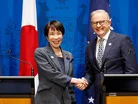
Australian Prime Minister Anthony Albanese and Japanese Prime Minister Sanae Takaichi have signed a bilateral agreement on critical minerals, energy and food supply chains during a three-day state visit.
The procurement partnership comes as organisations seek to reduce dependence on Chinese suppliers, which control 70% of global refining capacity for 19 out of 20 critical minerals. This concentration of processing capability has created significant supply chain vulnerabilities for procurement teams across multiple industries, particularly in manufacturing, technology and automotive sectors.
For procurement professionals, this dependency has manifested in price volatility, extended lead times and limited negotiating power. The bilateral agreement addresses these challenges by establishing alternative sourcing channels that give procurement teams greater supplier diversity and risk mitigation options.

Strategic sourcing decisions
The partnership establishes critical minerals as a core pillar of economic and security relations between the two nations. Australia plans to provide up to AU$1.3bn (US$943m) to the procurement initiative, funding that will support infrastructure development, processing facilities and supplier capability building programmes.
Japan has already provided AU$370m (US$268.5m) in grants and investments. This figure could increase as sourcing projects develop and new processing facilities come online.
"Australia and Japan are taking action to protect our economies from future economic shocks and uncertainty," Prime Minister Albanese said in a statement.
"By working together, we will achieve more secure and resilient supply chains that will benefit Australian and Japanese businesses and consumers now and into the future."
The agreement establishes frameworks for co-investment in Australian critical mineral supply chains. This could mean Japanese procurement teams gain preferred access to Australian lithium, copper and nickel reserves. For procurement organisations, this preferential access translates to improved contract terms, priority allocation during supply constraints and opportunities for long-term fixed-price agreements that provide budget certainty.
The partnership also creates procurement planning advantages. Teams can develop sourcing strategies with greater confidence in supply continuity, enabling more accurate demand forecasting and inventory optimisation. This reduces the need for costly buffer stocks that have become common practice when sourcing from concentrated supplier bases.
Diversification from Chinese suppliers
Demand for critical minerals has increased as organisations adopt AI systems, electric vehicles and renewable energy infrastructure. Traditional procurement routes have concentrated supply through Chinese refiners and processors, creating bottlenecks that affect procurement timelines and project delivery schedules.
The new agreement establishes alternative sourcing channels between Australia and Japan. Australia currently provides approximately 33% of Japan's energy supply and is its largest market for liquified natural gas (LNG).
Japanese procurement organisations have tracked Australian LNG developments as tensions in the Middle East have affected energy supply chains. The critical minerals agreement extends this sourcing relationship to solid commodities, allowing procurement teams to leverage established supplier relationships and due diligence processes.
According to the joint statement, the partnership will establish domestic smelting and metal processing capabilities. This could reduce procurement cycle times and supply chain vulnerabilities for both economies whilst creating new employment opportunities in regional mining areas.
The development of processing infrastructure within Australia addresses a critical procurement challenge. Currently, even Australian-mined minerals require processing in China before becoming usable materials. This adds transportation costs, extends lead times and creates additional points of supply chain failure. Domestic processing capabilities will enable procurement teams to source fully processed materials directly from Australian suppliers, streamlining procurement workflows and reducing the total cost of ownership.
Existing procurement relationships
Sojitz and Japan Organisation for Metals and Energy Security (JOGMEC) provided financing to Lynas Rare Earths in 2011. This procurement relationship helped the supplier commence light rare earth production.
By 2025, Lynas had expanded into heavy rare earth production. The model established by Sojitz and JOGMEC created a template for the broader bilateral agreement, demonstrating how strategic procurement partnerships can support supplier development and capacity expansion.
The same organisations have worked with one of Alcoa's operating alumina refineries in Western Australia to develop gallium recovery. Gallium is used in light-emitting diodes (LEDs), solar cells and semiconductors.
These procurement partnerships demonstrate how Japanese organisations have established sourcing positions in Australian critical minerals operations before the formal government agreement. Procurement teams can study these relationships as case examples of successful supplier development programmes and collaborative sourcing models.
The agreement covers energy, critical minerals, food and manufactured goods. Procurement teams in both nations can access frameworks for collaborative sourcing across these categories, potentially extending the diversification benefits beyond minerals to other strategic commodity groups.
Prime Minister Takaichi emphasised the collaborative nature of the procurement partnership. "We affirmed that Japan and Australia will closely communicate with each other in responding with a sense of urgency," she said.
The agreement establishes transparency requirements for procurement activities. Both governments stress that sourcing decisions will follow open communication protocols, giving procurement professionals clearer visibility into supply chain dynamics and market conditions.
The partnership could enable procurement organisations to reduce reliance on Chinese critical minerals production. This could mean both nations form new supplier relationships with greater control over their own sourcing strategies, improved negotiating positions and enhanced supply chain resilience that protects against geopolitical disruptions.