JAGGAER REV2025: Jens Brown, Principal at Huron
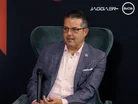
Jens Brown is a spend management expert who has spent over 20 years helping leaders improve their business operations and enhance financial performance.
As a Principal at Huron, he specialises in improving the performance of all aspects of the procure-to-pay cycle, including strategic sourcing, contract lifecycle and supply cost management, as well as identifying the organisational structures, policies, programmes and technology solutions needed to optimise it.
Throughout his career, Jens has led procurement, sourcing and travel programme assessments for numerous large, public research universities; managed procurement assessments, modelling exercises and technology implementations for universities, state and local government entities and global organisations; and served in leadership roles across eProcurement planning, design and implementation programmes.
Prior to joining Huron, he held various industry and consulting roles in procurement and supply chain management and served in the U.S. Navy.
At JAGGAER REV2025 in Miami, Jens spoke to BizClik's Neil Perry about Huron's 15-year partnership with JAGGAER, the challenges facing procurement leaders today and how organisations can optimise their existing technology investments.

What can you tell us about your partnership with JAGGAER?
We've had a really great evolving 15-year partnership with JAGGAER in a number of ways. I think it's been one of the cornerstones of what we've been doing for a number of years because the partner team is one of the few things at JAGGAER that hasn't changed dramatically.
We're able to have very candid conversations about where our business is headed, where we see clients are heading and what we're seeing as thought leaders. We're seeing things because we are closer to clients than a software vendor is. The idea of having a channel to share those real, on-the-ground stories of what clients are saying and translating that into something that the JAGGAER side of the business can act and react to, I think that's the challenge.
What challenges are clients looking to solve?
We're pretty fortunate to react to a lot of industries globally, but we've got some concentrations in a couple that are really meaningful. In North America, about 30% of our revenue is based on some flavour of higher education. Another 35% or so is based around all the work we do in healthcare and in hospital systems.
We have a lively and thriving business right now around what institutions and organisations are thinking about for reshoring. We've put this moniker on the physical and the digital part of supply chain because it's not just enough to have a supply chain technology. You have to ask, where is the robot going to be? Where is that distribution conveyor system going to be? Where are the trucks going to park and if I have an EV and a drone delivery, how does it all fit into place?
You mention the need for agility. How do you help organisations at different stages of their journeys?
We're fortunate to meet folks at different spots in the journey. Sometimes, we're involved very early on in pre-selection of the overall strategy for procurement transformation, P2P, expense management or supplier risk. Sometimes, we get involved much closer to software selection or thinking about moving from a legacy on-prem ERP to something that's more cloud, whether it's Oracle or Workday. Those are cataclysmic changes for a lot of these organisations.
We're really fortunate from, as we say here, soup to nuts. You're going from early planning, all the way down to execution and really helping folks optimise.
How critical is optimisation for organisations?
It's akin to having a house with five doors and you've only opened three of them and you don't know what's behind some of those doors. There's a dimension of general product knowledge that people don't necessarily learn during implementation because there's a fevered pace or there's a certain focus that isn't inclusive of a certain feature.
You might be dealing with a client that did their implementation circa 2014. Well, a lot has happened in 11 years. When you have 15-20% churn every year in an organisation, five years later you've had perhaps 80% or 100% turnover of everybody involved in that choice. The core knowledge that they gained implementing the first time maybe just goes away.
Optimisations are probably the most intriguing thing because you're meeting someone where they're at. They're eager to do something better, they're often really fast to do and, as a consultant, you're meeting a peer in a way where they're dynamically involved in the process.
With all the talk of reshoring and nearshoring, can disruption be turned into an advantage?
The less people can stop being paralysed, the more they're able to gain some sort of momentum, form some sort of strategy and have some sort of collective conversation about where they want to head. I think right now, just keep moving forward. Do not be paralysed, keep moving in the market as we see a lot of things are changing day by day.
Plan for agility; plan for being able to be in the market; ride the rapids and just keep moving.
What advice do you have for procurement leaders trying to keep up with the pace of technological change?
I'm going to steal my own analogy and say, just keep moving. I think you're seeing so many things in the market right now and there's so much noise with AI and there's so much dynamic change there. Folks need to understand what's out there, discern the noise and understand how are you individually using some of these solutions, whether it's Microsoft Copilot or ChatGPT, whether you're using it to write letters to your 80-year-old father-in-law for his birthday or refining data analysis for contract negotiations.
I think leaders should challenge themselves and their staff to do that on day one. If people aren't and they're waiting for instructions, they're already behind. Imagine waiting until 2001 to just say, well, I'm going to try out this internet thing. You missed your window.
What are the benefits of attending events like JAGGAER REV in person?
The vibe shift on the REV conference has been pretty remarkable in the last couple of years. I see a lot more on thought leadership now than historically and I think that's a great thing. People are craving conversation. They're really wanting to talk about a problem to solve. There's a reason people love panel conversations because they don't want a PowerPoint presentation. Having a conversation with three people that are doing your job and hearing what they're doing – that's worth getting on a plane and flying halfway across the continent for.
When you meet people outside their environment, they're able to think a little bit more broadly than just their day to day. I think a lot of that adds up to more than just death by PowerPoint, but you're going to have some actual impact to it and the thought leadership really ties it all together.