
Jabil and Adani Partner on Making Data Centre Parts

Florida-headquartered Jabil, one of the world's biggest manufacturing services companies, has announced its intent to establish 'a vertically integrated AI and data centre infrastructure manufacturing platform' in India with green energy and infrastructure company Adani.
The combination could directly address the explosive local and global demand for AI-ready data centre hardware, creating new procurement opportunities for organisations seeking to diversify their supply chains.
According to a report from Deloitte, India's AI market is expected to reach between US$20bn and US$22bn by 2027, posting a compound annual growth rate of 30%.
Jabil says the initiative addresses a global market opportunity exceeding US$3tn over the next seven years.

Infrastructure needs of tech giants
The manufacturing platform between the two companies is set to be built around three core pillars: giga-scale AI-rack architecture, a 360-degree AI infrastructure ecosystem and manufacturing scale to final documentation.
The platform plans to deploy multi-GW high-density AI rack manufacturing capacity.
According to the companies, it will serve the critical infrastructure needs of tech giants, co-location facilities and enterprise data centres through the advanced manufacturing and integration of liquid-cooled AI racks, servers, storage and networking systems utilising state-of-the-art surface mount technology and complex box-build processes.
This could mean access to locally manufactured alternatives to traditionally imported data centre components, potentially reducing lead times and logistics costs.
Beyond computing racks, the alliance encompasses full-spectrum white space and grey space device manufacturing, including power distribution units, coolant distribution units, transformers, switchgears, bus bars and advanced thermal management systems.
Gautam Adani, Chairman of Adani, says: "The world is entering an intelligence revolution more profound than any previous industrial revolution. Nations that master the symmetry between energy and compute will shape the next decade. India is uniquely positioned to lead.
"Our alliance with Jabil represents a decisive step in building India's complete AI infrastructure stack, from green power generation to world-class hardware manufacturing. Together, we will ensure India is not merely a consumer in the AI age, but a creator, builder, and exporter of intelligence."
India's AI aspirations
According to data from Deloitte, despite hosting nearly 20% of the world's data, India has just 3% of the global data centre capacity.
The professional services network argues that the gap between India's AI aspirations and compute infrastructure presents a strategic opportunity to build AI data centres at scale.
Mike Dastoor, CEO of Jabil, says: "By combining Jabil's more than sixty years of engineering expertise and advanced manufacturing capabilities with Adani's formidable infrastructure and energy platform, we can expect to execute down to the rack level for hyperscalers and enterprises here in India and across the globe.
“As India becomes one of the world’s fastest-growing AI markets, the country’s skilled workforce and supportive business environment make it an attractive destination for this collaboration.”
Procurement implications for infrastructure investment
Global tech companies are accelerating investment in India's digital infrastructure, with more than US$50bn in planned spending across data centre, cloud and AI ecosystems, according to Jabil.
This wave of investment could signal improved availability of components and potentially shorter procurement cycles for Indian-manufactured equipment.
Jabil and Adani are currently working on the definitive operational frameworks and formal documentation.
As India positions itself as both a manufacturer and consumer of AI infrastructure, procurement strategies may need to evolve to incorporate these emerging supply chain options whilst maintaining rigorous vendor assessment and risk management protocols.
Company portals


Executives
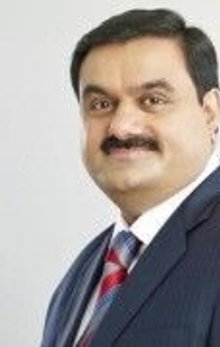
Gautam Adani
Chairman

Mike Dastoor
CEO