IEA: Exploring Procurement's Role in Energy Security

The International Energy Agency's 2025 World Energy Outlook provides critical data for procurement leaders, outlining future energy market scenarios that could directly influence corporate sourcing strategies and supply chain resilience.
The IEA’s report analyses energy demand projections, offering a framework for navigating the shifting landscape of global energy policy, markets and geopolitical tensions.
Global energy demand has increased by almost 60% since 2000. Understanding this trajectory is essential for planning long-term procurement strategy as the report’s findings have major implications for how businesses source energy and manage costs.
Forecasting future energy procurement
The World Energy Outlook details several potential pathways for the global energy mix. The IEA’s Stated Policies Scenario (STEPS) forecasts a peak in coal demand and a plateau in oil use around 2030, signalling a complex future for fossil fuel costs.
A second path, the Net Zero Emissions by 2050 (NZE) Scenario, is based on clean energy, electrification and efficiency. This route would see sustainable fuels almost quadrupling their use by 2035 from current levels.
This highlights a growing need for procurement teams to develop expertise in sourcing renewable energy and low-emissions fuels.
Trevor Hutchings, CEO at the Renewable Energy Association says: “We have the technologies we need to create a future built on clean, secure, homegrown energy. But the situation is delicate – if we lose momentum, we risk letting this opportunity for jobs and economic growth slip through our fingers.”
Mitigating risk in critical mineral sourcing
A primary concern is the security of critical mineral supply chains. These minerals are essential for everything from EV batteries and power grids, to AI chips and defence systems.
The IEA notes that as of November 2025, more than half of these key minerals are subject to export controls, creating considerable sourcing risks.
To counter this, the report suggests policy changes could help create more diverse and resilient supply chains. For procurement leaders, this highlights the importance of diversifying supplier bases and exploring circular economy models to secure these vital materials.
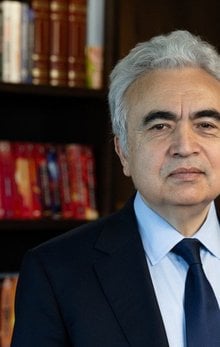
Fatih Birol, Executive Director at the IEA, explains “With energy security front and centre for many governments, their responses need to consider the synergies and trade-offs that can arise with other policy goals – on affordability, access, competitiveness and climate change."
Strategic sourcing for rising demand
Electricity’s role is expanding rapidly. The NZE Scenario projects that electricity demand will grow by more than 50%, outpacing overall energy use, fuelled by the growth of data centres and AI.
Investment in data centres is predicted to reach US$580bn in 2025 and this rise in demand is placing a major strain on electricity grids.
The IEA highlights that a lack of investment in electricity infrastructure is a key obstacle. This increases the risk of congestion and higher prices for end-users, presenting a direct challenge for corporate sourcing.
“Analysis in the World Energy Outlook has been highlighting for many years the growing role of electricity in economies around the world,” Faith adds. “Last year, we said the world was moving quickly into the Age of Electricity – and it’s clear today that it has already arrived.”
This signals a clear need for proactive electricity procurement strategies to ensure supply stability and cost control.
Company portals


Executives
Fatih Birol
Executive Director
Trevor Hutchings
Chief Executive Officer