How UPS is Adressing pharmaceutical Procurement Challenges
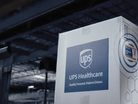
UPS has committed US$48m to expand its cold chain logistics network across Europe, Asia and the Americas. The investment targets temperature-controlled freight cross-dock facilities at 27 locations in key markets.
The expansion responds to procurement challenges in pharmaceutical supply chains. Sourcing decisions for logistics partners now require demonstrated capabilities in maintaining strict temperature ranges between two and eight degrees Celsius, frozen storage or 15 to 25 degrees Celsius throughout transit.
Strategic sourcing for healthcare logistics
Temperature control failures represent a material procurement risk. The estimated annual cost of such failures could reach US$35bn across the pharmaceutical sector.
According to the World Health Organisation, temperature control issues contribute to up to 50% of global vaccine waste. This creates a business case for procurement teams to evaluate vendor capabilities in end-to-end cold chain management.

Procurement professionals must assess multiple criteria when selecting cold chain logistics partners.
Key evaluation factors include facility certifications, temperature monitoring systems, contingency protocols and track record in maintaining product integrity. Vendors should demonstrate compliance with Good Distribution Practice (GDP) standards and provide documented evidence of temperature control performance across their network.
Supply chain procurement strategy must now account for the changing pharmaceutical product mix. According to PharmaSource, approximately one in three newly approved drugs is a biologic created from living cells. More than 85% of these products require temperature-controlled handling.
The procurement risk extends beyond simple refrigeration. Cell and gene treatments, mRNA platforms and GLP-1 injectables present more complex logistics requirements than traditional pharmaceuticals.
Strategic sourcing implications include longer contract negotiation cycles and more detailed service level agreements.
Procurement teams are increasingly requiring vendors to provide validation studies, temperature mapping data and risk assessment documentation as part of tender responses.
Vendor capabilities and infrastructure investment
UPS operates more than 19.2m square feet of cGMP and GDP-compliant healthcare distribution space globally. The company provides services across more than 200 countries and territories.
The new investment optimises speed and short-term storage across air and ground movements. Cross-dock facilities reduce handoffs between transport modes, which procurement teams identify as a key risk factor in temperature excursions.
Kate Gutmann, Executive Vice President and President of International, Healthcare and Supply Chain Solutions at UPS, says: "We have aligned our investments with our Healthcare customers' specialised needs. Our global cross-dock facilities strengthen our end-to-end cold-chain capabilities to ensure critical treatments are delivered safely and reliably to patients around the world."
Kate adds that the work "extends from a deep understanding that we're doing more than moving packages. We are helping patients access the medications and treatments they need."
Procurement risk management considerations
A fragmented logistics network increases the number of handoffs and temperature excursion events. Procurement strategies that consolidate logistics with a single integrated provider could reduce accountability gaps.
Risk management frameworks for cold chain procurement should include contingency planning for equipment failures, extreme weather events and regulatory changes.
Procurement teams must evaluate whether vendors maintain backup power systems, alternative routing capabilities and insurance coverage adequate to the value of pharmaceutical shipments.
UPS offers customers real-time oversight for each shipment through a 24/7/365 control tower. The system monitors shipments, identifies risks and enables intervention to maintain product movement.
According to Growth Market Reports, industry demand for temperature-sensitive biologics could grow to US$39.1bn through 2033. This projection informs procurement planning cycles and vendor selection criteria.
"Biologics and personalised treatments are driving better, more targeted care for patients," adds John Bolla, President of UPS Healthcare.
The business case for investing in robust cold chain logistics infrastructure centres on cost avoidance. Product losses from temperature excursions, regulatory non-compliance penalties and reputational damage to pharmaceutical manufacturers can far exceed the premium paid for qualified logistics providers.
Procurement teams are increasingly viewing cold chain capabilities as a value driver rather than a cost centre.
John adds that the investments "reflect our commitment to strengthening our end-to-end supply chain that helps protect innovative treatments and diagnostics, supporting better patient outcomes."
The expansion builds on previous strategic acquisitions. UPS has acquired Bomi Group, Frigo Trans and BPL throughout Europe. In North America, the company acquired Andlauer Healthcare Group.
The company has also expanded its Incheon, Korea air hub. This could make pharmaceutical trade flows more efficient for procurement teams sourcing logistics services in Asia-Pacific markets.
Procurement decisions for pharmaceutical logistics now weigh facility investments, compliance certifications and technology capabilities as core vendor selection criteria.
The US$48m commitment demonstrates the capital requirements for maintaining competitiveness in healthcare logistics sourcing.
Company portals
Executives
John J. Bolla
President UPS Healthcare
Kate Gutmann
EVP & President International, Healthcare and Supply Chain Solutions