How Schwarz Group Turns Circularity Into Advantage
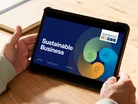
The companies of Schwarz Group are showing how they are using sustainability across their value chain to strengthen supply chain resilience, transforming sustainable business into a long-term competitive advantage.
This has been revealed after the publication of its Sustainability Report for the 2025 fiscal year. The group points to its targeted investments in sovereign energy supply and effective resource protection.

A global retail ecosystem
Schwarz Group is a global retail leader, operating around 14,500 stores and employing 604,000 people worldwide. In the 2025 financial year, the group's companies achieved combined sales of €185.6bn (US$211bn).
Its ecosystem spans the entire value chain, from production and retail through to recycling and digitalisation.
Lidl and Kaufland anchor the group's food retail operations, serving customers daily across 33 countries. A large share of the group's own-brand products and sustainable packaging is supplied by Schwarz Produktion.
"Especially in times of geopolitical volatility, we do not waver from our sustainability targets; instead, we steadily continue on our path," says Susanne Marell, Executive Vice President of Schwarz Corporate Affairs.
"Through measures to strengthen our energy and resource sovereignty, as well as a clear commitment to our responsibility as an employer and trainer, we reinforce the long-term stability and future viability of our entire ecosystem."
“We reinforce the long-term stability and future viability of our entire ecosystem. ”
Tackling plastic and operational waste
On the circular economy side, PreZero drives forward recycling management solutions that support a functioning circular economy and investment in a cleaner future.
One of its key initiatives across the value chain is plastic reduction. It saw a 35.9% reduction in plastic, alongside 26.1% use of recycled material and a 67.3% recyclability rate for own-brand primary plastic packaging.
With its adopted successor strategy, "REset Resources," Schwarz Group is now expanding its targets by 2030 across all divisions to encompass all packaging materials.
There are also positive signs when it comes to the handling of operational waste: a total of 90.1% of waste was reused, recycled, composted or fermented. By 2030, the company is aiming to increase this figure to 95%, with pure waste incineration (pursuant to DIN SPEC 91436) deliberately excluded, along with waste generated at its own recovery and disposal facilities as well as construction waste.
Sustainability as risk management
The company believes that in achieving long-term financial, ecological and social goals in a stable manner, there is a direct link between sustainability and its holistic risk management.
This is supported by its external ESG rating. This ongoing, transparent assessment process significantly reduces potential market and environmental risks. Schwarz Group's integrated ecosystem, spanning retail, in-house production, digitalisation and recycling, not only safeguards the long-term viability of its business models but also provides a dependable anchor of stability in challenging economic times, supported by a workforce of around 604,000 employees.
- Plastic reduction: 35.9% reduction in plastic packaging, 26.1% recycled material use, and 67.3% recyclability rate for own-brand primary plastic packaging
- Waste diversion: 90.1% of operational waste reused, recycled, composted or fermented, with a 95% target by 2030
- Solar growth: Self-generated solar power output rose 28% in 2025, exceeding 473,000 MWh — enough for over 136,000 households
- Emissions cut: Scope 1 and 2 emissions down 44.1% versus 2019, on track for a 48% reduction by 2030
Powering progress towards net zero
Self-generated solar power output grew by 28% in 2025, reaching more than 473,000 megawatt-hours, enough to cover the average annual consumption of over 136,000 households.
Consolidated operational emissions (Scope 1 and 2) have also fallen by 44.1% against the 2019 baseline, marking steady progress towards the group's shared near-term climate target of a 48% reduction by 2030.
A key milestone in this year's report is the publication of the companies' first-ever climate transition plan. Designed as a strategic tool to help achieve these shared targets, the plan lays the groundwork for making business processes more resilient to growing climate risks, while setting out the key levers on the path to net zero by 2050.
Company portals
Executives
Susanne Marell
Executive Vice President of Schwarz Corporate Affairs